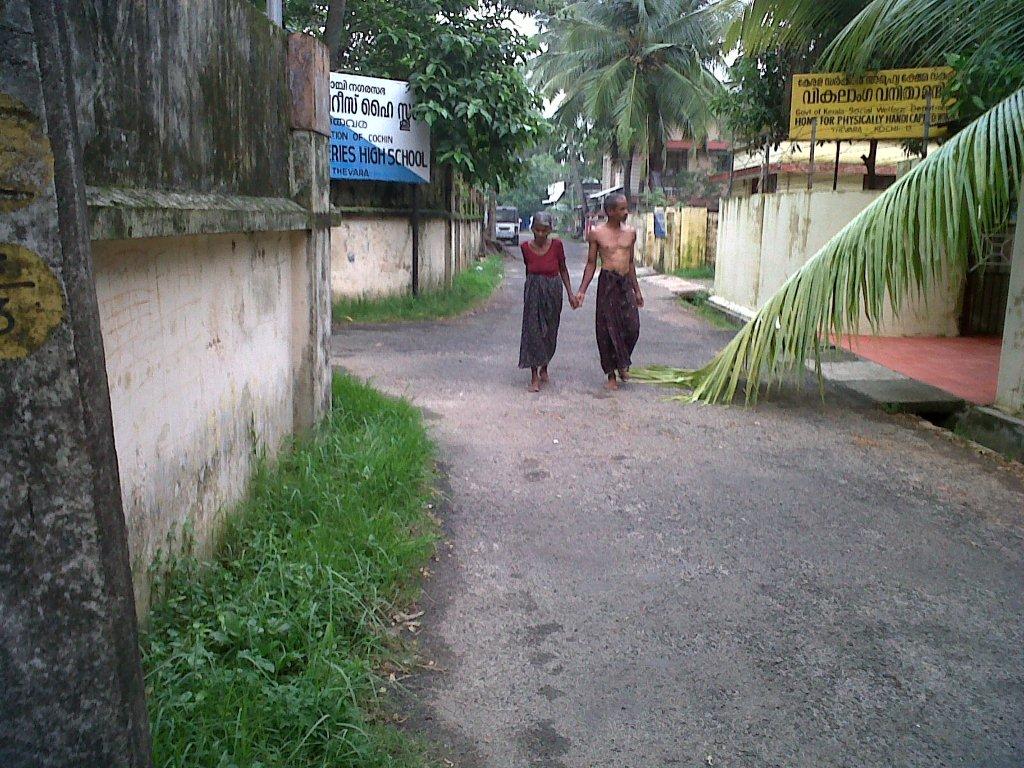
In more than one earlier post, we might have given the impression that only fellows are out and about for snapshots in the neighborhoods we visit. Not so.
In more than one earlier post, we might have given the impression that only fellows are out and about for snapshots in the neighborhoods we visit. Not so.
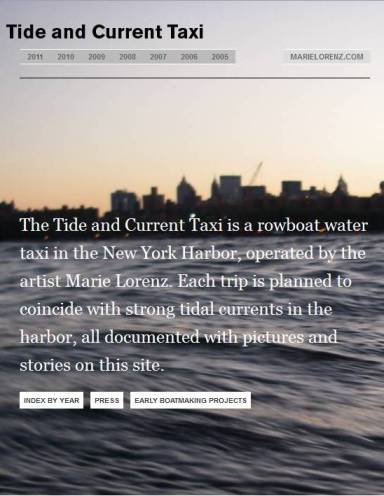 Click the image to the left and you will find yourself somewhere in the Marie Lorenz realm. It may be easier to understand this realm if you see some of her more “traditional” art, and especially the evolution of that art, at her own website first.
If you happen to be in New York City, you have an advantage: you can experience this realm firsthand. If not, maybe a description of some of her other recent art will give a small portion of perspective to the Tide and Current Taxi:
Recently I have been making collographs of things that I find on the beach. This project is an attempt to find out the story that an object tells about itself. I think of it as another way to collaborate with the tide – because of how the harbor collects things from the city, and distributes them around the shore according to their density, buoyancy, and shape. Continue reading
Having posted an item or two in the past about food, I am newly inspired to indulge my interest; inspired by a recent visit to Portland, Oregon. It was my first time to this city, a city that seemed to care more about its food than any other city I’d been to. (A bold statement I qualify with the varied ways in which a people can “care” about its food.)
 Good food is a social backbone of many a metropolis.
They cultivate their gardens of superstar restaurants, or food trucks, whatever the case may be. The big and advanced cities have their bevies of bloggers and critics, evaluating the experience that comes with each bite. Each person I’ve met in each town I’ve been to, no doubt, cares to a certain extent about their food, but only in Portland did I feel the caring resemble something like the way a person cares about family. Like a pet-owner, plant-keeper, or passionate professional, the people of Portland appeared to feel invested in their food as an essential way of being good not only to themselves, but to some “other.” Continue reading
Today I saw something very odd: dozens of ladybugs crawling along the top of a recycling bin. Some were the dark red that we normally associate with ladybugs, while others were a pale orange verging on yellow. Strange looking half-formed ladybugs, seemingly crouched in tight balls, adhered themselves along the surface as well. In the midst of it all swarmed long, fat black bugs with orange spotting along their backs. What was going on here? And what was this panoply of ladybug life occurring on a recycling bin in the middle of a college campus?

Two ladybug pupae
When I afterwards looked up ladybugs, I found that I had actually witnessed something pretty cool: the full life cycle of Coccinellidae, known as the ‘ladybug’ in America but the ‘ladybird’ elsewhere in the world. It’s also known as ‘God’s cow,’ the ‘ladyclock,’ or the ‘lady fly.’ There are over five thousand species worldwide, but the name ‘ladybug’ is perhaps most readily synonymous with the image of a small, round red bug with black spots.
The ladybug, as I had seen, has four distinct phases in its life cycle. The life of the ladybug begins in an egg; small clutches hatch after three or four days at which point the larval form of the bug emerges. It may molt three to four times over a period of about twelve days before pupation (i.e., the beetle creates a pupa). Continue reading
In my previous post, I talked briefly about the beauty of contrast between stationary backdrops and objects in motion, waterfalls being my focal point. Still without a tripod (an almost essential piece of equipment for this kind of photography), I have been putting myself and many props in uncomfortable positions to steady my camera as I aimed for enlightenment.
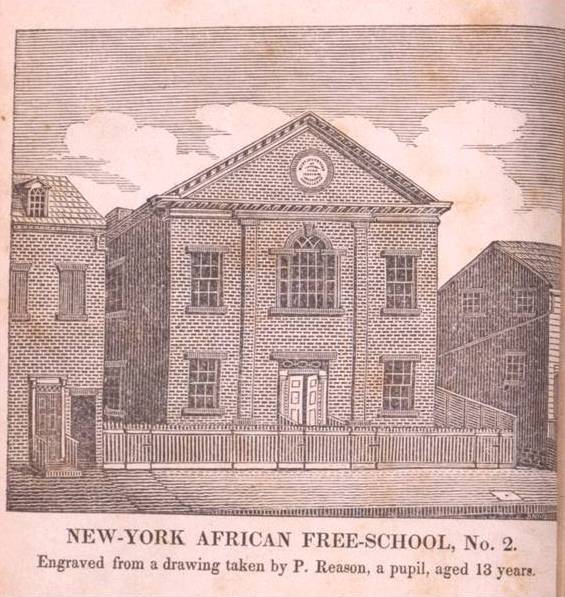 Source: Schomburg Center for Research in Black Culture / Manuscripts, Archives and Rare Books Division/ The New York Public Library, via Columbia University
The New York African Free School was established November 2, 1787, seventy-eight years before slavery was officially abolished by the 13th Amendment of the U.S. Constitution. Despite the fact that slavery was considered “crucial to the prosperity and expansion of New York”, groups such as the New York Manumission Society were established that advocated for African Americans and abolition.
Certainly ahead of its time, the school was co-educational, teaching reading, writing, arithmetic, and geography equally to children of both slaves and free men. Vocational skills were taught as well; the boys were offered astronomy and cartography, skills needed by seamen, and the girls learned sewing and knitting. Continue reading

But how is it? It’s certainly not a beauty compared to other bigger cities. The Google Earth image above provides a kind of accurate representation of the first impression–not much to feel at first glance. But this city has its own very charming sides, and I enjoy being here. Continue reading
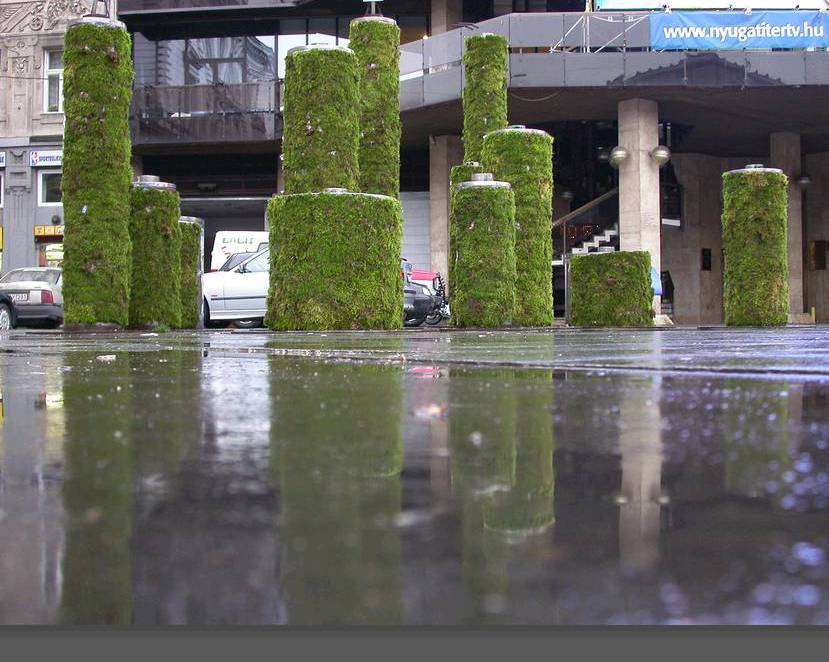
Mosstika: As It Started, Budapest, 2004
Nature calls to us. All the more so in urban settings. This is evident in the long history of elaborate parks and gardens in major cities, dating back to Frederick Law Olmstead, André Le Nôtre and beyond. Olmstead’s designs were meant to emulate the Savana landscape that strikes so strong a chord in people around the world, whereas Le Nôtre helped define that famously manipulated symmetry of the classic French garden.
Both respond to what we now refer to as biophilia, the magnetic draw that nature has on each of us. The question we have to ask ourselves is which one is “Art”. Not an easy task, to be sure. Perhaps the solution is to say “both” and leave it at that. Continue reading

Notice where the railway used to enter the building
The High Line railway was originally designed to bring shipments straight from the Hudson to manufacturing warehouses in Manhattan. The train cars could run packages from wharves to upper-level floors of these industrial buildings without having to obstruct street traffic or be carried up several stories manually (freight elevators weren’t a common sight in the 1930s, whether for safety, efficiency, or invention reasons I don’t know).
In 1980 the High Line trains stopped running, and construction of the new park design started in 2006 (after seven years of planning). The first section opened to the public in 2009, and the second section in 2011.
I first heard of the High Line Park this summer, while doing some browsing about the city online. I was immediately struck by the ingenuity of converting what had once been industrial space Continue reading
There have already been plenty of posts on this site that give the perspective of non-Indians living in or visiting India. Here is another good example of an Indian describing a local feature of life that, to the non-Indian, is more of a phenomenon. And so the style of delivery, while quite different from that of this man, is equally intriguing (fair warning: the accent is stronger here, but you can train your ear to understand)–both men talking about old stuff, rather genially and humbly, but clearly aware that they are sharing with the world something of value that might have been overlooked because it has been hiding in plain sight for so long.
The style of delivery, in fact, is as interesting as the content itself, if you are a non-Indian trying to figure out what makes the place called India so worthy of attention. It is not what Robert Hughes called the Shock of the New, translated from art to service or organization; it is another example of the Shock of the Old. And the style of delivery reinforces just that.
The joking self-effacement–no Silicon Valley-type innovation or technology, but we get by in our own way–belies an organizational philosophy made tangible that would be the envy of many organizations around the world.

Whether by coincidence or just being on a roll (sorry), I just came across an inspiring urban art project that is part Civil Disobedience, part Public Art Initiative, part plain old recycling and completely FUN! Continue reading

The Celebration of Urban Birds isn’t just about “Bird Counts” and helping to create welcome habitats for your ornithological neighbors. Protecting migratory birds is an urgent part of this process. Just as we work to create and support buffer zones around nature reserves in various parts of the world, we need to think about ways that human lifestyles impact animal health and habitat.
New York City Audubon’s Director of Conservation Susan Elbin states that
Night-time migrants navigate using cues which include moon-light and star position, and may become confused by the glare of tall building lights.

An aerial shot looking down on the Washington Grasslands section of the park, with Rashid Johnson’s artwork Blocks and Yutaka Sone’s Little Manhattan visible, both 2015 Commissions.
Railroads were one of the most significant early forces of change to the landscape of North America. They not only moved freight and people but they participated in opening up the newly formed National Parks to visitors with the creation of the now iconic grand hotels.

Some of the railway’s original train tracks were marked and put back in their original locations. You’ll see them throughout the park today. Photo by Rick Darke
But as roads began to rival rails the network underwent a steady decline, and fewer and fewer resources were being put into their maintenance.
Fast forward a century–give or take a decade–and we find railroads, or at least rail corridors, going back to one of their greatest historical traits; as a pathway to nature.
In the 1980s the U.S. Congress passed an amendment allowing the use of soon-to-be-abandoned rail lines for hiking and biking trails.The highly successful “Rails-to-Trails” program has lead to nearly 1,012 rail-trails in the U.S. with a total trail mileage of more than 11,000.
Not just a U.S. phenomenon, there are similar programs in Canada, Mexico, Europe and Australia, to name a few. (Tasmanian Trail anyone?) Continue reading
For anyone who has lived in a great city with street-level public transit the experience is familiar: traffic is a lullaby; snooze; random awakening; the window frames something that seems important. There are plenty of visual reasons to take a bus, for residents as well as visitors. This view was taken from such a window in Mumbai a few days ago, at a place that evoked a strong memory. Neither was it 5th Avenue at 60-something Street, nor was that Central Park behind the wall. But it was, for a moment. For one particular person. A madeleine, of sorts?
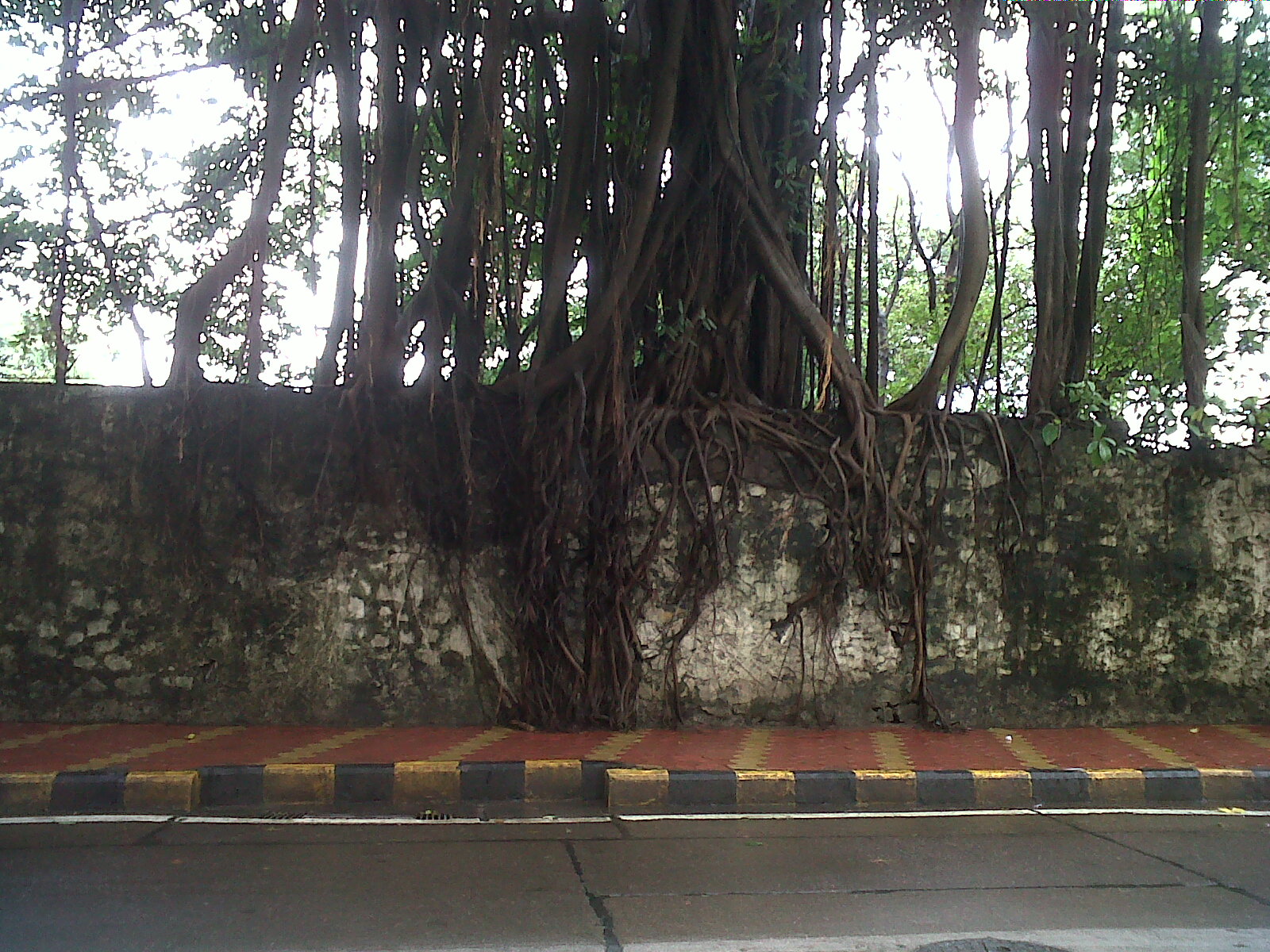
Just a moment later, before the cab started moving again:
Vimeo is one of the many slippery slopes on the mountainous terrain aka the internets. The creativity unleashed there can knock you head over heels. Nonetheless, we must risk those slopes. And give credit where it is due. Just two hours ago Moritz Oberholzer commented on this video, and how it was created (including his credit where due): Continue reading

 Organikos