Gulf Of California Partnership

Reviewing events in the region since I was last there, I came across this news (three years late, for something this interesting, is better than never to learn about it). WWF, to its great credit and the world’s benefit, found creative ways to partner with entities during the time since I completed my small task for them.  Listening to this man speak on behalf of the aquarium, I see the enormous educational impact such an institution can have (and here I must acknowledge that I have always found zoos and aquariums melancholia-inducing places, with charismatic mega-fauna trapped in relatively small spaces for us to muse over; but I am changing my perspective):

The WWF press release at the time started:

Long Beach, Calif., April 30, 2008— Described by Jacques Cousteau as the world’s aquarium, Mexico’s Gulf of California is one of five marine ecosystems in the world with the highest diversity of wildlife.
Continue reading

Gulf Of California

I had not been exposed to the corridor known as La Giganta, which you can see in the background of the above photo, when I carried out my work on behalf of WWF several years ago.  Now that I have, over the last week, I can only say that it had such an impact on me that I am still processing it.  It is partially the geology of this portion of the peninsula known as Baja California Sur.  It is partially how that geology intersects with the marine ecosystem. But it is mostly–and here I refer to the impressions I am still processing–the intersection of local people with those two natural wonders that really got to me.  The photo above looks from the back of a panga (the type of boat local fishermen use) as we departed a property that is best described as an oasis. Continue reading

Protecting Penguins

Penguins – one of the most charismatic and charming birds on the planet, and yet very few people ever get the chance to see them. They are not enigmatic, nor are they rare, for the most part. And yet, the majority of people are under the impression that the only penguins living today are the Emperor Penguins, and that they live in the Arctic region. However, not only are the emperors one in over twenty extant species, but no penguins whatsoever live in the Arctic region. In fact, no penguins at all even live in the northern hemisphere – all are native to the southern hemisphere, but not exclusively in icy-cold climates such as Antarctica. They are spread over the entire hemisphere, with significant populations on the east coast of South America, the entire Sub-Antarctic, Oceania, and various islands on the Indian and Pacific oceans.

This slideshow requires JavaScript.

Continue reading

Rhyothemis variegata

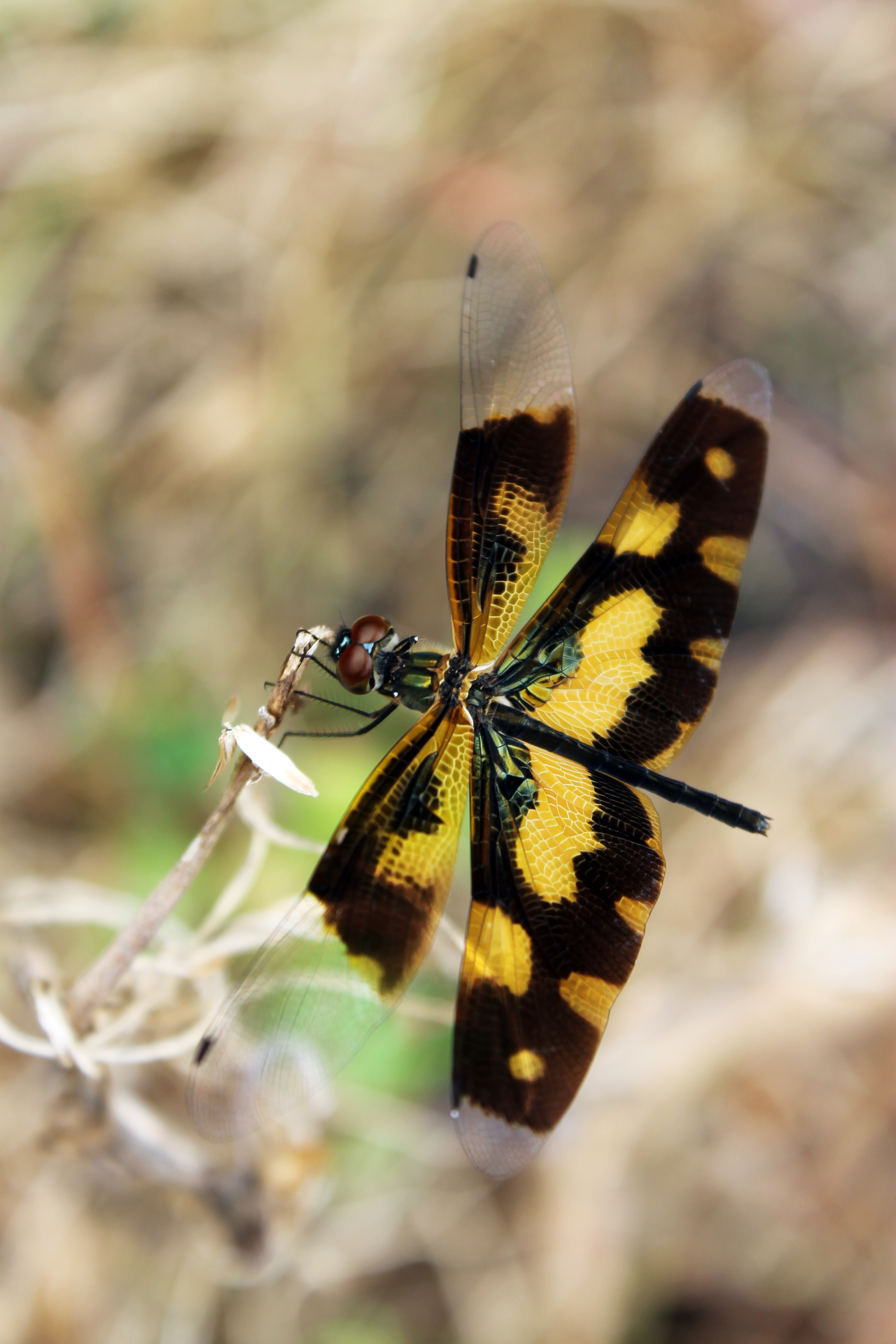
Field guides and online  descriptions of this dragonfly dub her the ‘Common Picture Wing’. I ask you to take a good look at her delicate wings – the architecture of the joints on the back of her thorax, and the colored patterns of the papery wings that carry her so gracefully through the air. I ask you to ask yourself – why is it called the Common Picture Wing?


Walton Ford, Come To India!

In my last post, I walked along a border–the one separating the land of nostalgia from the land of meaning–and am still not sure which side of the border I was on.  One person’s memory lane is full of madeleines, and another’s may have no particular there there (so be it, glass houses and all).  The link to Brother Blue is the puzzle.  Can anyone, out of context, realize who that man was and what he accomplished from that little bit of Lear jive?  I do not know.  But recycling is an ethos that India is instilling, so I go with it.

The thread linking Thoreau and Brother Blue for me the other day kept un-spooling, and led me back to my favorite living artist:

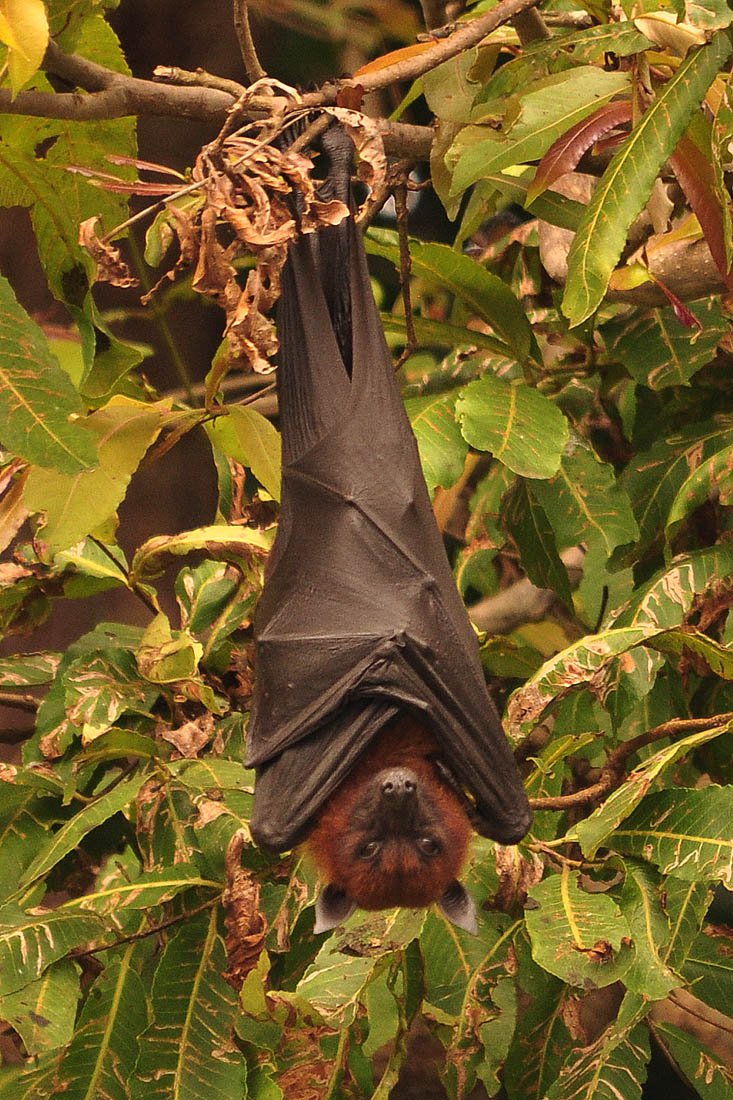
Non-Bird of the Day: Flying Fox (Thekkady, India)

They come out before dawn, and again at dusk, and it is easy to confuse them with birds–eagle-sized at that– when they circle around Cardamom County.  Flying foxes are good neighbors, hanging around the bamboo stand across the way from us in the Periyar Reserve during the day; munching on insects during the darker hours.

Oxygen & Odonata

300 million years ago, the world was a very different place. Besides the severe geological changes and the sudden appearance of invertebrates, the Paleozoic Era was host to a severe change in atmospheric composition – namely the extreme increase of oxygen levels, and a drastic drop of carbon dioxide. The atmosphere, changing so radically, caused one or two ice ages, a few extinctions, and a natural development of what we today would consider very strange creatures indeed.


Scientists today, curious about (or perhaps inspired by) the fossils of dragonflies with 2-foot wingspans that zipped and zoomed (or whooshed, rather) through the Paleozoic skies, have been conducting experiments on the effects of atmospheric oxygen levels on short-term adaptation in a variety of insects.  In late 2010, results were produced – on a large scale.

Live an Example

Lullwater at Emory

Do you respect your friends? Unless you have very strange relationships, I’m guessing you can say that your friends’ ideals and opinions are meaningful to you. If you know that a buddy doesn’t enjoy country music, you’re probably not going to blast Keith Urban when he’s around. If your best friend can’t stand whistling, maybe you’ll refrain from providing your most rousing rendition of the Star Wars theme song. If she’s not so into politics, perhaps that’s not the person you’ll run to and inform of Glenn Beck’s latest revelation.

The point is, what matters to your friends usually matters to you, and vice versa. If you’re mindful of this Continue reading