The Other Side

When I was 9 my family relocated from Upstate New York to Orlando, Florida, an odd hodgepodge of concrete and drywall that is less a city and more a network, an expanse of strip malls and toll roads stretching for miles with no discernible locus—i.e. a place without place, a harbinger of the New America—both model for and copycat of other American NonCities. At the heart of this network, not in place but in time, is Walt Disney World, Orlando’s reason-to-be and essence, which lies below and hangs around the accretions and habits of Orlando-residents like a living ancestor. As Orlando’s originary purpose, it touches its inhabitants even if they try to avoid it; it shapes you, no matter how far away from it you stand.

I say this not only because I enjoy holding forth on the metaphysics of place (I do), or because I want to suggest I’m some sort of DisneyChild (I don’t), but because a curious circumstance surrounded our ‘Cloud Walk’ on Sunday morning that caused me to think about my relationship to where I grew up, and how these ‘living ancestors’ affect how we experience our environments. Continue reading

Meeting with the Forest Department

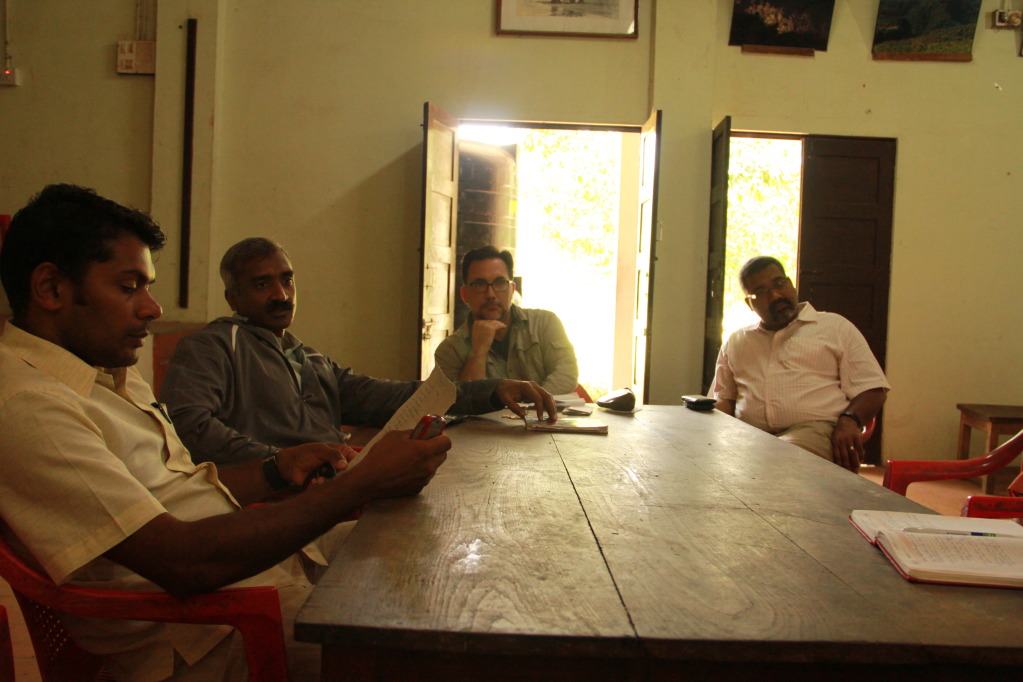
Developments in our community development initiative haven’t come easily for the past two weeks in Kumily. With our primary Forestry Dept. contact away from his office for a little more than a week, and given that the time table agreed up at our last meeting (June 26th) allowed for a ten day period during which our ‘talent scout,’ as it were, would make contact with potential producers, we at the resort were, in the meantime, left playing a bit of a waiting game. But with the distraction of staff tour revelry behind us and anticipation for the arrival of our newest intern, Sung, at a high, our idle and indolent interlude came to a happy end today when we met with several FD officials and functionaries, some of whom none of us had met previously, including a ‘Forest Guard’ (a title I hope to earn someday) who runs the protection agency focused on the tribal community.

For while we in Thekkady had been sitting on our proverbial hands, Crist and Amie had been actively ascertaining details from our sister bag-making enterprise in Kochin. Continue reading

Spider Monkey Threats

On one of our walks through the forest, Pierre and I found another green-backed spider (see my previous post) that spewed some white droplets at us. Unless we had an unusual double coincidence of interrupting arachnid bowel movements, I now believe that the spiders meant to deter us with the liquid. Whether it was excrement, poison, or liquid silk material remains to be seen.

Later on the trail we reached the main road and were about to pass under a group of huge mango trees when several mangoes thumped loudly onto the ground in front of us after the branches crashed around a bit. We looked warily into the trees to see a group of fleeing spider monkeys, which are very timid and don’t enjoy being anywhere near humans. Through the camera’s zoom, I was able to spot a mother with her baby hanging on her back. She was bouncing up and down, shaking a branch to startle us away. Once her mate arrived next to her, she left, and about half a dozen other monkeys followed her, causing a further bombardment of unripe (hard and dangerous) mangoes to hit the road at our feet.

The hazardous fruit attracts all three Morgan’s Rock species of monkey (howler, white-faced, spider), so it is a good place to watch them enjoy the mangoes while making sure to not stand too close to the trees. With the addition of the muñeco trees that I wrote about in another post, the roads should be great places to spot the tree-bound mammals.

Entomotography

We had been on bamboo rafts in the Periyar Lake most of the morning, and had gone on shore briefly to visit the night ranger’s encampment.  I had been there several times previously, but today was different. We witnessed one of the greatest wonders of the natural world—a mother elephant and her calf (because of a mother’s aggressively defensive instincts, it is rare for humans to see this combo in the forest).  It was too spectacular for words, and even photos are worth just a few thousand words—not nearly as much as it felt worth while there.

By midday we were back on the water, and the rush of seeing such a huge and intelligent creature bonding with its offspring was lingering, but passing. We landed for a bit of respite. As the rest of the group ate lunch and talked, I decided to renew that rush with a change of perspective: from charismatic megafauna to wily winged minifauna. I crouched on the parched rocks, squatted and staring at my camera’s viewfinder. I had been stalking my tiny target along the shore for almost 30 minutes, and had enough mud, pebbles, grass and dung on my knees to open eyes at a detergent expo.

My eyes strained to focus on the strangely camouflaged creatures I was hunting. Scanning the motionless terrain of the shoreline, I saw no movement except for the gentlest rippling of grass and the lake’s surface with the breeze. I got impatient and decided to draw them out of hiding. It wouldn’t take much – I lifted my foot and took a step forward, and there!

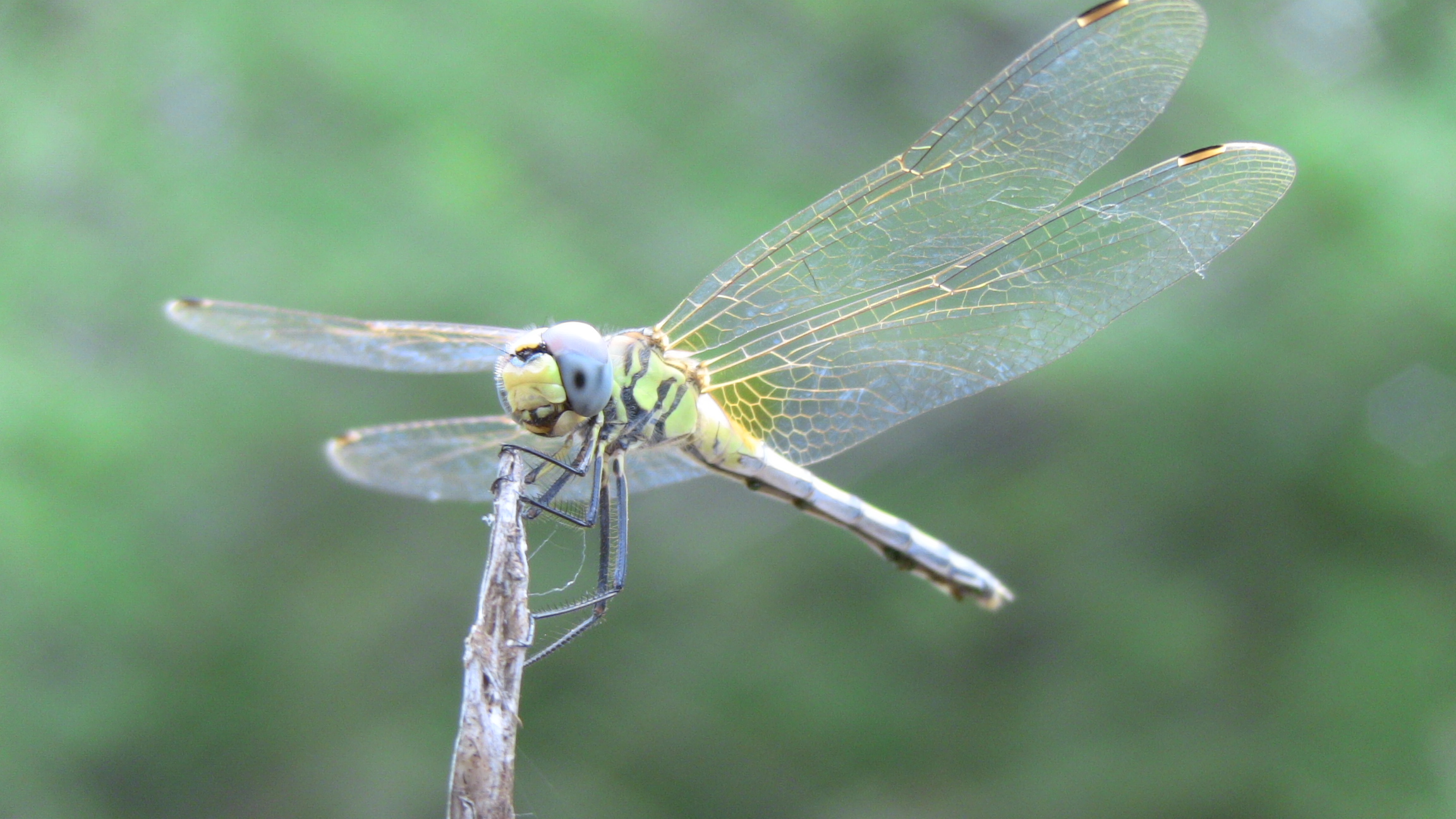
A bright blue-green dragonfly that had been surreptitiously clinging to a twig alighted, and began to zoom around. Continue reading

Scuba Fishing

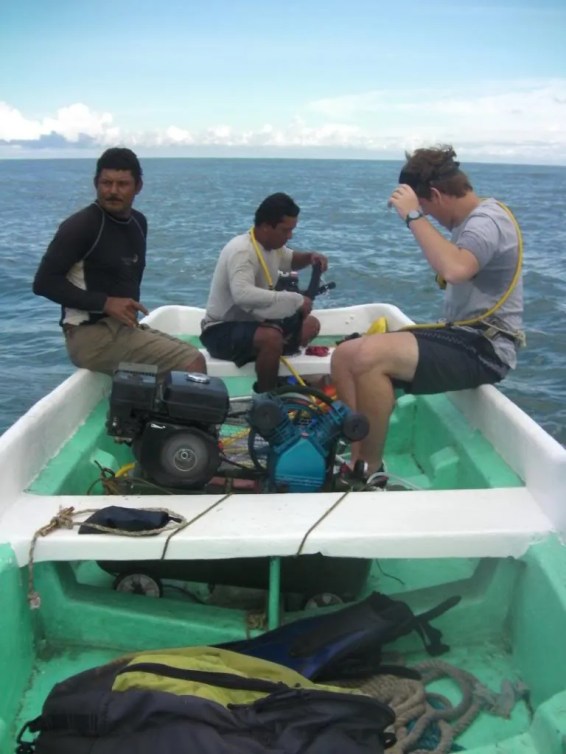
This morning Pierre and I got up early to go on a scuba fishing expedition with Jacinto and Juan. Using a kayak to cross the wide and deep channel the sea was cutting into the estuary, we headed to a spot where the waves were a bit calmer, and the fishermen came in a small motorboat to take us over to the Eco I. Unfortunately, it turned out that the smaller boat was to be our vessel for the morning, since the Eco I was out of fuel. A green air compressor machine sat in the middle of the boat, and the long air hose sat coiled at the bow with a couple pairs of flippers and snorkel sets.

Pierre and I installed ourselves at the stern and started putting on sunscreen. “The water visibility is a bit low today, but we will try to find some lobsters,” said Jacinto in Spanish. Juan drove the boat past Morgan’s Rock and close to the rocks on the next cove over. Then he handed the tiller to Jacinto and started pulling on some flippers, signaling for me to do the same. The two fishermen showed me how to operate the air regulator, which was the same sort found on a tank scuba set, and they helped tie the hose so that it fell over my shoulder and across my back.

Continue reading

Arthropods and Sunsets

While walking on a trail today, Pierre and I came across a spider with a lime green back. As we approached it, it bared its behind at in our direction and dripped forth some dangerous-looking white liquid. They were very small droplets that didn’t spray towards us, but merely fell down to the dirt below the web. We paused to photograph this spider, keeping our distance in case what we had witnessed was just the priming of a more serious discharge mechanism, and then went on our way.

As I thought back on this spider I realize that we may have simply walked in on its moment of defecation, and incorrectly interpreted the droplets of excrement as an attack. A quick Ecosia search showed me that spiders’ poo is often white liquid that leaves a chalky residue, so I am starting to believe that what Pierre and I saw was not a direct assault but perhaps still a method of self-defense in some cases.

What we watched later in the day, however, was a clear attack. A millipede (which I incorrectly identify as a centipede in the short video I took) was beset upon by a fast-moving bug that darted at its writhing, myriapodous prey without mercy. Unfortunately, Pierre and I were on the way to Sunset Hill (see my previous post) so we had to leave at the risk of missing what we hoped would be a great view of the sunset.

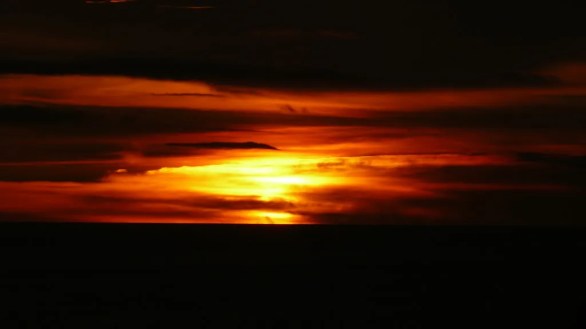
When we got to the top of the hill, we were rewarded with the best sunset I’ve seen from the point so far out of the three times I’ve been up there. I think the better sunsets must be during the dry season, when there aren’t quite as many clouds covering the sun as it descends over the ocean horizon.

Central American Pygmy Owl

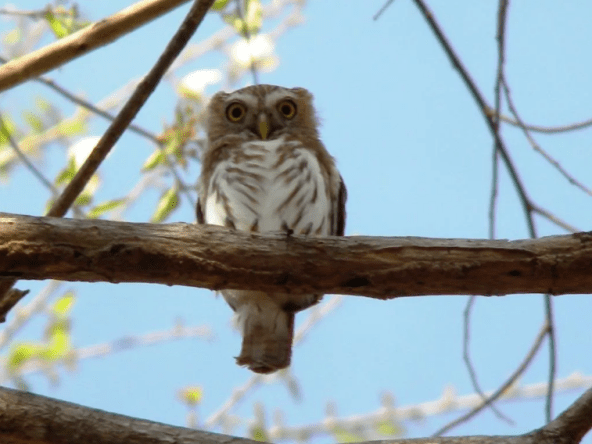
Today Harvey and I went on a nature walk with a couple guests from California. Interested in seeing birds, they had brought a pair of binoculars along, which we soon had an opportunity to use. We were walking along what seemed a deserted trail when Harvey suddenly motioned for us to stop and pointed up into the trees on our left. We saw nothing, and Harvey had to lead us along the branches with his finger to show the little fist-sized lump of white and light brown that was a pygmy owl. With the help of the binoculars and Harvey’s guidebook, we were able to identify it as a Central American pygmy owl. Without the binoculars it would have been impossible to distinguish between the three or four species of owl, since they are all roughly the same color and only differ in markings and patterns on their chest, head, and tail feathers. Although I couldn’t get a picture since it was too far away (still no zoom on the camera), here are some photos that Bismar took last summer, the season when trees’ foliage is much less dense and in some cases nonexistent.

It is winter (the rainy season) here now, and therefore very impressive that Harvey was able to spot the tiny bird through all the leaves without the help of a flashlight at night, which is when one usually sees the owls.

Damn Dams and Macaque

A couple of days ago, I hopped on a motorcycle (my first in 21 years!) helmed by Saleem, and headed across the border of Kerala into Tamil Nadu. I hadn’t realized until this trip just how proximate the neighboring state was, and that I had actually walked into it several times without realizing I had done so.

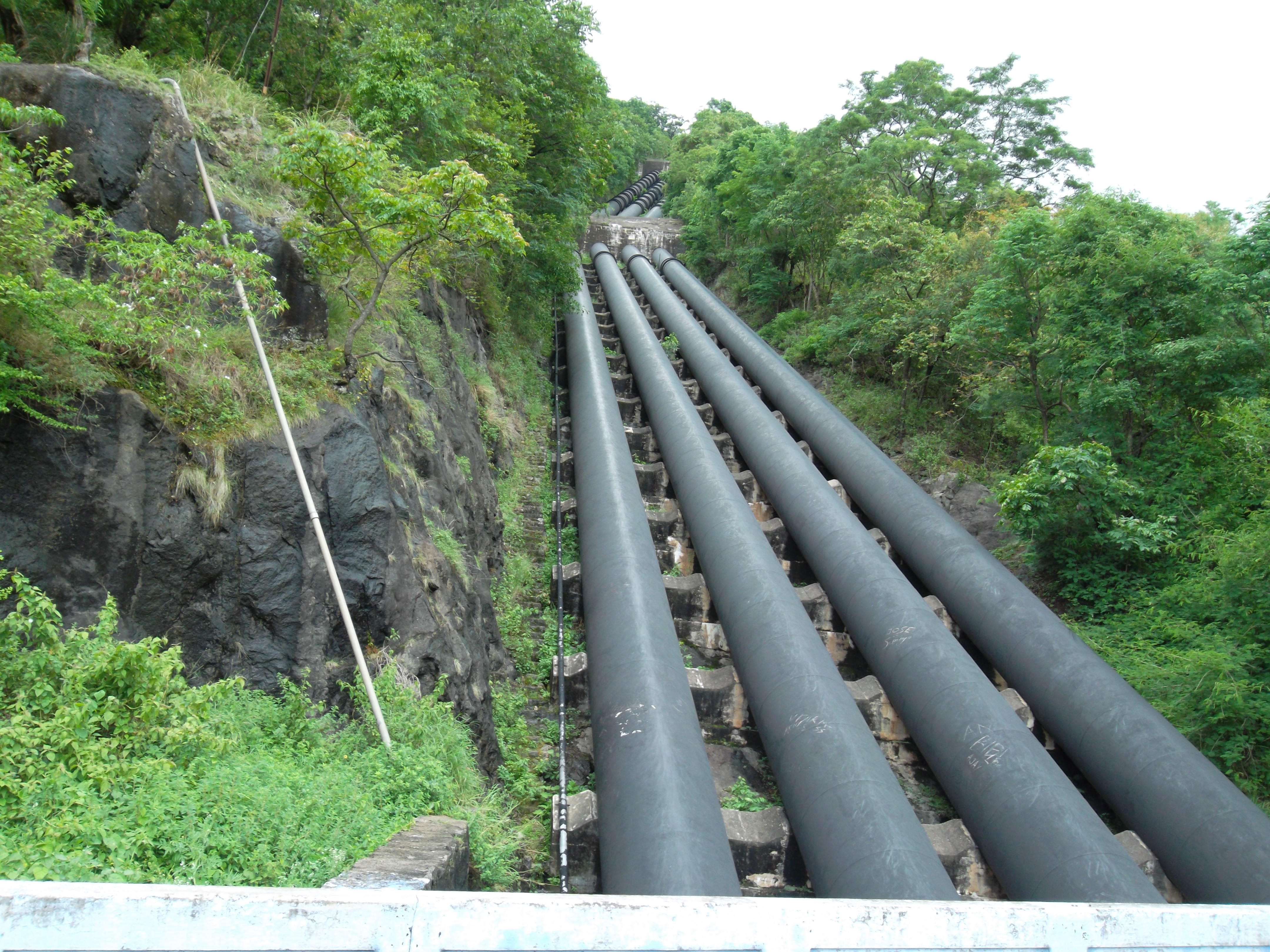
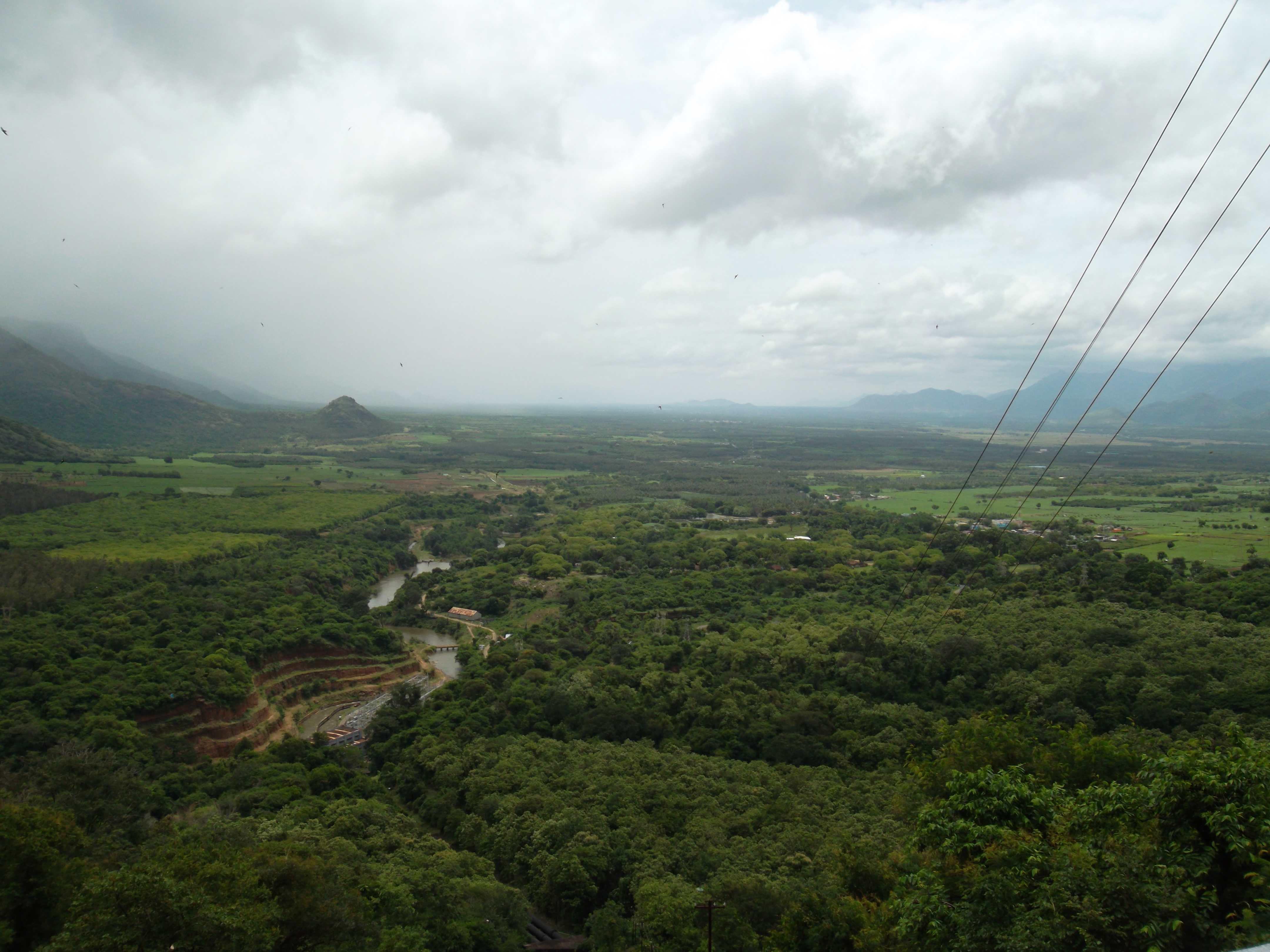
Saleem had plans to take me through the measure of forest that extends beyond Kerala to the penstock pipes that carry water from the Periyar River down to Tamil Nadu and a hydroelectric plant. These pipes are an attraction unto themselves, and looking over the slope down which they run provides a scenic view of the lush farmland of this TN valley.

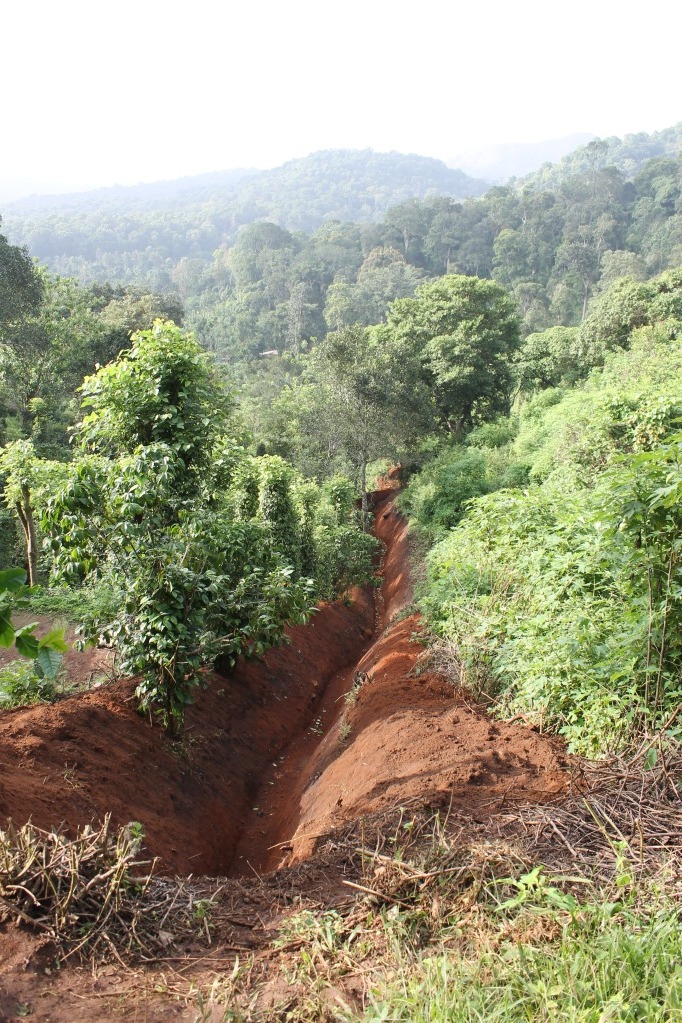
At that time, I didn’t know– and Saleem only hinted at– how fraught with political tension the very spot we were standing is (and has been) to the Tamilians and Keralans. The provenance of this conflict is a century-old treaty between the Princely State of Travancore (which is now Kerala) and the Secretary of State for India, representing what is now Tamil Nadu. Essentially, this treaty gave to Tamil Nadu, an otherwise arid area, the right to use water from the Periyar River for irrigation– for 999 years. This agreement, for all intents and purposes, created the Tamil Nadu you see in the picture above. Continue reading

A Kipling Character at Morgan’s Rock?

It happened today.

I was on the Campesino Breakfast Tour with guests. We drove through the finca till we got to the Aguacate Farm, where the chickens, ducks, and cows are kept. Don Juan taught us how to milk a cow; the lactating mother was mooing with discomfort, eager to be relieved of her burden. Sitting on a one-legged stool that was tied to his waist, Don Juan expertly sent streams of white into a gray pail, and the guests crouched to do the same with early morning alacrity.

We filled up the pail, thanked Don Juan, and made our way to the chicken barn. Through the dim light and faintly unpleasant smell, about 180 chickens skittered about, clucking indignantly at the disturbance. A rake and shovel leaned against the wall, a wooden stick with little rawhide strings hung from a column, and a leather belt was wound around a rafter in the corner. The man who takes care of the chickens took Harvey aside and whispered something in his ear, then proceeded to lead the guests through the barn to show them the coops and water-troughs. While the guests were distracted, Harvey approached me.

And then it happened.

Continue reading

Finca Work

I had more butterfly luck this morning when, exiting the trail from my lodgings onto a dirt road, I spotted a Hamadyas glauconome glauconome, commonly known as the Guatemalan or Glaucous Cracker, on a tree nearby. Although I didn’t know it at the time, the males of this species can create a cracking sound while flying. I had heard this sound from flying insects several times as I biked along the road during my stay here, but had never been able to identify the source. The specimen photographed here was a female, however, because once I got close enough to take the shot, it flew away silently. After breakfast, I was crossing the long suspension bridge that leads to the bungalows and one of the trees next to the railing, whose canopy was roughly level with the bridge, had flowers that had attracted another butterfly. Despite the length of time that the butterfly stayed at the flowers to collect nectar, I have not been able to identify it from the various photos I took, because it never opened its wings to show the markings that would give it away in a guidebook.

However, one animal I have been able to identify is a little lizard that I found while walking a trail. More specifically of the family Polychrotidae, or an anole lizard, the species I was lucky enough to encounter was the indigo-throated anole, Anolis sericeus. I have learned that all anoles have at least some ability to change color, they all have dewlaps, which are cartilaginous frills below the neck, and, like many lizard families, they can relieve themselves of their tail if sufficiently threatened. Fortunately my presence was only frightening enough for the anole to reveal its beautiful frill and, as I approached for a close-up, run off.

When I was done with my little hike, I headed to the finca, where I was to see the recently planted saplings and the cleaning of last year’s crop area. Continue reading

Sunset Hill

The right arm of the Ocotal cove, the hill directly visible from the restaurant and beach, is just as important a landmark as Morgan’s Rock itself, since it is actually part of the property and is not hidden from view at certain angles. When one looks out at the ocean from the ecolodge, one sees this hill first; the rocks at its base withstand the constant onslaught of thundering waves, and the steep rocky slope is almost completely covered in verdure.

The prominence might be called Sunset Hill, due to its function as the lookout point for guests who wish to watch the sun descend into the ocean from a high vantage point. From most locations on the property, viewing a full sunset is impossible since the Hill is in the way.

I left the ecolodge in the morning today to climb Sunset Hill and see what the trail was like without the dim lighting that would accompany a sunset. Before approaching the hill, I found two low-hanging coconuts and cut them with some stem as handles—I knew it would be a hot and long climb and wanted some refreshment at the top. Despite the additional weight, the climb was not too difficult, but I was left sweating when I reached the first stop: a bench set in the trough of the two wave-like hills with a view of the whole cove and ecolodge. Setting the larger coconut aside, I grabbed the other and used my pocket-knife (Wenger Swiss Army, Patagonian Expedition Race Edition) to cut a channel through to the small orb holding the water. The can-opener proved the perfect tool for this job, since the blade was short enough to present little danger to my fingers in case of a mishap, and I could also apply significant pressure to leverage chunks of husk out of the way without fears of bending or breaking the metal.

After a few minutes I had reached my goal. This fact was drawn to my attention mostly by the popping sound and burst of water that sprayed up to soak my face. Setting my dripping glasses aside (I only wear my old pair while hiking, in preparation for these unforeseeable events) to dry, I widened the hole slightly and titled the large vessel back to drink the refreshing water.

I am used to drinking coconut water from the fruit itself, but in a very different fashion: street-vendors in Central America and India use a machete to hack the top off the coconut and stick a straw in the near-perfect circle they’ve created. Using my tiny tool to pry open the fruit’s tough skin and press my lips to it like a certain Tom Hanks character made me feel much less touristy than I do when I buy a street-coconut. After all, I had not only selected the fruit off the tree myself, but had also carried it up a significant slope and used its water to cool off before continuing the climb to the Sunset Summit.

To reach the summit, one merely has to climb the stairs set into the hill. This is not a great challenge, but in what was now a midday heat, the stairs were unwelcome. However, compared to the tall limestone steps of Tikal temples, or the uneven sandstone tomb-paths of Petra, these simple wooden planks set into the earth were nothing—a mere ten-minute task, if that. When I completed my ascent, it was instantly clear why the hill has been chosen as a sunset lookout. The height of the hill, along with its projection from the mainland by roughly a kilometer, presents a worthy view even without the sun setting over the water. A little lizard, which I later identified as a rose-bellied spiny lizard, was resting in the full sun that fell on the top of a railing post.

I enjoyed my second coconut in a cooler location: the middle of the stairs, where the overhanging branches of bushes and trees create a tunnel blocking the sun. A little more cautious, I avoided getting sprayed, and slowly consumed my drink before descending the hill and returning to the beach. On my way there, I saw a pair of mating butterflies that I believe to be Papilio thoas nealces, and once I got to the beach I found a Draedula phaetusa. As I walked from the beach to the road, a Microtia elva fluttered along the path and rested a while on a nearby bush. It was a lucky day for butterflies, and I look forward to photographing and identifying more of them, especially once I have a camera that can zoom!
My Search for a Boa Constrictor

Growing up in Costa Rica, I was always interested in snakes. Finding the bones of a tiny garden snake and then a group of baby coral snakes in my back yard generated more curiosity than fear, and being able to hold a baby boa constrictor that my friend had found in his yard was an amazing experience.

Since then, I have read about Burmese pythons invading Florida and looked for opportunities to photograph snakes at every opportunity. Last summer, in Kerala, I was lucky enough to find a green vine snake while hiking, but what I’d really like to find is a boa constrictor, perhaps due to my childhood experiences, or because the species is often held in captivity as pets or zoo attractions and I want to find one free in the wild.

This morning I went on a trail hike with Harvey, and we saw a group of howler monkeys, several birds, and a couple variegated squirrels. But it was towards the end of our excursion that we found a creature worth seeing that wasn’t warm-blooded. As we walked on a dirt road between two rows of tall trees, something large rustled loudly in front of us. On the back of the blur twisting through the grass on the side of the road, I thought I saw markings I recognized. Maybe this was a young boa constrictor! I quickly cut left while pulling out my camera and approached the still-moving snake. It was already climbing a tree, and I managed to take a few shots once it was up in the branches. I could easily see that it was yellow mixed with a much darker color, maybe green or black, but it was quickly clear that what we were looking at wasn’t a boa constrictor, since the yellow was so bright and its head wasn’t arrow-shaped. When we got back to the lodge, Harvey and I carefully reviewed the few pictures and attempted to identify the snake with a few guidebooks. Based on the colors, size, and where we found it, we decided it was a tiger rat snake. Despite our fortune at seeing such a large snake in the first place, I couldn’t help wishing it had been a boa.

Better luck next time.

But my search for the boa constrictor is far from over. Every time I hike I peer into the undergrowth or crane my neck to scour nearby branches. Perhaps I will have more chances at night, since the species hunts nocturnally. I plan on going on a few night walks to find the elusive strangler.

Some details on the tiger rat snake: This black and yellow species eats small mammals, frogs, and birds. It lives in trees or open areas at environmental edges, which is where we found it: at the edge of a dirt road not far from the mangroves and right next to a plot of trees planted by MR guests. When it sensed us, it slid through the grass and up a tree, giving evidence for the guidebook referring to the species as an “astonishingly agile climber,” as well as the Mexican common name voladora, or flyer. According to Twan Leenders, the Dutch herpetologist responsible for “A Guide to Amphibians and Reptiles of Costa Rica,” the tiger rat snake, or Spilotes pullatus, can occasionally “stand their ground when approached closely and employ an impressive threat display. The neck and the front of the body are compressed and sometimes lifted off the ground; the tail tip is rattled simultaneously, creating an audible buzz.” Although this behavior would have presented an awesome photograph opportunity, I’m glad the one we found didn’t feel threatened enough to defend itself aggressively.

The Estuary Part One

The estuary waters are always flat and calm, with practically no current apart from what the wind kicks up, and the OceanKayaks’ sensitivity to motion allows you to maneuver very adeptly around mangrove trees or floating logs. All the kayaks are doubles, but I have only gone out alone in the back, and later the middle, seats, joined either by Harvey in another kayak or by the winged microfauna (who tag along even when Harvey is keeping me company).

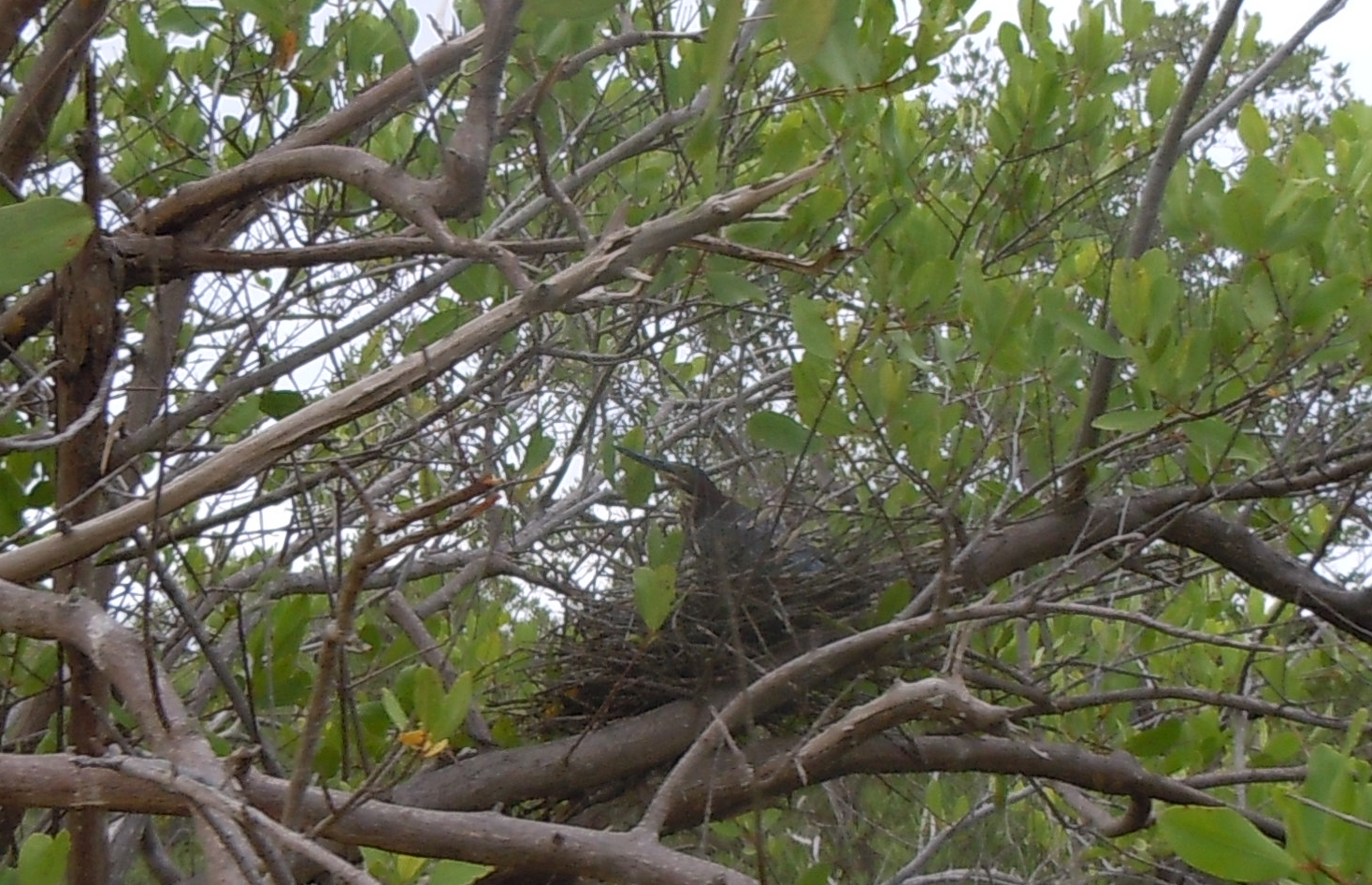
The estuary runs for over a kilometer and a half in a winding path, but there is also a larger open area with mangrove trees dotted inside it. The trees in this wide space are lower and farther apart, allowing you to get up close to the tree and check out the birds’ nests within. A couple times I have been able to see birds sitting in the nests up close, and it is fun to test how slowly you can approach them without scaring them away.

Paddling the estuary is a great activity because you can choose your pace very easily. If you want to take two strokes and then slowly glide along for a minute while looking for birds in the trees, then you can do so, as long as you make sure not to drift too far to one side and bump into a mangrove. If it is already getting dark and the mosquitoes are taking advantage of this fact, then you can see how much of a wake you can leave as you speed towards the beach and watch fish jump out of the water to get out of your way. I generally use the slow and photograph-friendly method on the way in to the estuary, where I can get shots of caterpillars or woodpeckers, and reserve the faster cardio-workout for the way back. I have been thinking about taking a kayak out onto the cove, where the waters seem pretty calm once you get past the first couple waves. I’ve never been on a sit-on-top kayak in the ocean before, so I’ll let you know how that goes.

First Two Days at Morgan’s Rock

Day 1: After dinner, the rain had stopped and it was now pitch black outside, but the wind coming off the ocean made it feel cooler. The refreshing breeze helped me recollect the day’s highlights: Over a million native hardwood trees have been planted here since my father, my brother and I had been camping on this property a decade earlier; some of the guys I remember from then are now working as naturalist guides or kitchen staff; the organic farm is much more extensive, and hundreds of guests have come and gone from their bungalows.

The mind and breeze’s sweeps finished, and now reading, I heard crunching from the corner. At first I didn’t quite register it, and continued reading. When it continued, the interruption made me curious. I slowly stood and leaned around the large wooden column that was blocking my view of the corner in question.

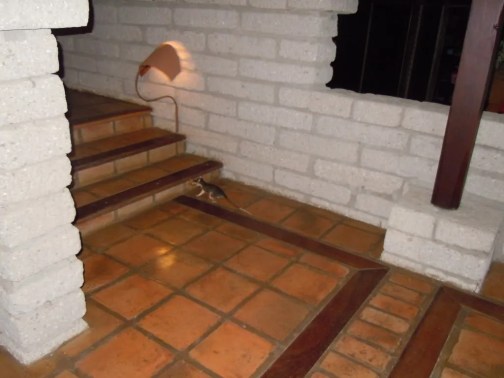
The adolescent opossum and I both froze. It was about the size of a squirrel, and it had a Halloween crab dangling from its mouth. When it looked away I decided that it either couldn’t see me very well or didn’t see me as a threat, so I slowly inched my hand towards the camera that lay on the table up against my knees. Silently cursing the camera’s malfunctions that prevented me from being able to change any settings, including zoom, I turned and took a snapshot. The flash didn’t startle it, so testing my luck further I very slowly stepped over the table and around the column. About six feet away the opossum snapped out of the trance, and ran off with the crab. By chance it ran in a direction where it would have to climb a few steps, slowing it just enough to allow me a last photo as it hurried off.

small possum

Day 2: As a slight drizzle fell through the trees, we sat on wooden benches fixed in the back of a pickup truck on the way to the finca from the lodge. The finca is essentially a farm, of trees and livestock, that is connected to Morgan’s Rock and provides much of its food and maintenance services. After a few minutes it started raining hard, but neither I nor the two guests, a man and woman from Atlanta, minded getting wet after having endured the heat of the past couple days. Bismar, our guide, handed me his radio and cell phone to pass through the rear window to our driver, and I gave up my borrowed camera as well. Just as one of the guests was pulling on her travel poncho, which looked like a translucent red trash bag, Bismar called for a stop. Pointing, he said simply, “sloth,” and we looked up to watch a drenched and sorry-looking two-toed sloth inch its way from one branch to another, fur plastered to its body and spiking up on its head. “They sleep 14 hours a day,” said Bismar, “and only poop once a week.” I added that when they did relieve themselves, they had to do so on the ground. “If I had to climb down my tree every time, I’d probably only do it once a week too,” joked the guest to his wife. A few minutes later we reached the reforestation site, and met the man in charge of equestrian activity, Don Jesus, and started our horseback ride on the road towards the trail. Despite the rain, the horses easily climbed the slope up to the lookout point at the top of the wooded hill.

ocean view