Invasive Python Hunting Season

3000 (8)

A Florida Wildlife Commission employee captures a Burmese python during the kickoff event for the Florida Python Challenge in Sunrise, Florida, on 10 January. Photograph: Joe Cavaretta/AP

We first started paying attention to invasive species here. Since then, every year, we pay more and more attention, especially to the pythons in the Everglades. It is that time of year:

Florida hunters capture more than 80 giant snakes in Python Bowl

Annual challenge encourages the public to catch as many of the invasive giant snakes that decimate native wildlife as possible

Most visitors to the mosquito-infested swamps of the Florida Everglades are happy to leave again quickly: a half-hour airboat ride and photograph of a basking alligator is usually enough to satisfy the curiosity of any tourist keen to return to the theme parks and beaches – or sports events – of the sunshine state’s more traditional attractions. Continue reading
Citizen Science & Northern Lights

We believe citizen science, in all its forms, is one of the latest greatest innovations of mankind, and here is one more example:

A New Form Of Northern Lights Discovered In Finland – By Amateur Sky Watchers

People in northern climes have long gazed at the wonder that is the aurora borealis: the northern lights.

Those celestial streaks of light and color are often seen on clear nights in Finland, where they’re so admired that a Finnish-language Facebook group dedicated to finding and photographing them has more than 11,000 members.

There aurora aficionados gather to discuss subjects like space weather forecasts and the best equipment to capture the northern lights. Continue reading

Weeds Are Not Automatically Enemies

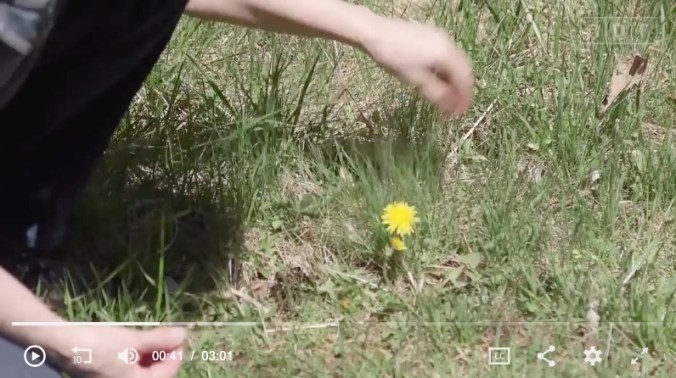
Dandelion

Credit: NPR

We missed this when it was first posted, but on this topic never too late to share:

VIDEO: Dandelions Aren’t Just Weeds. You Can Fry Them, Too

Some may think of dandelions as just unwanted weeds, but expert forager and nutritionist Debbie Naha says “a weed is just a plant growing where you don’t want it to.”

Naha loves to collect and eat dandelions when they bloom in the spring and again in early fall, when the days begin to shorten.

Some may also think of dandelions as those white puffballs whose seeds you can blow away like a candle on a birthday cake. The puffball is also considered a dandelion — it’s what the yellow flower matures into after a few days. But these aren’t especially good to eat. Continue reading

Listen To Workers, Especially On This Topic

3600

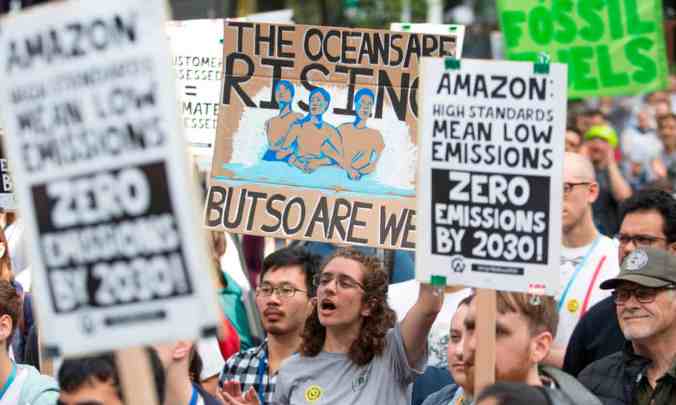
Amazon workers lead a walk out to demand that leaders take action on climate change in September. Photograph: Jason Redmond/AFP via Getty Images

We hope someone in the upper ranks of Amazon is listening:

Hundreds of workers defy Amazon rules to protest company’s climate failures

Employees ‘needed to stand up for what’s right’ despite policy barring workers from speaking about business

Hundreds of Amazon employees defied corporate policy to publicly criticize the company for failing to meet its “moral responsibility” in the climate crisis.

More than 340 tech workers at Amazon used the hashtag #AMZNSpeakOut in public statements that condemn the company for not taking sufficient action on the climate crisis. Continue reading

Albatrosses Tracking Fishing Vessels

merlin_167922471_f481217a-ad3b-4c91-82b0-06bba600e648-jumbo

Albatrosses tracking fishing vessels found that 28 percent of ships had turned off their equipment, possibly fishing without a license or transferring illegal catches onto cargo vessels. Alexandre Corbeau

Thanks to Katherine Kornei, who we are linking to for the first time, for some great science writing:

They’re Stealthy at Sea, but They Can’t Hide From the Albatross

Researchers outfitted 169 seabirds with radar detectors to pinpoint vessels that had turned off their transponders.

merlin_167922456_2ca15e06-a6b7-4573-bcfd-d4a45c100b7d-jumbo

Researchers tagged an adult wandering albatross. Julien Collet

There’s a lot of ocean out there, and boats engaging in illegal fishing or human trafficking have good reason to hide.

But even the stealthiest vessels — the ones that turn off their transponders — aren’t completely invisible: Albatrosses, outfitted with radar detectors, can spot them, new research has shown. And a lot of ships may be trying to disappear. Roughly a third of vessels in the Southern Indian Ocean were not broadcasting their whereabouts, the bird patrol revealed. Continue reading

Add Global Worming To Your List Of Concerns

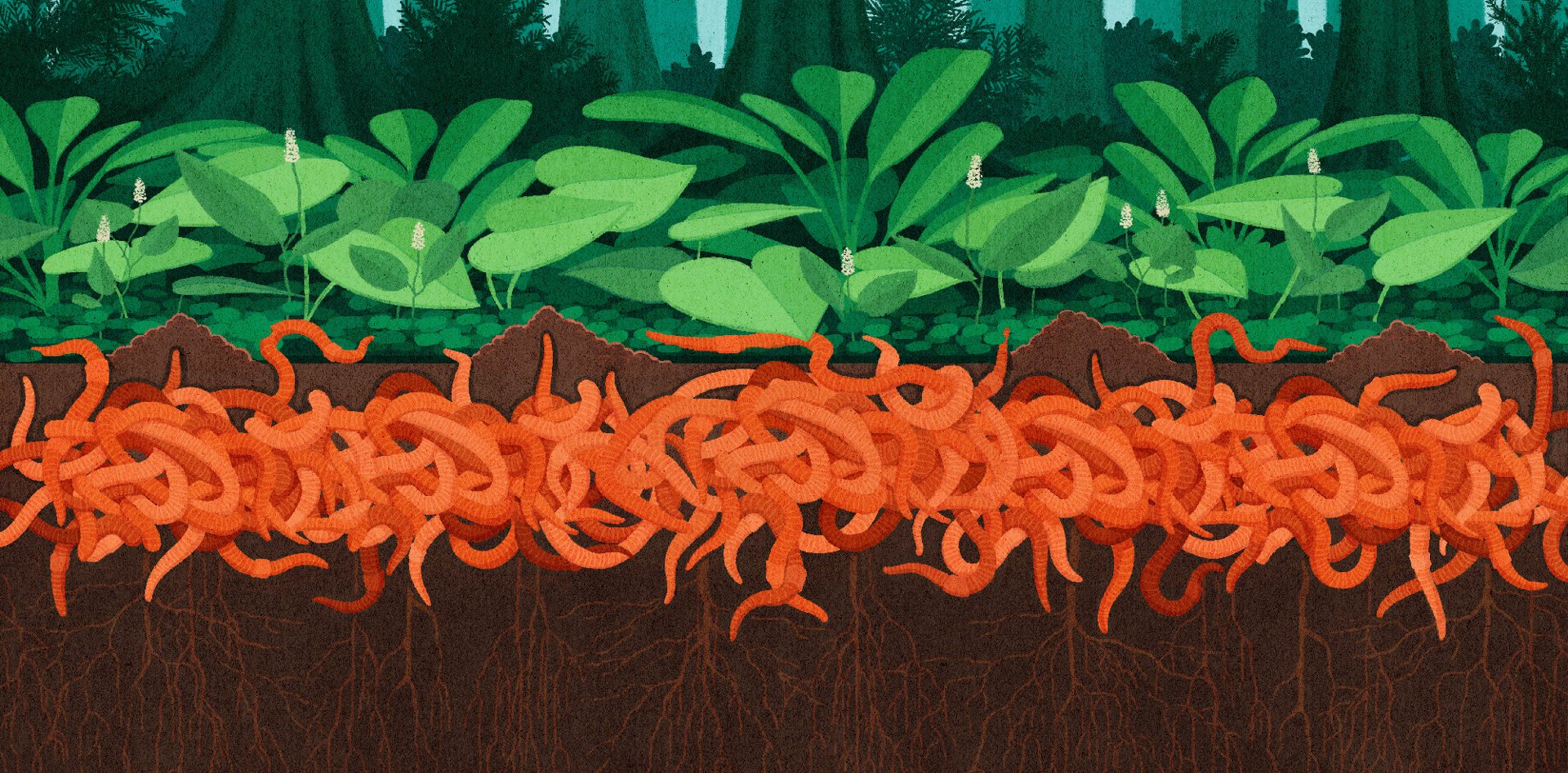
An illustration of a mass of worms beneath a forest.

Myriam Wares

Thanks to Julia Rosen, writing in the Atlantic, I am reading for the second time about worms as a radically different creature than I had assumed for my entire life:

Cancel Earthworms

The “crazy worms” remaking forests aren’t your friendly neighborhood garden worms. Then again, those aren’t so great either.

On a sweltering July day, I follow Annise Dobson down an overgrown path into the heart of Seton Falls Park. It’s a splotch of unruly forest, surrounded by the clamoring streets and cramped rowhouses of the Bronx. Broken glass, food wrappers, and condoms litter the ground. But Dobson, bounding ahead in khaki hiking pants with her blond ponytail swinging, appears unfazed. As I quickly learn, neither trash nor oppressive humidity nor ecological catastrophe can dampen her ample enthusiasm. Continue reading

Alternative Glitter In The Amazon

3271

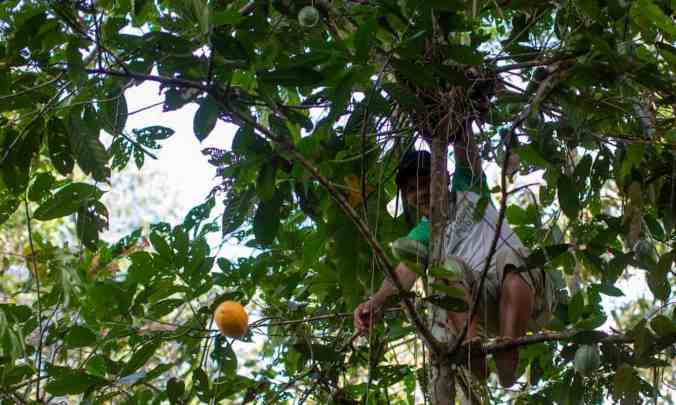
Edmilson Estevão climbs a mature cacao tree to pick the fruit. Photograph: João Laet/The Guardian

In the Authentica shops our featured chocolates are artisanal in terms of production, and both companies are leaders in their own ways–sourcing, packaging, etc.–in terms of sustainability. We are just now tasting chocolates from a third possible supplier, one that farms the cacao organically and is in control of all stages of production and packaging–from farm to bar as they say. When we have their product on our shelves, you will be the first to know, right here. Since our thoughts are already on this topic, special thanks to the Guardian for this story that helps better understand the many ways in which cacao can create a brighter future:

Cacao not gold: ‘chocolate trees’ offer future to Amazon tribes

In Brazil’s largest indigenous reserve thousands of saplings have been planted as an alternative to profits from illegal gold mining

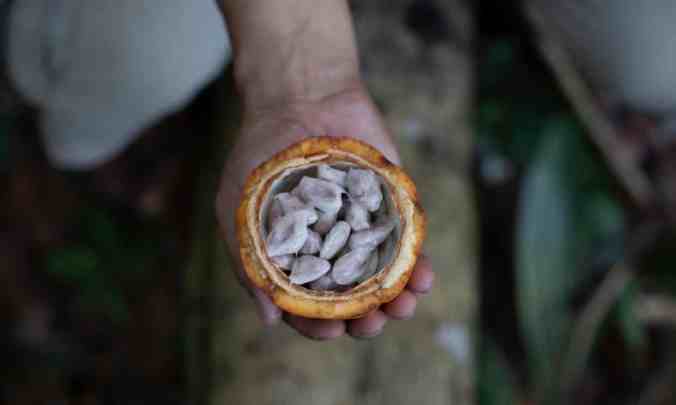
The villagers walk down the grassy landing strip, past the wooden hut housing the health post and into the thick forest, pointing out the seedlings they planted along the way. For these Ye’kwana indigenous men, the skinny saplings, less than a metre high, aren’t just baby cacao trees but green shoots of hope in a land scarred by the violence, pollution and destruction wrought by illegal gold prospecting. That hope is chocolate.

4200

Cacao seeds, which are dried and roasted to make chocolate. Photograph: João Laet/The Guardian

“We want to plant and develop income for the community,” says Júlio Ye’kwana, 39, president of the Ye’kwana people’s Wanasseduume association, which came up with the idea. “And it is not destructive for the forest.” Continue reading

Biodiverse Forests Are Better For So Many Reasons

Stare me, if you can!!

A tiger in Nagarhole National Park, India. Photo © Chethan Ramesh/TNC Photo Contest 2019

Sometimes the headlines for scientific findings seem to state the obvious; but then again, these days nothing is obvious, nor can be taken for granted:

Biodiverse Forests Capture Carbon Better Than Plantations

Plantations and natural forest regeneration are leading strategies for enhancing carbon sequestration and using nature to fight climate change. New science shows that diverse natural forests with a mix of tree species provide more stable and reliable carbon capture than monoculture plantations in the long run.

The Gist

Published in Environmental Research Letters, the study focused on India’s Western Ghats Mountains, one of 36 global biodiversity hotspots. The mountains are home to several wildlife reserves that were once colonial teak and eucalyptus plantations, allowing researchers to compare the carbon sequestration of both long-lived monoculture plantations and neighboring native forest. Continue reading

Ugly, Not Deadly

t8awet

Photo: Vangelis Aragiannis/Alamy

We do not like looking at them. They disrupt many otherwise pristine views of nature, in the most surprising places. And so the thought of them being dangerous to birds would be an easy stretch of the imagination. Thanks to Audubon for the clarification, that their danger to birds is just an act of imagination:

No, 5G Radio Waves Do Not Kill Birds

Here’s the truth behind a Facebook falsehood spreading across the internet.

On the internet, there is often a fine line between a healthy skepticism of new technologies and blatant misinformation. The recent claim that the radio waves from 5G cellular communication towers are causing mass bird die-offs is a perfect example of just how thin that line can be—and how quickly falsehoods can spread across Facebook, Twitter, YouTube, and even in the comments of Audubon magazine’s stories.

The origin of this claim is as head-spinning as it is instructive, so let’s untangle the knot: Does 5G really kill birds, and if not, why are so many people shouting about it online? Continue reading

Perils of Posing

200127_r35394

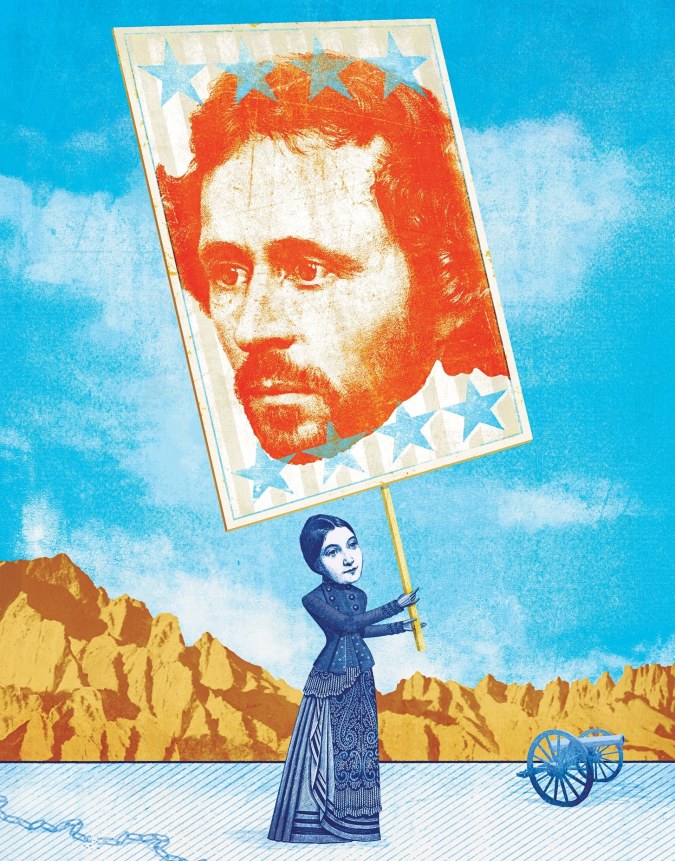
The couple cynically stage-managed their Western exploits for propaganda value.
Illustration by Christian Northeast. Source images from Chronicle / Alamy (woman); Bettmann / Getty (man)

Adam Gopnik’s book review illustrates the roots of today’s Instagram culture, and the perils of posing:

Pioneers of American Publicity

How John and Jessie Frémont explored the frontiers of legend-making.

Legendary development can happen with astonishing speed after a life is past. Gore Vidal, in his 1992 novel, “Live from Golgotha,” made sport of the notion of television coverage of the Crucifixion, as the kind of thing that would happen only in contemporary America, but in truth Jesus’ body was hardly cold, or gone, before the apostle Paul, in a single generation, had made the desert rebbe into a demigod. The special American contribution to legend-making has not been speed so much as absolute simultaneity, with the life and the legend developing together. The American frontier, the Wild West, was not burnished and made epic in memory. It was made epic even as its very brief life was taking place. Buffalo Bill was only twenty-three when dime novels about him began to appear in New York, and early accounts of Billy the Kid’s life read “like a press agent’s yarn,” as one biographer says, because they were. Butch Cassidy and the Sundance Kid were robbing banks and posing for mock formal photographs all at the same time. This national truth remains constant even in our own time. The Apollo missions were genuine acts of daring—and were also, as everyone knew at the time, scripted television programming, with well-wrought lines delivered live. Continue reading