Geckos, A 10th Latitude Lovely

science-take-gecko-sfSpan-v3

Geckos are in most of our favorite places–Kerala, Costa Rica, Ghana–which share some 10th Latitude commonalities in different continents.  They are one tiny example of the commonalities, but one that most of us love, for reasons we cannot begin to explain. So for us this story is a welcome puzzle solver for mysteries we did not know needed explaining, yet enjoy the answers:

SCIENCETAKE

Climbing a Glass Building? Try a Gecko’s Sticky Pads

By JAMES GORMAN

The lizard and, well, Spider-Man, have ideal tools for scaling slippery surfaces. Engineers have copied the gecko’s clingy foot pads.

Ethio-jazz And A Goal For 2015

16ETHIOPIA1-articleInline-v2

Nichole Sobecki for The New York Times. Mulatu Astatke, seen as the father of Ethio-jazz, performs at African Jazz Village, which opened in late 2013.

As we prepare for a scouting trip to Ethiopia for a possible Raxa Collective collaboration with our Ghana colleagues in 2015, we were happy to see this item in the Sunday Travel section of the New York Times last week and just now remember to post this link:

CULTURED TRAVELER

In Ethiopia’s Capital, a Resurgent Jazz Scene

Solar To Take Prime Position On Cost Basis Soon

iHF9w5iJW38M

Thanks to Bloomberg for the surprising news:

While You Were Getting Worked Up Over Oil Prices, This Just Happened to Solar

By Tom Randall

Continue reading →

Migrating Wildlife Needs More Than Merely Parks

According to an in-depth atlas project being undertaken by the Wyoming Migration Initiative, many species of wild ungulates (hoofed mammals) require more land than what is currently encompassed in wilderness reserves. Certain areas that are under private ownership or designated as mixed use government lands are also key to the survival of species like the bighorn sheep (whose migration routes are to the left), mule deer, elk, and others.

Continue reading →

Sea Snakes, Rhinos, And The Close Observation Of Two Tragic Commons

rhino-snake-680x450

Thanks as always to Conservation, and in this case to Jason G. Goldman for the excellent summaries of scientific findings each week. There is not much happy news in this story, but nonetheless it is critical reading because of the detailed observation of the scientists:

Each month, hundreds of squid fishing vessels return to port in Vietnam loaded not just with squid, but also with sea snakes harvested from the Gulf of Thailand. Each month, the seven major snake processing facilities move an average of 6,500 kilograms of sea snakes, which are sold for between $10 and $40 per kilogram, depending on species. By comparison, squid sell for between $7 and $20 per pound, making sea snakes the more lucrative catch.

In the most recent issue of the journal Conservation Biology, Vietnam Academy of Science and Technology researcher Nguyen Van Cao and colleagues argue that the harvest of sea snakes from the Gulf of Thailand is perhaps the world’s largest systematic exploitation of marine reptiles in the world, but it’s one that is woefully ignored or, at best, underscrutinized. Continue reading →

Entrepreneurship In The New India

Recasting India How Entrepreneurship Is Revolutionizing the World's Largest Democracy by Hindol Sengupta Hardcover, 249 pages

I argue that in India you cannot be against the state. That would be madness … But the state should not be running five-star hotels, which it is still doing. – Hindol Sengupta

Thanks to NPR z(USA) for this review of a book that helps those of us working in India get a better grip of what we see around us. It is likewise an invaluable guide for those observing from afar the vibrant new economics of this ancient mix of cultures, all wrapped up in the largest democracy on earth:

It takes almost a month to get permission to start a business in India — a feature of the country’s four-decade experiment with centralized, state-controlled economic planning.

India began moving away from its old policies and opening up to outside investment in the early ’90s — but that movement towards a free market economy has happened in fits and starts, and is far from complete.

Hindol Sengupta is an editor-at-large with Fortune India, the magazine’s India arm, and he’s written a new book about the policy shift: Recasting India. 

When I sat down with him in New Delhi, he told me that India’s greatest economic battles “are being recast, the debate is being reframed” away from the longstanding idea that India’s protracted problems can only be solved by its government.

Continue reading →

An Impromptu Tacacorí CUBs Art Contest

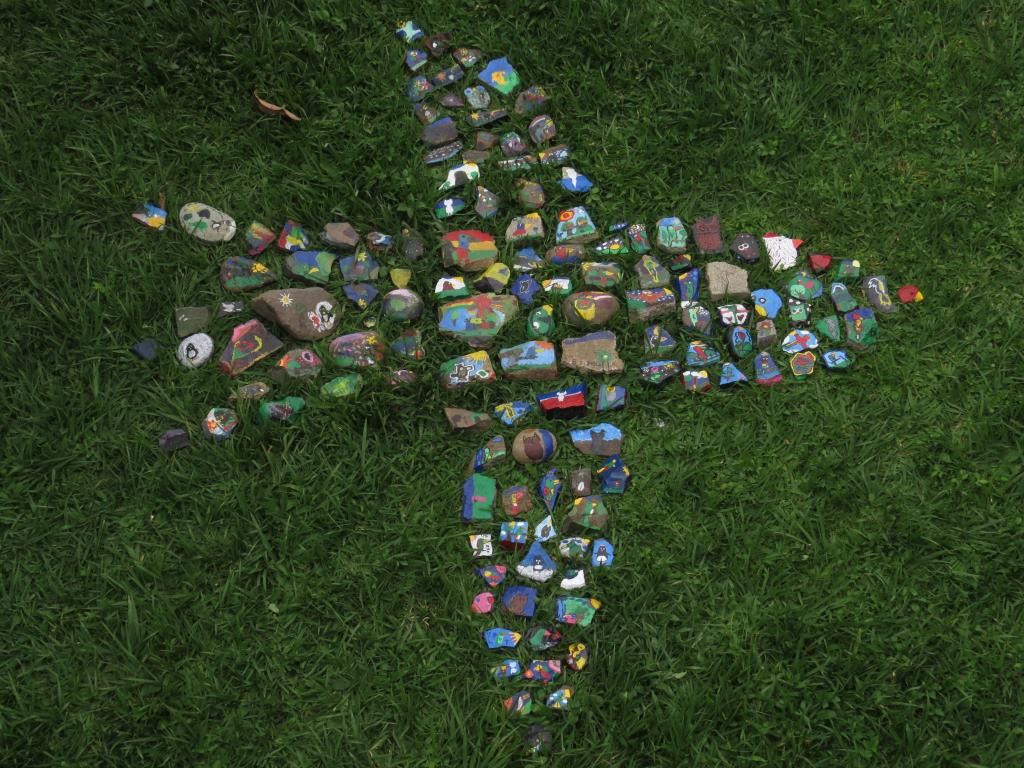
A crudely-formed bird (airplane?) mosaic, photographed from the school roof

Last week, after many delays, I was able to get down to the school in Tacacorí and take photos of all the CUBs rocks that the students had painted. I used my camera (rather than my phone) and a borrowed tripod so that the pictures would be better quality and also more standardized. The result was 146 photos of rocks. I don’t know the exact number of students at the school, but I know that fifth-graders in particular were impatient to take their rocks home before I photographed them, because there were only a handful of specimens left last week.

Unfortunately for those students who didn’t wait until I told them they could  Continue reading →

President of Iceland to Speak at Cornell in T-minus Two Hours

10421239_10152851517090132_6600294053230348364_nIn less than two hours, Ólafur Ragnar Grímsson, the fifth president of Iceland, will deliver a talk at Cornell’s Einaudi Center, as part of the Foreign Policy Distinguished Speaker Series.

Since I have a very personal academic connection to Iceland, I will be viewing the live stream of the speech at CornellCast’s webpage, and I invite you to do the same! The site helpfully provides a countdown of the talk for those of us in diverse time zones.  Continue reading →

The Sophie’s Choices Of Conservation

Screen Shot 2014-11-21 at 5.53.37 PM

Life is not fair.  Sometimes it is really unfair, especially when it comes to entire lifeforms disappearing, or not disappearing, subject to choices we humans make, with all our inherent biases. Thanks to Nautilus for bringing this research to our attention:

Which Endangered Species Would You Save?

Conservation is in the eye of the beholder.

BY CARRIE ARNOLD

You have just been appointed Conservation Czar. But there is a catch. You can only save three animals. Look at the 12 animals below and click on the three that you would save. After you make your choices, you will learn about the endangered status of each animal.

Continue reading →

Resistance, Change, Art, Words–Liberating

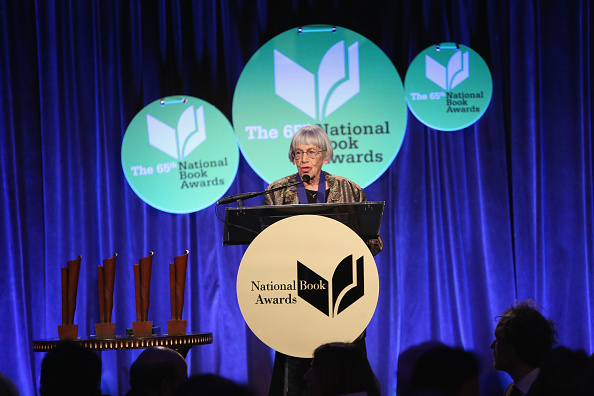
NEW YORK, NY - NOVEMBER 19:  Ursula K. Le Guin attends 2014 National Book Awards on November 19, 2014 in New York City.  (Photo by Robin Marchant/Getty Images)

NEW YORK, NY – NOVEMBER 19: Ursula K. Le Guin attends 2014 National Book Awards on November 19, 2014 in New York City. (Photo by Robin Marchant/Getty Images)

We do not normally pay attention to awards ceremonies, but this one catches our attention. We have said on occasion why we think books matter, why libraries matter, why the fate of publishing matters. On a good day, in our line of work, we approach the same ideal of books: to create experiences different from those encountered in normal, every day lives and by virtue of such experiences, to liberate. Comfort. Beauty. Taste. Wonderment, awe, perspective, yes yes yes.

But going somewhere. And that somewhere is freedom from the confines of norms, from the confines of places devoid of nature. The freedom of the road, a cliche that nonetheless has meaning.  Thanks to the New Yorker‘s Rachel Arons for pointing us to the short, powerful comment from an author who influenced many of us early in life to do what we do for a purpose:

…But it was Ursula K. Le Guin, accepting the Medal for Distinguished Contribution to American Letters early in the evening, who gave the definitive remarks of the ceremony, gliding through the genre debate and the Amazon-Hachette debacle on her way to explaining the crucial role that literature must play in our society.

Continue reading →

15 Years, And Counting

monopoly-man-with-green-wings

Click the image above or the title below to go to the summary, thanks as always to Conservation:

THE LOW-CARBON DEAL THAT’S ALMOST TOO GOOD TO BE TRUE

The economics of slashing carbon emissions look significantly better than they did only a few years ago. Continue reading →
Introduced Species in the Galápagos

Feral goats on Isabela Island. Photo by Galápagos National Park Service.

Yesterday I wrote about the case of the North American beaver being purposefully introduced to Argentinian Patagonia for a business venture and having severe unintended consequences on the environment in both Chile and Argentina. Most of us think of Patagonia as a pretty faraway and isolated place, and its location so far down the southern hemisphere merits that. The Galápagos Islands are another place geographically apart from most of us–that distance accounts for the specialized evolution that took place in the archipelago over millennia.

The isolation of the Galápagos from the rest of the world for so long, and the relatively small size of the islands, means that it is especially vulnerable to opportunistic species that can become invasive. In the same way that the Canadian beavers had no natural predators in Patagonia, common domesticated goats, when introduced to different islands in the Galápagos by sailors centuries ago, were able to roam and multiply, which was the travelers’ goal Continue reading →
Foodpreneurship

Revolution Foods makes healthy kids meals for both schools and stores. Co-founder Kristin Richmond says mentoring and support have been key to the success of her business. Shelly Puri/Courtesy of Revolution Foods

Revolution Foods makes healthy kids meals for both schools and stores. Co-founder Kristin Richmond says mentoring and support have been key to the success of her business. Shelly Puri/Courtesy of Revolution Foods

In the past year, with conceptualization and then food trials that led to the opening of 51, this story catches our attention and interest. Thanks to the salt, over at National Public Radio (USA) for the new vocabulary:

Culinary Institute’s School For ‘Foodpreneurs’ To Cook Up Innovation

The Culinary Institute of America may be best known for churning out chefs. And some of its graduates — from Grant Achatz to Roy Choi to Anthony Bourdain — have succeeded in entertaining and inspiring a new generation of foodies.

But not all CIA graduates don chef toques. Continue reading →

Origins Of Chocolate In Costa Rica

We had not heard of this series until now, but considering the geographic and foodstuff focus of this current episode, we want to know more, especially considering what we learn in the show’s About section:

Iron Way Films, the creators of Original Fare, has spent the last seven years traversing the globe in search of authentic stories and incredible locations. We’ve explored tropical oceans with musicians & pro-surfers. Road horses through big sky back country with ranch riders. Tasted backyard wine deep in the tiny towns of Provence. We’ve glamped, we’ve camped, we’ve lived on boats and spent far too much time in rental cars.

But we always sought to uncover what makes a place special- and what makes it unique.

EL-COSMICO-NIGHT-TENT900x5001

Continue reading →