Organic Cotton, India & Veracity

Harvested organic cotton at a bioRe facility in Kasrawad, India. India is the single largest producer of the world’s organic cotton, responsible for half of the supply. Saumya Khandelwal for The New York Times

When I see a headline like That Organic Cotton T-Shirt May Not Be as Organic as You Think my first reaction is a reflexive wince.

I will read the article for sure, as I did in this case, but even before reading it I feel defensive.

I am deeply committed to organic certification and seven years living in India makes this subheading into a red flag in terms of my sharing it with others:

The organic cotton movement in India appears to be booming, but much of this growth is fake, say those who source, process and grow the cotton.

Not because it is hard to believe. Exactly the opposite. I had work experiences that this story echoed in a different context. But when I share articles I value each day, usually on an environmental topic, a large percentage of those who click and read are from India. That is likely because we started this platform 10+ years ago while based in India. I do not enjoy, even if I am confident of its veracity, sharing news that I know will make those visitors, not to mention my many friends in India, uncomfortable.
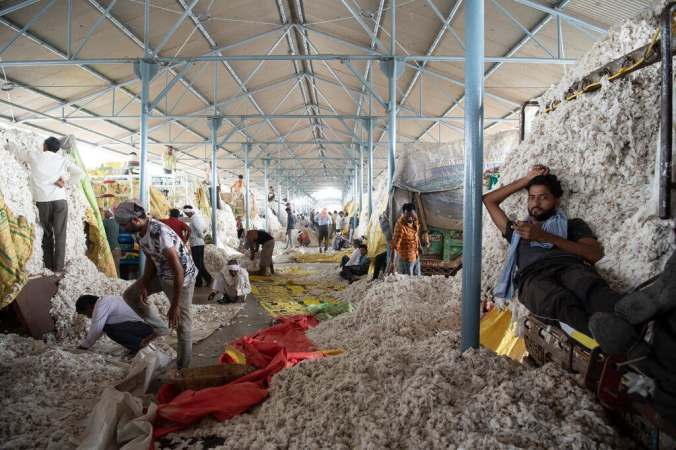
Farmers set up their load of cotton at the Khargone mandi, a large auction market. Saumya Khandelwal for The New York Times

But I got over it. Each of the journalists who authored this story put something on the line to get these important facts about two topics I care about. So, please read on and visit the source so the authors and photographer are properly credited for their excellent work:

Michael Kors retails its organic cotton and recycled polyester women’s zip-up hoodies for $25 more than its conventional cotton hoodies. Urban Outfitters sells organic sweatpants that are priced $46 more than an equivalent pair of conventional cotton sweatpants. And Tommy Hilfiger’s men’s organic cotton slim-fit T-shirt is $3 more than its conventional counterpart. Continue reading
How Smart Can Wood Be?

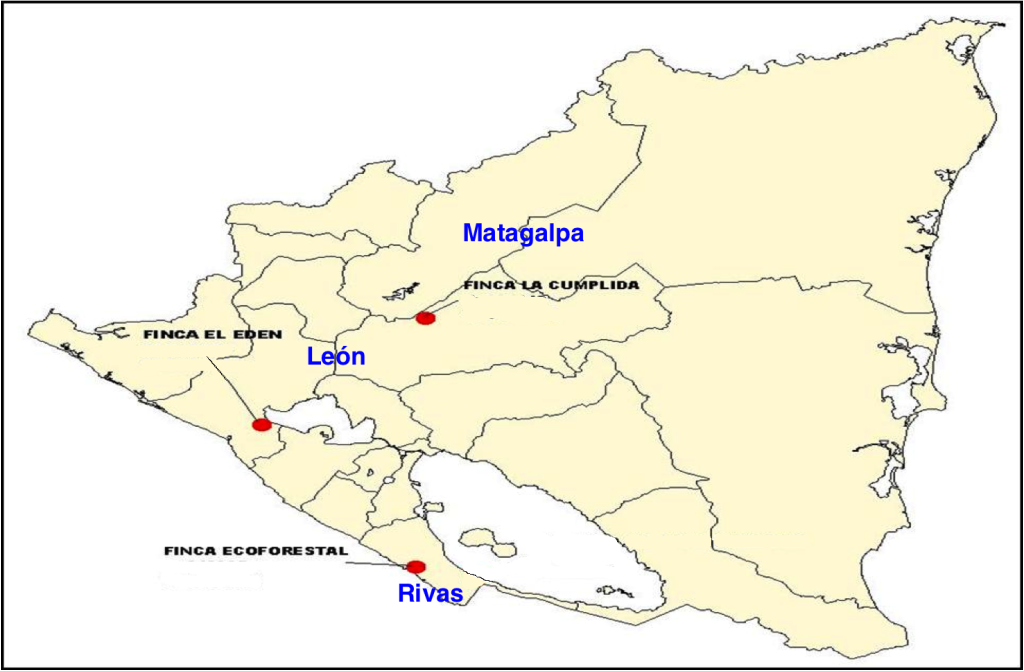
Yesterday I met with Javier López, the forestry engineer for Agroforestal, S.A. This company covers the tree plantations at La Cumplida, Ecoforestal/El Aguacate (Morgan’s Rock’s finca), and El Eden; it is not to be confused with Cafetalera Nicafrancia, which manages the coffee (and the planted trees growing in the coffee fields) at La Cumplida, or MAPIINIC S.A., which administers the forests felled by Hurricane Felix in 2007 at a finca called Rosita.

Javier, often known simply as “Prófe,” [PRO-feh] which translates as “Prof” (a nickname for Professor), has worked to get certification from Rainforest Alliance’s forestry auditor SmartWood (and by association the FSC and RA itself)

In 2009 Agroforestal became certified for forest management. To do so the company had to go through the same continuous improvement process that I described a bit in my post about coffee certification. An initial evaluation is made, and subsequent audits over the next 5 years that the certification is valid provide the certifier with evidence of progress and room for improvement. From what I saw of a couple examples, SmartWood seems to emphasize explicit documentation, which makes sense given the nature of the forestry industry: extractive at its most basic, but also focusing on replanting trees as long-term investments.

Some of SmartWood’s requirements are as simple as Continue reading

Equitable Origin–Certified Responsible Oil Production

Whether one believes that oil is the lifeblood of our modern society, or that we need to rapidly transition to more sustainable forms of energy, it is clear that society will be using petroleum for decades to come. In this post and in those that follow, I’ll describe my present work as well as underline the importance of responsibly produced oil. As it stands, despite the ubiquity of petroleum products in our global economy, there is no internationally implemented standard to monitor the social and environmental impacts of its exploration and production. Through a collective effort that brings together petroleum exploration and production companies (E&Ps), NGOs, academics, governments and indigenous and local communities, my company, Equitable Origin LLC, has created the first stakeholder-negotiated rating system for the oil and gas industry that is objective and verifiable.

Our standard, the EO100 recognizes and rewards world-class performers in the oil and gas industry while ensuring transparency as well as environmental and social accountability. It also allows certified operators to differentiate themselves quantifiably, based on their social and environmental performance, and to realize the added financial and brand value associated with certification. By developing this standard, EO is also creating a new marketplace for responsibly-produced oil and its derivatives, akin to those created for FairTrade Certified coffee, Kimberly conflict-free diamonds and Forest Stewardship Council Certified paper products.

If you’re interested in the work of Equitable Origin please visit our website.