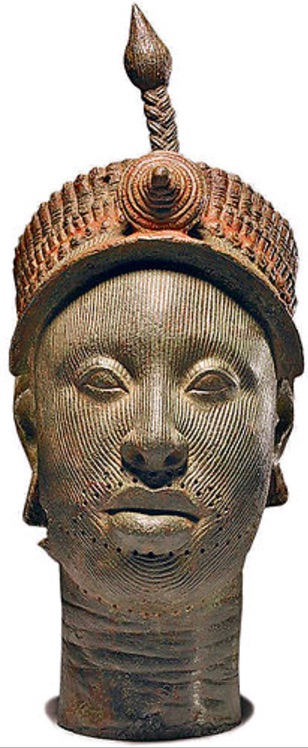
HEAD OF IFE
Brass statue, from Nigeria (A.D. 1400-1500)
“It is one of a group of 13 heads, superbly cast in brass, all discovered in 1938 in the grounds of a royal palace in Ife, Nigeria, which astonished the world with their beauty. They were immediately recognized as supreme documents of a culture that had left no written record, and they embody the history of an African kingdom that was one of the most advanced and urbanized of its day.’’
Credit: Trustees of the British Museum
The first podcast I ever listened to was this one, back earlier in this decade. Although neither the BBC nor the British Museum is maintaining the website, it is still there. I recommend getting ahold of the podcast that you can find here among other places.
Object #63 did not particularly stand out more than any of the others chosen for this innovative historical exhibit that I listened to without visual cues. But I do remember it because the description was as vivid as any (pasted after the jump). So, I am sorry to be reminded of this piece again due to the modern world’s confused and confusing approach to art as represented by this so-called bad boy (aka fraud), who is still at his naughty ways according to this news item today:
There’s controversy in Venice for Damien Hirst, the British artist who has occasionally drawn accusations that his pieces are not always wholly original but inspired by others’ work.
At the Venice Biennale this week, the Nigerian artist Victor Ehikhamenor accused Mr. Hirst of copying a well-known ancient Nigerian brass artwork, “Head of Ife,” found in 1938 in Ife, Nigeria, without giving it the proper historical recognition it deserves. Continue reading
 Organikos