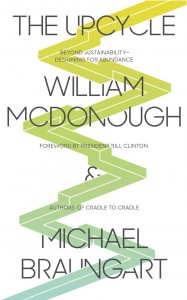
“The Upcycle”, the sequel to “Cradle to cradle”

If you’ve read “Cradle to Cradle” and you come here regularly, chances are you’ll be as excited as I am to learn about the sequel : ‘The Upcycle”.

10 years ago William McDonough and Michael Braungart published one of the most important environmental manifestos of our time.

Based on biomimetics, Cradle to Cradle design is an approach to the design of products and systems. It models human industry on nature’s processes viewing materials as nutrients circulating in healthy, safe metabolisms. The book states that:

“All products can be designed for continuous recovery and reutilization”.

Every product can and should be conceived with the reuse of its materials in mind and every material can and should be conceived to be used again. Just like in nature, nothing goes to waste.

If you have not read it, McDonough’s TED talk Cradle to Cradle design will probably make you want to give it a go.

In their newest book  The Upcycle: Beyond Sustainability – Designing for Abundance,  McDonough and Braungart go further than ‘Cradle to cradle’ saying that we should be ambitious about our role on this planet.

“Industry can do better than “do no harm”: it can actively improve everything with which it comes into contact.” Continue reading
Solar Powered

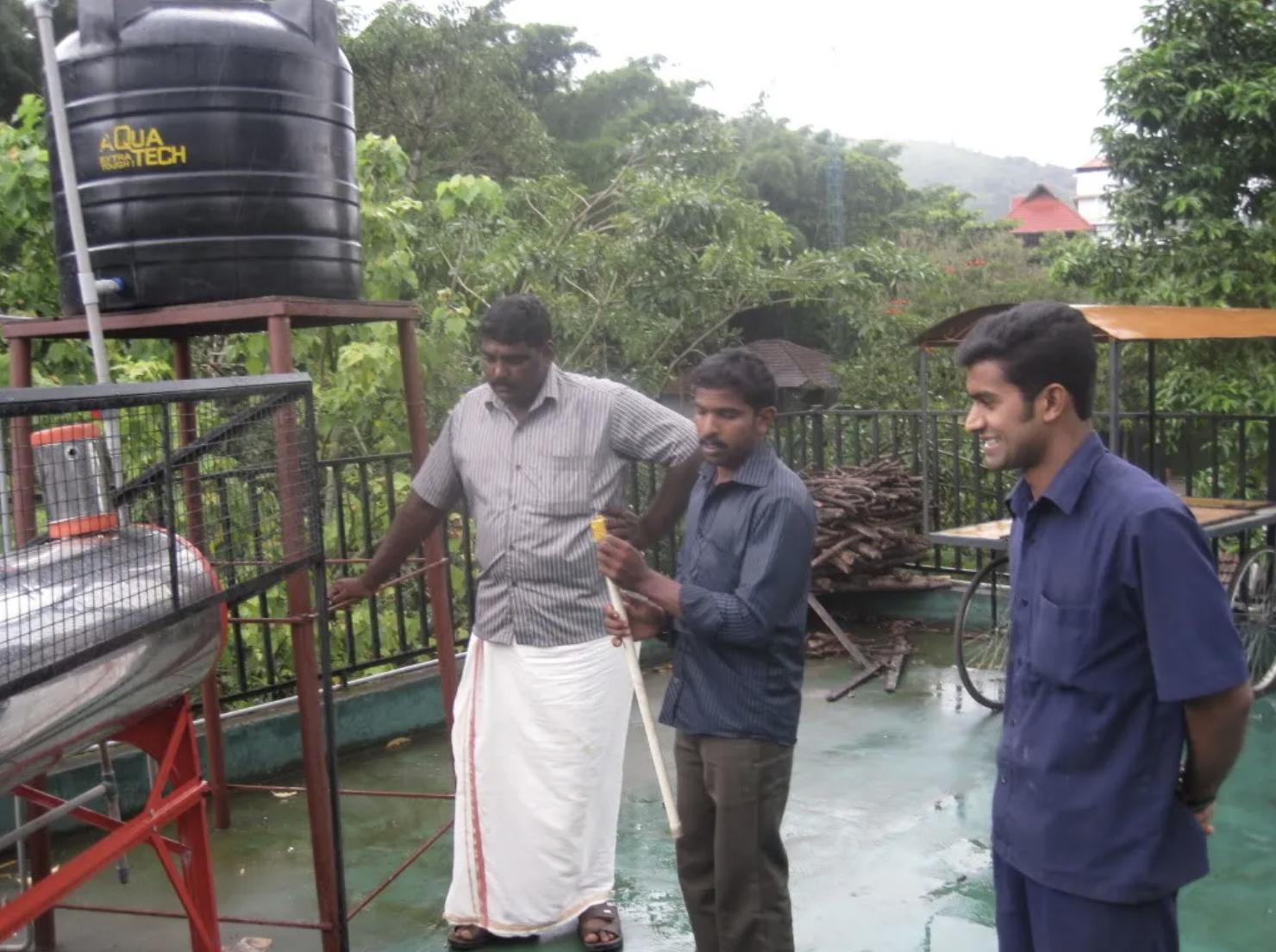
Over the last couple of days solar panel engineers have been arriving at here in Kumily to gauge the possibility of installing solar panels as well as examining the solar tubing water heating system to increase its efficiency. This involved the measuring and examination of various areas including the open rooftop of the All Spice Restaurant and the wide expanse of organic plantations, including the area cultivating ginger root, turmeric, and two varieties of yam: the typical sweet potato and the elephant yam.


Our team of engineers including Suresh and Santosh listed the various outlets of energy in the resort to help the solar paneling engineers estimate the input that could be provided as a supportive energy source. This included the fans, plug outlets, and the CFL or compact fluorescent lamps that are a very low 6W (watts). The solar paneling engineers mentioned that the last project that they had worked on was quite a large one, which involved a 65kW power source that took approximately six months to complete. As a reference, the nearby 25 meter high power line, which is provided by the Kerala State Electricity Board (KSEB), is an 110kW power source. It has not yet been determined how the space can be utilized here and how much wattage it will be able to harness from the power of the sun because as I’m quickly learning, it is a long and complicated process.

Continue reading