Too Many Romeos

When I last posted about an animal with a name like this the ending was sad. As it usually will be, given the state of things. There are not enough Juliets, but that should not keep scientists from trying to make matches. As reported by the great science writer JoAnna Klein, who has written about some of nature’s great comeback stories and its unexpected cases of animals expressing affection, she had me at the headline:
merlin_149345388_f756ad7f-59f4-45c2-b0be-5fd879353ba2-jumbo.jpg

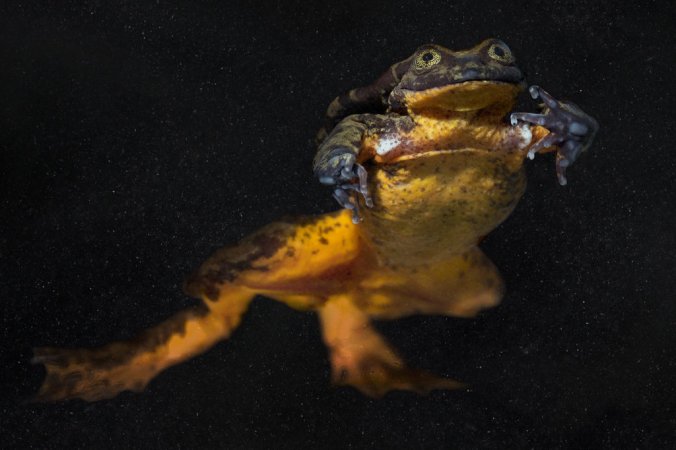
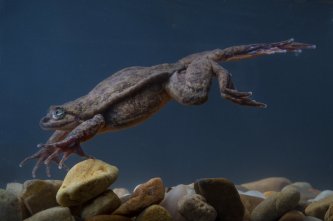
Romeo, who was thought to be the last Sehuencas water frog: “Did my heart love till now? forswear it, sight! For I ne’er saw true beauty till this night.” D. Alarcol and D. Grunbaum/Global Wildlife Conservation

Romeo the Frog Finds His Juliet. Their Courtship May Save a Species.

The lonely male in a Bolivian museum was thought to be the last Sehuencas water frog, but an expedition has found him a potential mate.

Romeo was made for love, as all animals are. But for years he couldn’t find it. It’s not like there was anything wrong with Romeo. Sure he’s shy, eats worms, lacks eyelashes and is 10 years old, at least. But he’s aged well, and he’s kind of a special guy.

Romeo is a Sehuencas water frog, once thought to be the last one on the planet. He lives alone in a tank at the Museo de Historia Natural Alcide d’Orbigny in Bolivia.

And there is more. In this same story as reported by National Public Radio (USA), I cannot be happy about the long-term macro situation, but the shorter-term micro situation for this Romeo looks like it may have a happy ending:

FrogLove.jpg

While Shakespeare’s Romeo spent only about two days banished in Mantua, away from his beloved Juliet, Romeo the frog has remained in complete isolation — sans love interest, cousins, friars or friends — living in a laboratory for the last 10 years. But that’s all about to change.

2.-juliet_photo-by-robin-moore-global-wildlife-conservation-2-_custom-a5b14d91d352034fca84afcc3c9144bd8c354edf-s1200-c85

Juliet appears to be a perfect match for Romeo — she’s a Sehuencas water frog and of reproductive age. Robin Moore/Global Wildlife Conservation

The world-famous amphibian was believed to have been the last of his kind – a Bolivian Sehuencas water frog (Telmatobius yuracare) – and lived under the protection of researchers at the Museo de Historia Natural Alcide d’Orbigny in Cochabamba City. They have made it their mission to find Romeo a special lady friend who might respond positively to his plaintive mating calls and help save the species from becoming extinct.

Year after year, scientist scoured Bolivia’s cloud forests for signs of other googly-eyed, orange-bellied Sehuencas, but they’ve always come up empty, until recently. Continue reading
Map the Herps You Spot

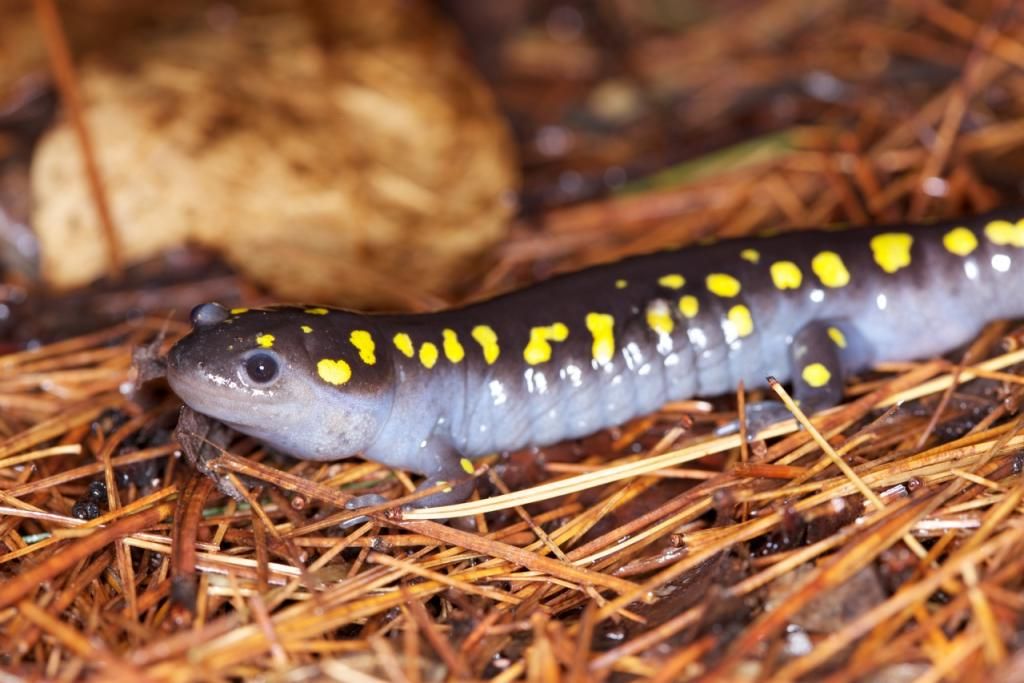
Spotted Salamander by Brian Magnier

In the spring of my penultimate year at Cornell, I took a Herpetology class that introduced me to the world of reptiles and amphibians, or “herps,” as they’re affectionately known. Thanks to that exposure, I was able to enjoy the spring migration of certain salamander species and learn the basics of the main families of frogs, lizards, snakes, and other herps like alligators, crocodiles, and all the other slimy or scaly animals in the classes Amphibia and Reptilia. If I had known of the existence of the citizen science project HerpMapper at the time (it wasn’t released until September of the same year as that salamander migration) I’d have certainly submitted some observations and photos to the organization! From their About page:

HerpMapper is a cooperative project, designed to gather and share information about reptile and amphibian observations across the planet. Using HerpMapper, you can create records of your herp observations and keep them all in one place. In turn, your data is made available to HerpMapper Partners – groups who use your recorded observations for research, conservation, and preservation purposes. Your observations can make valuable contributions on the behalf of amphibians and reptiles.

Continue reading

A Night Walk in the Osa Peninsula

I recently went on a night walk in the rainforest of Costa Rica’s Osa Peninsula, looking for frogs, snakes, and other nocturnal animals with a great wildlife guide who knew the area well. Although we didn’t see any mammals or the famous deadly Bothrops asper viper known as the “terciopelo” in Spanish (velvet) and “fer-de-lance” in French (spearhead). We did, however, see numerous frog species and at least two snake species, although we could only identify the six or seven Cat-eyed Snakes we saw.

There were also some basilisk lizards getting bit by mosquitoes, a large spider similar to a tarantula, a dragonfly larva in the water, and plenty of frog eggs. At one point we turned off all our flashlights to try to find a glass frog (pictured below) and noticed some bioluminescent mushrooms, which were impossible to photograph in the dark and look pretty dull in the light. Although I’ve forgotten the names of the various frog species featured in the slideshow of the photos I was able to take below, I hope you enjoy Continue reading

Bi-Coloured Frog


Bi-Coloured Frogs are endemic to the Western Ghats, especially in Periyar Tiger Reserve. The tropical climate and abundant rain combine to create rich and varied niches that offer safe haven for these amphibians. The leaf litter–the most nutrient and species rich strata–is a favourite hunting ground for these frogs.

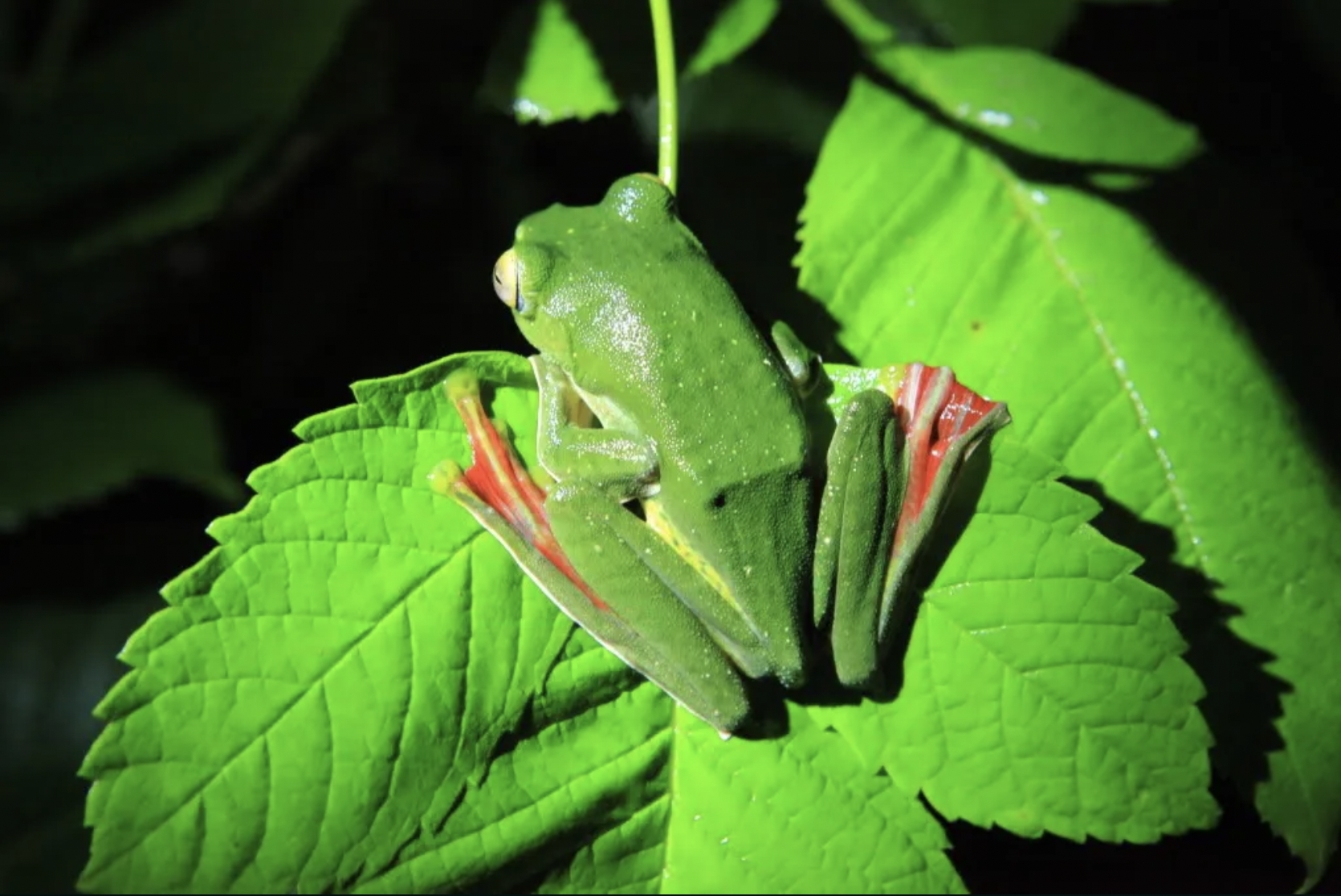
Malabar Gliding Frog (Rhacophorus malabaricus)

Malabar gliding frogs are widely distributed in the Western Ghats of India, primarily in evergreen and semi-evergreen forests at altitudes between 500 to 1200 meters above sea level. These pictures were taken at the Aralam Wild Life Sancatury near Kannore.

Continue reading

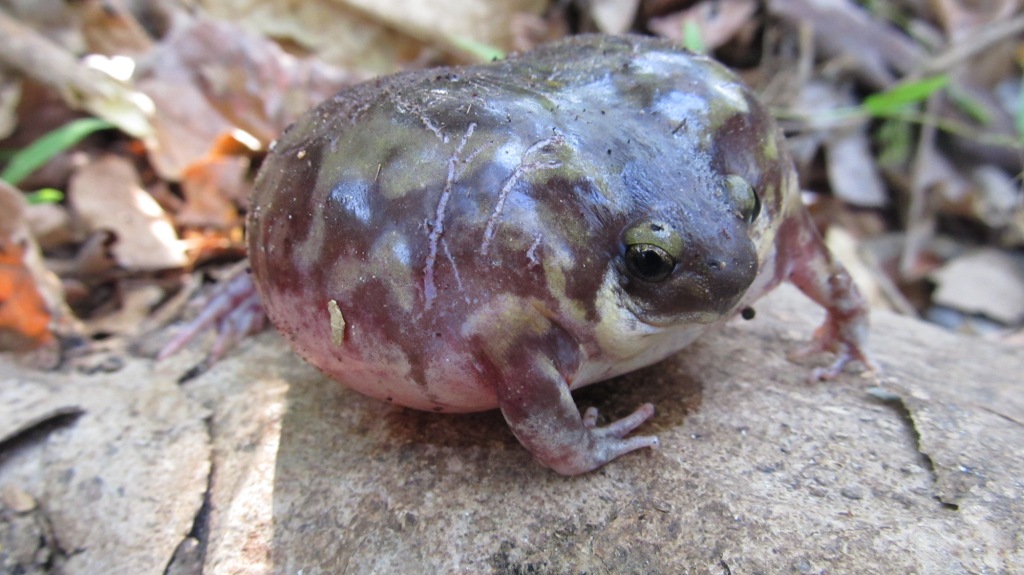
Indian Balloon Frog – Uperodon globulosus


Photo: Mr.Kannan

The Uperodon, commonly known as the Balloon Frog, is well known for its ability to puff up, expanding its lungs past its backbone. It has a small head, especially compared with its exaggerated body, with a narrow mouth and a rounded snout.

Continue reading

Amphibians of Periyar

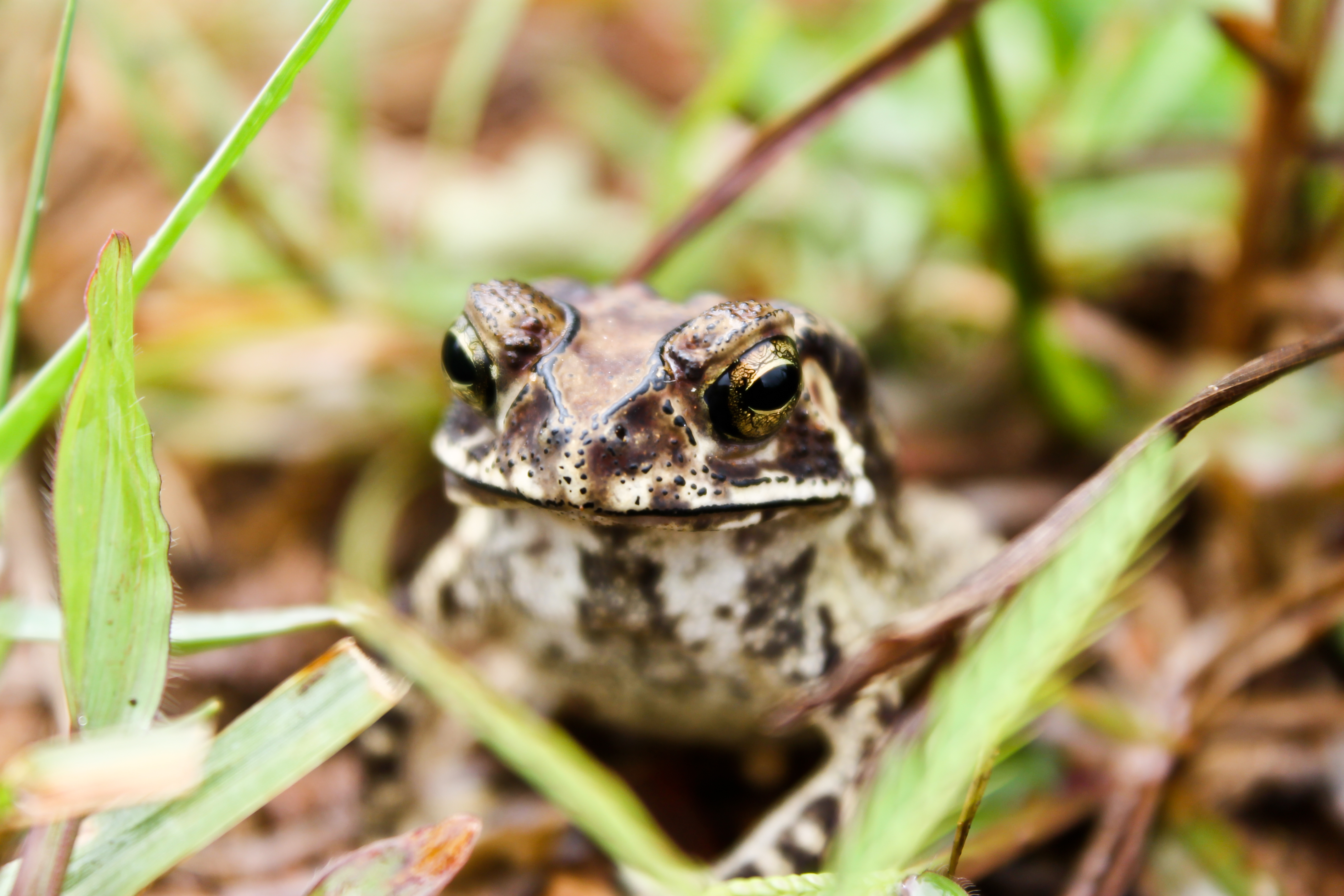
So far, my treks in the Periyar Tiger Reserve have yielded a generally consistent array of wildlife sightings. Insects and spiders are a constant, birds of some sort or other are common, boar and gaur are to be expected, deer are a pleasant (but not huge) surprise. Elephants are not uncommon to see, but don’t stand around modelling for pictures, and are usually sighted from a great distance. Tigers are out of the question to see, except for the extremely fortunate. Of course, this leaves out dozens of categories of creatures, and hundreds (possibly thousands) of species. Amphibians are a pretty constant sighting, mainly in the form of frogs and toads. To be honest, I don’t really know the difference, but I do have a definite ID on one species: the Common Indian Toad (Duttaphrynus melanostictus).

Continue reading