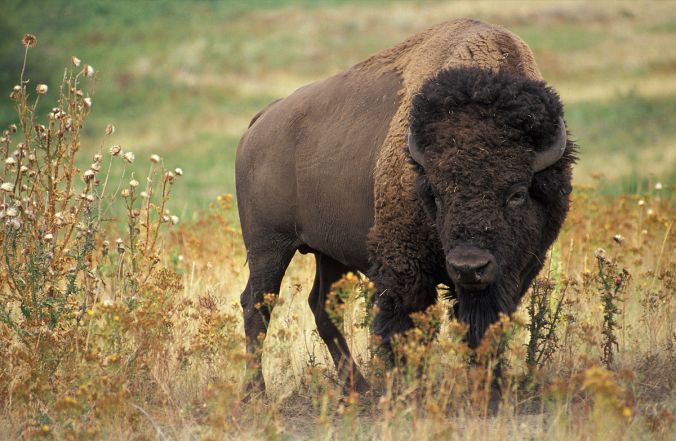
Source: Modern Farmer
Bison meat is not the typical protein one finds on the dinner plate every night (especially not in my vegetarian household), but it is a meat product that is known for being healthier than beef and – possibly – more environmentally friendly. “How so?” you might wonder. According to Modern Farmer there are several components to bison farming that give it a “greener edge.”
It’s believed that bison cause less trampling and erosion damage to the plains than cattle, that their diet is higher in grasses and thus less damaging to the long-term chances of the plains environment, and that bison poop functions as a natural fertilizer to their habitats.
This all mostly stems from a general idea that bison, being not domesticated and technically, even when ranched, a wild animal, are more in tune with nature, more balanced in their impact than cattle. They are also native to North America, unlike cattle, which were domesticated from Old World animals. “Because bison are a natural part of the North American ecosystem, bison ranching can be a beneficial to the natural environment,” writes the National Bison Association, a promotional group, on its site.
 Organikos