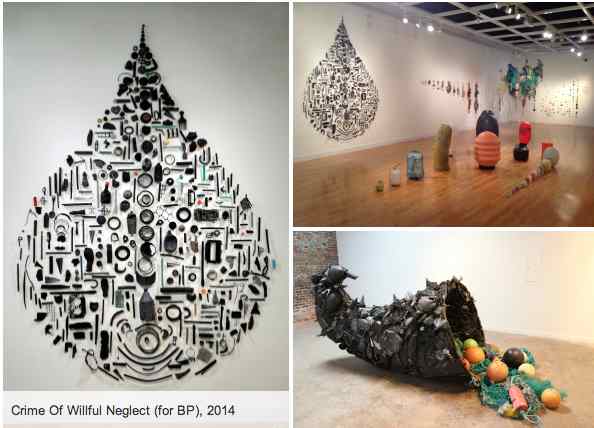
From the Drifters Project by Pam Longobardi
The world’s oceans effect all life on earth and it’s no longer news that even the most pristine places on earth are impacted by our “toxic legacy,” as artist Pam Longobardi puts it. The project statement for her Drifters project is really worth reading. Here is an excerpt I found particularly poignant:
Plastic objects are the cultural archeology of our time. These objects I see as a portrait of global late-capitalist consumer society, mirroring our desires, wishes, hubris and ingenuity. These are objects with unintended consequences that become transformed as they leave the quotidian world and collide with nature to be transformed, transported and regurgitated out of the shifting oceans. The ocean is communicating with us through the materials of our own making. The plastic elements initially seem attractive and innocuous, like toys, some with an eerie familiarity and some totally alien. At first, the plastic seems innocent and fun, but it is not. It is dangerous. We are remaking the world in plastic, in our own image, this toxic legacy, this surrogate, this imposter.
By doing this Drifters project, she has removed thousands of pounds of material that would be considered trash and then presenting it within a cultural context. Amie wrote a previous post about artists using ocean trash as materials for art. They too found themselves telling the story of global consumerism using plastic. Continue reading
 Organikos