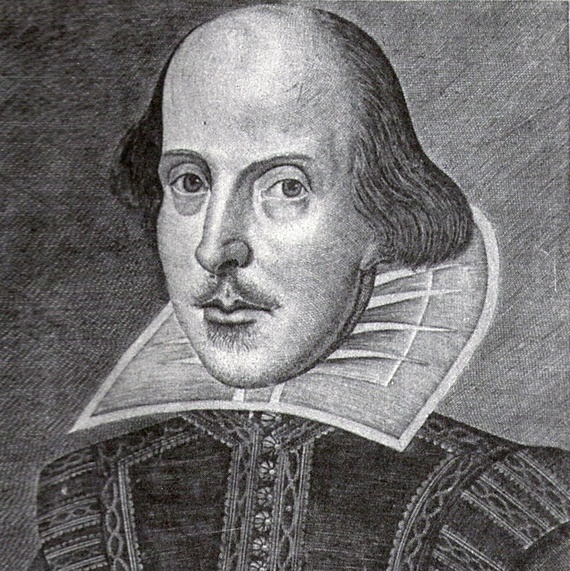
Keeping Shakespeare in Mind

Illustration by Mathew McFarren

Illustration by Mathew McFarren

Quite a few of our team can attest to the power of a liberal arts education, especially when put in such a joyful context.

Scott L. Newstok’s convocation speech to the Rhodes College class of 2020 embraces this joy, adding the cheeky tweak of asking the incoming class to approach their college experience in the “spirit of the 16th century”.

Building a bridge to the 16th century must seem like a perverse prescription for today’s ills. I’m the first to admit that English Renaissance pedagogy was rigid and rightly mocked for its domineering pedants. Few of you would be eager to wake up before 6 a.m. to say mandatory prayers, or to be lashed for tardiness, much less translate Latin for hours on end every day of the week. Could there be a system more antithetical to our own contemporary ideals of student-centered, present-focused, and career-oriented education?

Yet this system somehow managed to nurture world-shifting thinkers, including those who launched the Scientific Revolution. This education fostered some of the very habits of mind endorsed by both the National Education Association and the Partnership for 21st Century Learning: critical thinking; clear communication; collaboration; and creativity. (To these “4Cs,” I would add “curiosity.”) Given that your own education has fallen far short of those laudable goals, I urge you to reconsider Shakespeare’s intellectual formation: that is, not what he purportedly thought — about law or love or leadership — but how he thought. An apparently rigid educational system could, paradoxically, induce liberated thinking.

“Take advantage of the autonomy and opportunities that college permits by approaching it in the spirit of the 16th century. You’ll become capable of a level of precision, inventiveness, and empathy worthy to be called Shakespearean.”
So how can you think like Shakespeare?
Continue reading

Shakespeare, Crown Toady?

Shakespeare

In honor of the departure of James from Xandari, we send him off with a blast of relative modernity. Shakespeare is certainly classic, but tres nouveau in terms of a classicist.

Little did any of the liberal arts majors among Raxa Collective contributors know that the image we have of a witty, well-versed but ultimately populist entertainer is confounded by a consistent streak of conservatism. But we are thankful for the enlightenment, that far from being an equal opportunity observer and critic of all forms of foible, the Bard was so unwilling to bite the hand that fed:

Ira Glass recently admitted that he is not all that into Shakespeare, explaining that Shakespeare’s plays are “not relatable [and are] unemotional.” This caused a certain amount of incredulity and horror—but The Washington Post’s Alyssa Rosenberg took the opportunity to point out that Shakespeare reverence can be deadening. “It does greater honor to Shakespeare to recognize that he was a man rather than a god. We keep him [Shakespeare] alive best by debating his work and the work that others do with it rather than by locking him away to dusty, honored and ultimately doomed posterity,” she argued. Continue reading

Flash Folio Exhibition at Cornell–Happy Birthday Will!

shakespeare

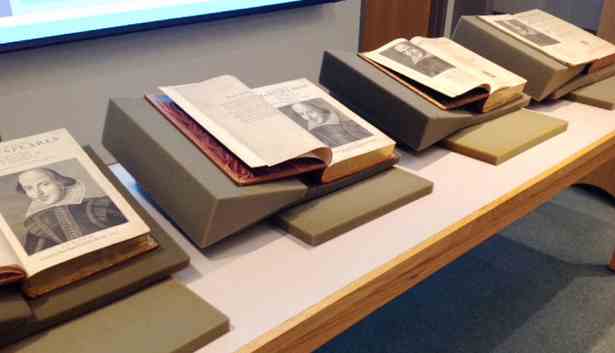
I spent my university years lugging around the weighty Riverside Shakespeare, the volume that has held the status of “definitive Shakespeare” text in academic circles since its first publication 30 years ago. Having never minded the moniker Shakespeare nerd–I could not help the stab of jealousy at missing the opportunity to experience Cornell’s flash exhibition of 4 rare folios in honour of the Bard’s 450 birthday.

For one day only, the Library is putting all four folio editions of William Shakespeare’s plays — the earliest published collections of his work, all printed in the 17th century and now among the most important books in all of world literature — on display to commemorate the 450th anniversary of the Bard’s birth.
All the world may be a stage, but Cornell is fortunate to be one of the few places in the world that can put all four folios on display for its community of readers and researchers.

Continue reading