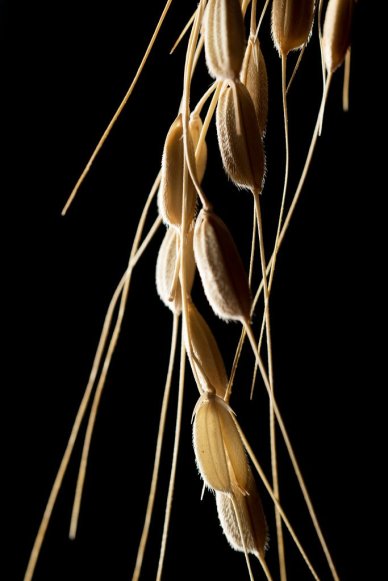
Upland red bearded rice, which grows in the Moruga district in Trinidad, turned out to be a missing culinary link between enslaved people in coastal Georgia and a group of slaves who were able to buy their freedom by fighting for the British in the War of 1812. Credit Karsten Moran for The New York Times
Our interest in rice was not simply because we started this platform while carrying out work in south India, where rice is central to life. We learned during those years that rice is as 1493 a food item as any, with footprints in each major region of the world. Kim Severson has been featured in our pages twice before, both times for food-related history. Now, she brings us a gem of a story titled Finding a Lost Strain of Rice, and Clues to Slave Cooking:
CHARLESTON, S.C. — Among the biologists, geneticists and historians who use food as a lens to study the African diaspora, rice is a particularly deep rabbit hole. So much remains unknown about how millions of enslaved Africans used it in their kitchens and how it got to those kitchens to begin with.
That’s what made the hill rice in Trinidad such a find.
The fat, nutty grain, with its West African lineage and tender red hull, was a favored staple for Southern home cooks during much of the 19th century. Unlike Carolina Gold, the versatile rice that until the Civil War was America’s primary rice crop, the hill rice hadn’t made Lowcountry plantation owners rich off the backs of slaves.
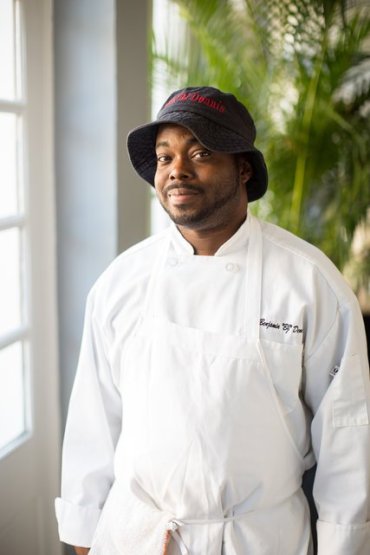
B.J. Dennis, a chef in Charleston, S.C., has dedicated himself to tracing Gullah-Geechee heritage through food. He traveled to Trinidad and found rice that could be traced back to slaves in coastal Georgia. Credit Hunter McRae for The New York Times
It didn’t need to be planted in watery fields surrounded by dikes, which meant that those who grew it weren’t dogged by malaria. You could grow it in a garden patch, as did many of the slaves who had been taken from the rice-growing regions of West Africa. This was the rice of their ancestors, sustaining slaves and, later, generations of Southern cooks both black and white.
Even Thomas Jefferson was a fan. Some researchers think he is the one who helped spread hill rice throughout the South, giving gifts of the African seed from a 30-gallon cask a ship captain brought him from Africa in 1790. But by World War I, the rice had all but disappeared, a victim both of cheaper imports that were easier to produce and of the Great Migration, in which millions of African-Americans left the rural South.
That’s why B.J. Dennis, a Gullah chef from Charleston, was stunned to find the rice growing in a field in Trinidad, tended by a farmer descended from slaves who once lived in Georgia. Continue reading
 Organikos