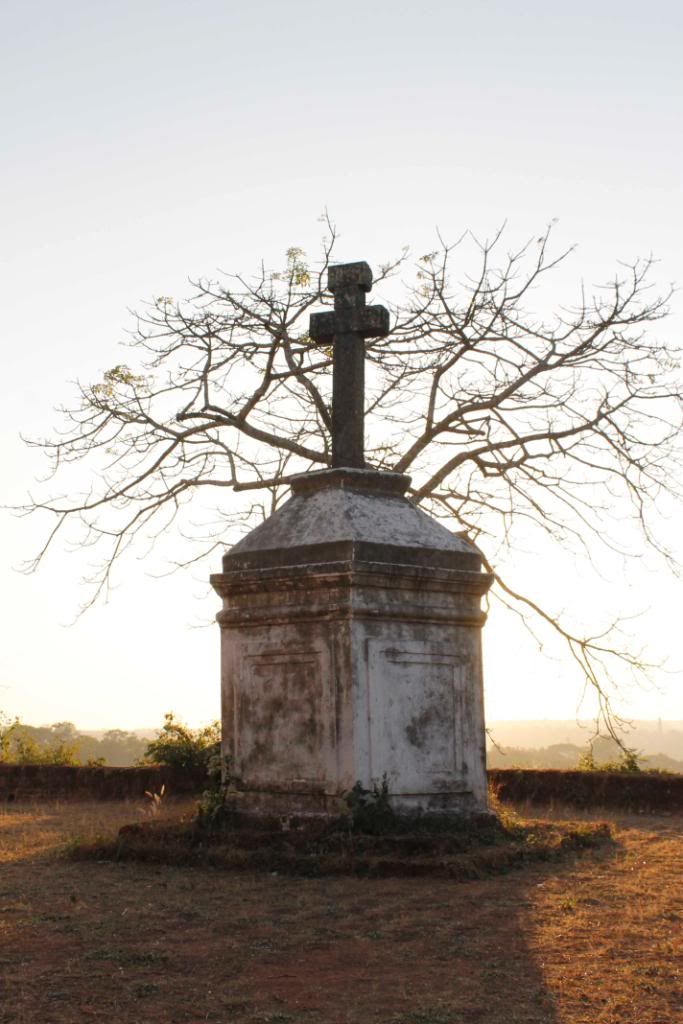
 Goa, India’s smallest state, is a former Portuguese colony bordering the Arabian Sea. Once a key trading enclave for spices, Goa is now a significant tourist attraction due to its beaches and festivals. It is also known for its considerable Catholic history and architecture; St Francis Xavier arrived in 1542 with Jesuit missionaries (he was a pupil of St Ignatius Loyola, founder of the Jesuit Order) and there are many impressive churches throughout Goa’s capital, Panaji, and its former capital, Old Goa.
Perhaps one of the most awe-inspiring of these is the Church of St Augustine. Augustinian friars completed its construction in 1602, and it has been in different states of disrepair since 1835, when the Portuguese government began evicting many religious orders from Goa. The 46 meter tower (half of which collapsed in 1931), in varying stages of illumination, is perhaps the most easily appreciated element of grandeur remaining. But close examination of the vault floor reveals dozens of tombstones in relief, mostly for men who seem to have been knights, or at least who had knightly coat of arms. Some of these sigils are surprising, such as the skull and crossbones motifs. This is the church that I spent the most time at; most of what is left is eroded, overgrown, cracked, or otherwise dilapidated, without detracting from the ruins’ beauty or impressiveness, however. Continue reading
 Organikos