
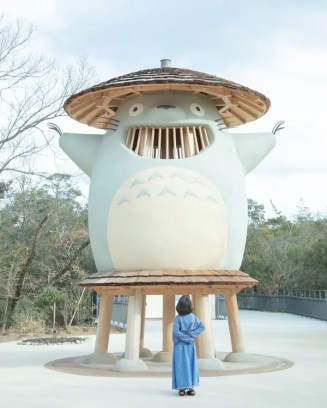
The magazine sent the Japanese photographer Rinko Kawauchi to Ghibli Park on a day when it was closed to the public, and she took along her daughter and some friends. Rinko Kawauchi for The New York Times
Links to the writings of Sam Anderson have not appeared in our pages before, and I almost missed this opportunity because at first appearance this article does not fit the norm for our themes. But if you read to the end, it does so in one clear way. It has to do with the power of nature, trees in particular, and once you read the article you will understand (if you are familiar with our platform). You can also listen to an audio version of this article here, but be sure to see the photos in the original publication:
Spirited Away to Miyazaki Land
What happens when the surreal imagination of the world’s greatest living animator, Hayao Miyazaki, is turned into a theme park?
A Totoro-like climbing structure. Rinko Kawauchi
As an American, I know what it feels like to arrive at a theme park. The totalizing consumerist embrace. The blunt-force, world-warping, escapist delight. I have known theme parks with entrance gates like international borders and ticket prices like mortgage payments and parking lots the size of Cleveland. I have been to Disney World, an alternate reality that basically occupies its own tax zone, with its own Fire Department and its own agriculture — a place where, before you’ve even entered, you see a 100-foot-tall electrical pole along the freeway with Mickey Mouse ears. This is a theme park’s job: to swallow the universe. To replace our boring, aimless, frustrating world with a new one made just for us. Continue reading
 Organikos