Easy Tips for City Living

As I eagerly prepare to head to Cardomom County in a few days to contribute some of my time and efforts to Raxa Collective on site, I’m packing up my apartment in Paris and thinking of the irony of leaving my little pot of coriander in the window for fields of spices in Kumily. I was growing coriander, basil and parsley – and before that, these lovely flowers my mother got me during her visit several months ago.

Growing my own herbs was a fun way to keep the kitchen an innovative little atelier. Basil was a must for anything remotely Italian, or Thai if I got so daring; parsley was hard to know what to do with at times but got its fair share of dicing in with many miscellaneous creations; and then of course there’s coriander, my preferred name for which is cilantro as I grew up with the herb in its Mexican context of carne asada tacos and guacamole. An absolute favorite flavored flora of mine.

In some countries, the mores of a city-dweller’s everyday life can somehow keep “environmental friendliness” in those darned quotation marks, and make the concept seem as remote as the rainforest. Continue reading

Profile: Varghese & Resource Management

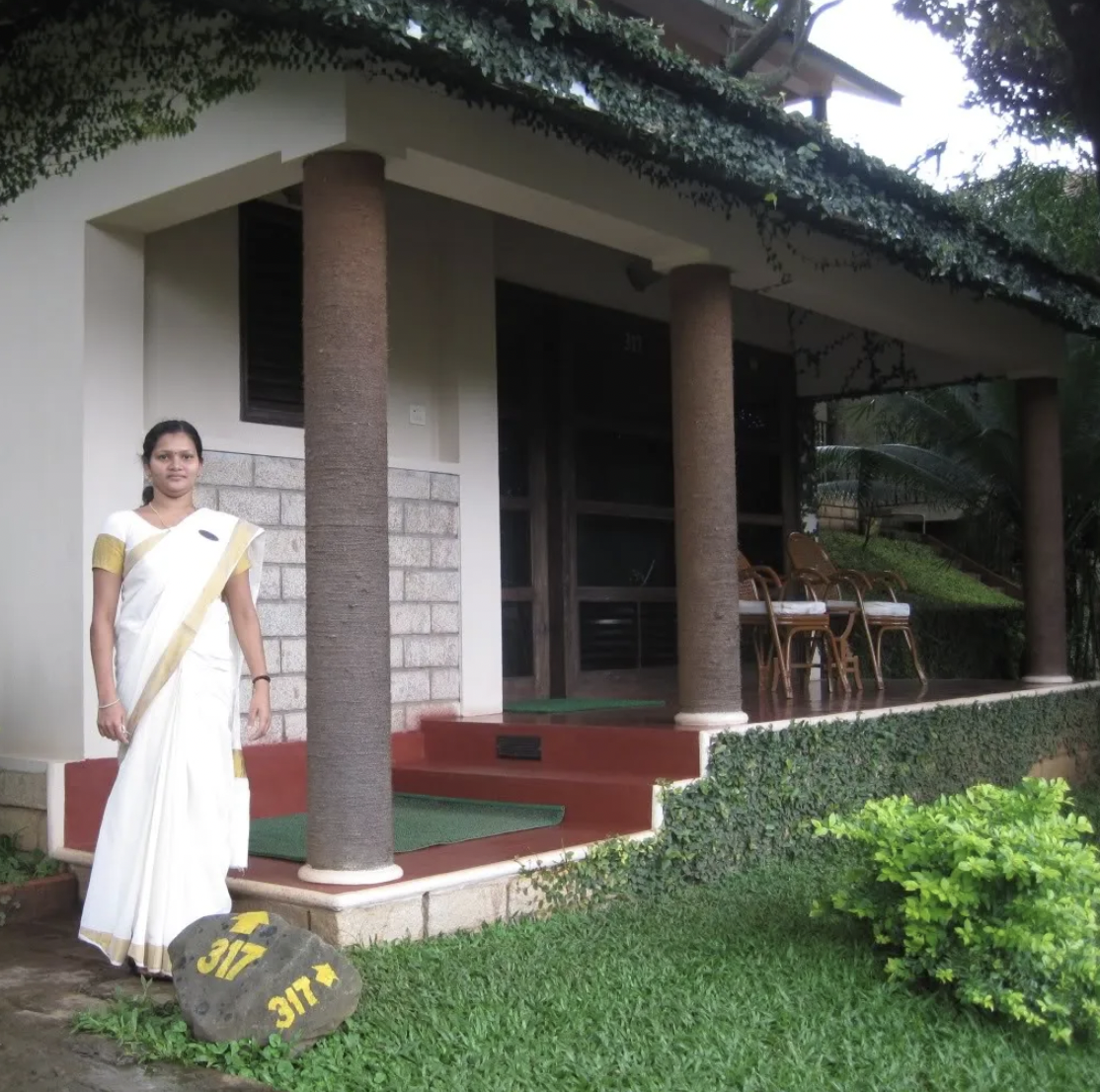
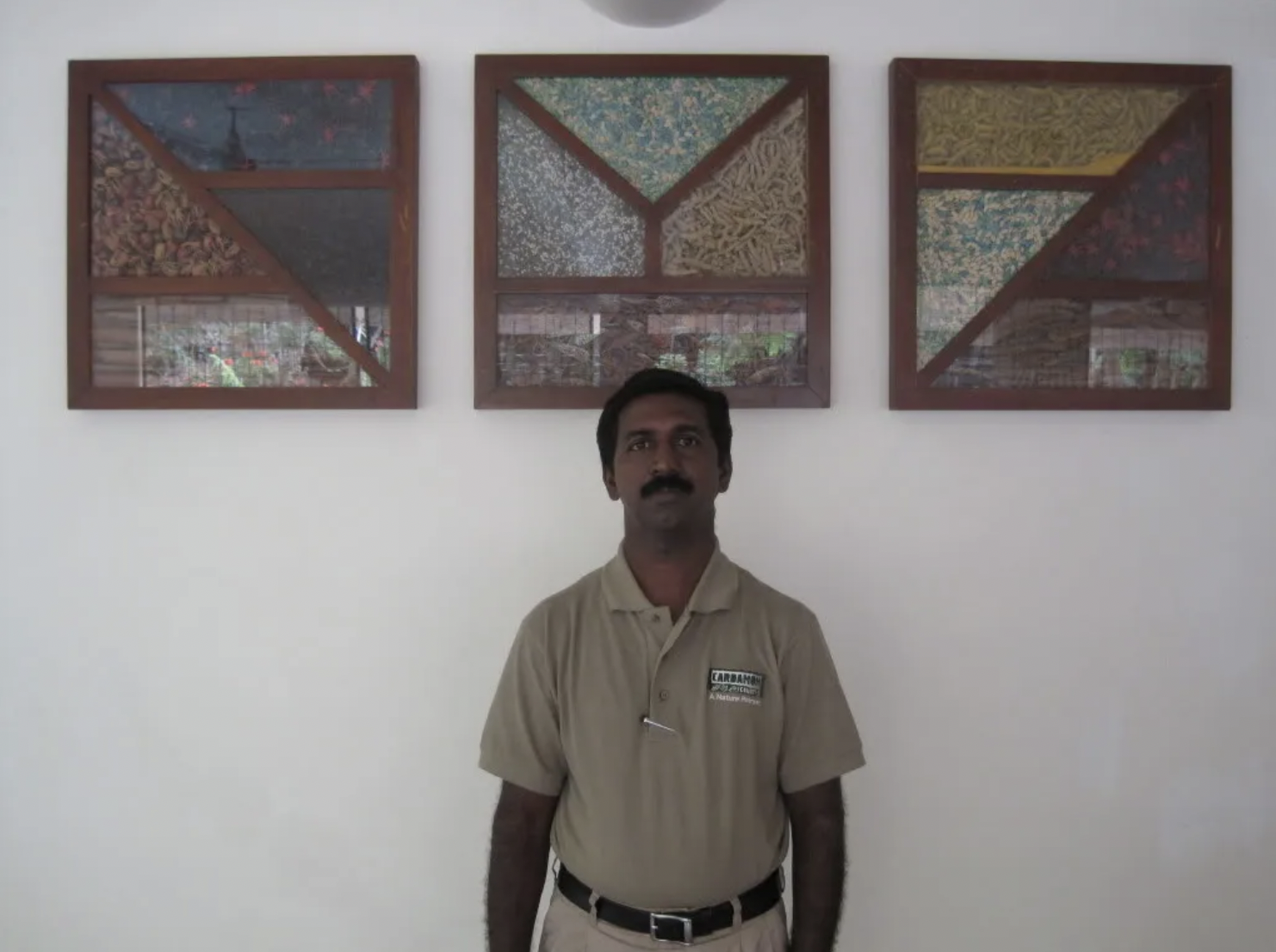
A few days ago I spoke with Varghese, the restaurant manager and head of the food and beverage department here at Cardamom County, who prides himself in running a tight ship and making sure that guests are at their happiest. Varghese is another long-time member of the Cardamom County family, originally arriving here eleven years ago, in 2000. Having taken a two-year hospitality course in Ravipuram in Ernakulam (the same district housing Cochi), at a school that has now shifted to become the Fort Munnar Catering College in the misty mountains of nearby Munnar, and training with Taj Group of Hotels, he arrived to fill the role of a restaurant supervisor.


Varghese told me about his Uncle Phillip who was one of the many well-educated people from Kerala who went over to a Gulf country, in this case being Bahrain. We talked about this brain drain, which Varghese mentioned had been going on since as early as the 1970s. The highly educated people and professionals of Kerala go in search of new opportunities, higher living standards, and money to send back home. Varghese also talked about Arabic being a language that is not too difficult to pick up, especially because of the difficulty and speed with which the native tongue of Malayalam is spoken. However, what is interesting to note is the stark contrast of climate between the Gulf countries and Kerala, the former being very dry, arid, and hot with the latter being humid and comfortably cooler especially at higher altitudes near the Western Ghats such as here in Kumily, Idukki. Continue reading

Building Blocks of Opportunity

The wooden block is probably one of the simplest and most played with toys.  However, this iconic block did something unexpected: it has been promoted amongst the complex toys of this generation and sure to last for many generations.  With a little entrepreneurial conservation, Tegu has created a block that surpasses most expectations of a toy.  It is educational and stimulates children’s creativity and unscripted play (as I mentioned in one of my previous posts), is heirloom quality, helps the planet and its citizens, and is so much fun that adults sneak off and play with them.

Tegu’s magnetic blocks are built to leave a legacy.  They are complex, yet they don’t require any batteries or instruction manuals, just an imagination.  The uniqueness of this toy is not just the functional (and inaccessible to children) magnet, but the series of events that follow each block purchase, called the Tegu Effect.  Tegu gives every buyer the choice to either donate dozens of trees or donate schooldays for Honduran children.  But it is not only the environment and children that benefit; as Tegu grows, the company creates living wage jobs for the Honduran factory workers, and with 65% of the population living currently below the poverty line Tegu offers the people a great opportunity. Continue reading

Profile: Mereena & Sustainable Housekeeping

A couple of days ago I had the pleasure of speaking with Mereena, the head of the housekeeping department at Cardamom County. Mereena has been here since 2003, and started from the bottom rung of the housekeeping department ladder. Mereena explained to me how she was successively promoted six times.


She began as a trainee housemaid, and then progressed to official housemaid and then to senior housemaid. Next she became housekeeping desk assistant, then trainee housekeeping supervisor, and then housekeeping supervisor and finally Room Experience Officer and head of housekeeping. Taking full charge of the department required thorough and extensive knowledge of housekeeping but maintaining that authority has required managing responsibly.  In multiple senses of that term.

Continue reading

They’re Real, Not Plastic

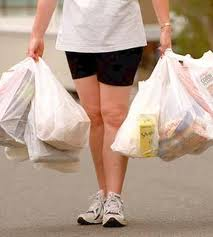
Earlier this year I would have thought blogging about plastic bags would be boring and quite redundant.  I have heard and read of the dire effects plastic bags have on the environment countless times.  And I am well versed in the “green tips” of bringing my own bag that are so prevalent.  Intellectually, I realize that plastic bags…well, suck.

I heard the implications and I pride myself to be eco-savvy yet I still would often be caught red-handed with those pesky plastic bags on a few desperate occasions. Continue reading

Back to Nature

I was recently walking around in a neighborhood park, and I saw birds splashing in a pool of water.  I watched a pair of squirrels play tag up and down a large oak tree, and I admired an elderly couple walking hand-in-hand in a flower garden.  Then, I heard a car door slam and my eyes beheld children entering the park hardly lifting their gaze from their electronic devices as debris flew from their car.  As I raced to retrieve and dispose of the litter, my mind quickly volunteered pieces of itself to give to them and their parents.  How could this world’s future generation be so oblivious to the natural environment?  And especially when global climate issues are so prevalent? Continue reading

Certification of Sustainability

Unlike most of my other posts, practically all the hyperlinks in this post link to an aptly corresponding webpage instead of a picture I took. Also, please note that my previous post on the reserve at La Cumplida has been corrected. You can find the corrections in bold at the top of the post.

*

La Cumplida’s coffee farm is accredited by UTZ CERTIFIED and Rainforest Alliance. These two organizations are worldwide leaders in assessing and monitoring sustainable practices. UTZ is solely concerned with agriculture—coffee, cacao, and tea farms, mostly. The group states that through their standards, farmers see increases in productivity, efficiency, and quality:

Productivity

“In 2007, before being certified, my farm of 2.1 hectares produced 7,000 pounds of parchment. Now, in 2009, I have a productivity of 11,000 pounds. That represents an income increase.” (Cooperativa San José El Obrero, Guatemala)

Efficiency

“Before certification I fertilized 3 times a year with 80 grammes per plant, now I fertilize two times a year and apply 100 grammes per plant; with this measure I saved labor and fertilizers, while farm productivity has not been affected. Savings have been US $39 / ha”. (Cooperativa Anserma, Colombia)

Quality

The percentage of Class 3 & 4, which fetch better prices, has increased above 80% since certification, unlike 2006/2007 when they only produced 26.1% of class 4. (Rianjagi Coffee Farmers Cooperative Society (RFCS), Kenya)

Continue reading

The Organic Solution

When rain seems like only a dream, taps are turned and water begins to flow from sprinklers onto family lawns across the U.S.  In many areas, water has not been given the value it deserves making this precious resource easy to take for granted.  As the global population and industrialization and urbanization increase, the rising demand for water will only cause more harm to the environment.

The UN estimates by 2025, a combined population of 2.8 billion people across the world will face freshwater drought or “scarcity,” and according to water.org, about 70 percent of all freshwater withdrawals go to irrigated agriculture; with these statistics, turning the water tap on to quench the backyard will soon no longer be an option.

Water is important to just about every natural phenomenon and artificial activity.  The more I think about water the more I realize the countless times I use it throughout my day.  I mean it is my drink of choice…and the main ingredient of many other favorites.

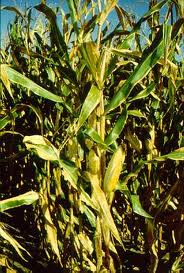
So, as water conservation becomes increasingly more urgent, I began to research some efforts geared to the alleviation of the largest use of freshwater—agriculture.  The media is saturated with advertisements of drought-resistant and other GMo and hybrid plants.  And in response to the ever-changing climate, chemical-producing companies are racing to release the first species of drought-tolerant corn.  They claim these genetically modified and hybrid plants may be the answer to a potential food crisis, but they also seem to have an ulterior motive of extorting millions of already economically drained farmers.

While these developing drought-tolerant plants may be one aspect of reducing the stress of water conservation, another solution has already been proven and researched that farmers can do instantly without paying for special seeds from these mega producers. Continue reading

The Power of Clean

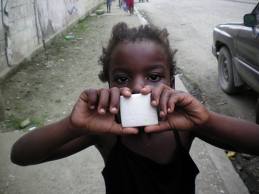
What happens to those little bars of soap in many hotel rooms?  Specifically, what occurs after a guest opens a carefully packaged bar and uses it?  Most guests often do not use all of it.  Some wrap it back up and take it; most leave it for housekeeping.  I have mostly seen the latter; and having some experience in housekeeping operations now, I am shocked at the amount of amenities that are thrown to overflowing landfills every day.  However, my anxiety about this abundance of waste was reduced slightly when I stumbled upon a small, not for profit organization, Clean the World Foundation, Inc., that collects these gently used bars of soap and recycles them to distribute amongst several developing countries and underprivileged communities.

According to Clean the World, millions of pounds of soaps are discarded each day in North America.  These bars not only get wasted and take up space in an overflowing landfill, but they also contribute to groundwater contamination.  Continue reading

The Fundamental Question

It’s something I ask myself every day. I wake up, untangle myself from my bedding, and ask…Why on earth am I here on this planet? I reassure myself with some grounding answers, and once I get a glimpse of the world outside my window I answer like this…

Sustainability is my passion. Sustainable societies. Sustainable economies. Sustainable environments. Got the idea? Basically, my goals focus on sustainable lifestyle for sustainable futures. To achieve this, I not only try practicing an enduring lifestyle, but I also live to promote the conservation efforts of others around the word.

Having been raised in a developed country where varieties of information seem endless, it excites me when less informative, developing countries make strides towards conservation.  Here, I will share my excitement as I discover more about global conservation initiatives, and, in turn, hopefully my accounts will inspire citizens of all originations to join these efforts to conserve and protect the beauty this planet and its inhabitants have to offer.