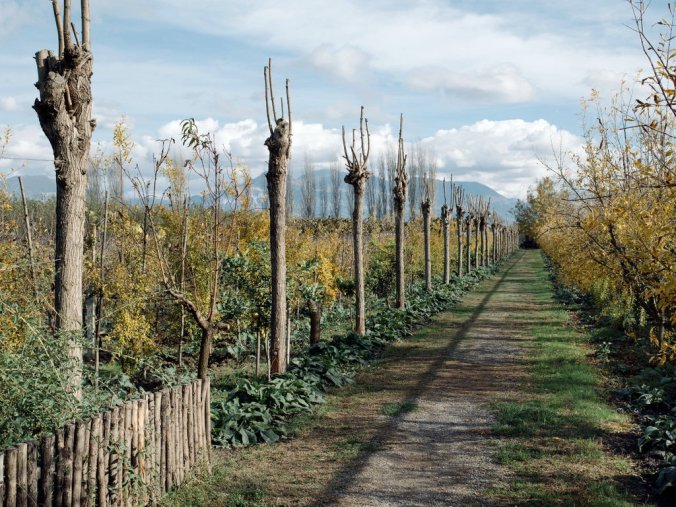
Rows of acacia trees and ceruja vines at Uka Farm, with a view of Dajti Mountain National Park in the distance. Federico Ciamei
Ten years ago I was in Tirana and if I squinted I might have seen this article coming. I was working on a project for the United Nations Development Programme, focused on the Prespa Lakes Basin, and the visits in Tirana were like a time warp. In a good way, as it is now more easy to see:
The City Poised to Become Europe’s Next Affordable Creative Haven
In the Albanian capital of Tirana, the country’s strange history and bright future collide.
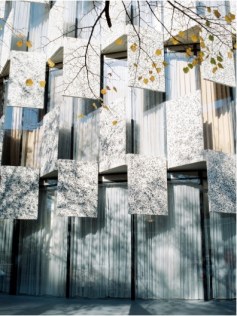
The paneled facade of the Plaza Tirana. Federico Ciamei
Over the past five years, Albania has been discovered by travelers as that rare thing: a largely unexplored corner of Europe (one with some 265 miles of coastline). The small Balkan country sits just across the Adriatic and Ionian seas from Italy’s heel and a mere 45-minute ferry ride away from the Greek island of Corfu. It’s recently gotten its first high-end waterside resorts, and as the beach town of Sarande and the seaside city of Vlore have become more comfortable, so too has Tirana — the country’s capital, about 22 miles inland with a population of over half a million — grown more cosmopolitan, with new restaurants, shops and galleries joining the almost surrealist pastiche of testaments to the city’s past. For a good example of the way eras collide in Tirana, just visit Skanderbeg Square, recently renovated with new fountains and rosy granite paving, and home to an 18th-century mosque and minaret, a domed Albanian Orthodox church opened in 2012, a set of government buildings that echo the fascist architecture of Mussolini’s Italy and a Brutalist monolith that houses the National Historical Museum.
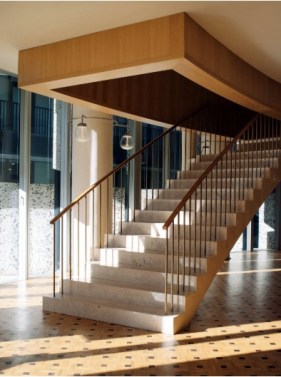
A sun-dappled staircase at the Plaza Tirana leads to the hotel’s breakfast room. Federico Ciamei
Initially settled by Illyrian and Greek tribes during ancient times, Albania spent over four centuries as part of the Ottoman Empire. After 1912, it became a fascist-leaning monarchy, and then, in the wake of World War II, a Communist state ruled by the infamous dictator Enver Hoxha. In 1991, a full year behind many of its Eastern Bloc neighbors, the country saw its first democratic elections, as well as murmurings of a cultural awakening. Tirana may not have a robust avant-garde scene, but it does have a gritty, iconoclastic edge — the Pyramid, a large monument to Hoxha in the center of town, is now popular with skateboarders — and a joie de vivre that’s enticed many former expats. “There’s so much potential,” says Flori Uka, a local winemaker who trained in northeastern Italy and now specializes in vintages made from organic Kallmet grapes grown just outside the city. “We were isolated for so long, but today it’s possible for creative people to do what they love. The place has become very receptive to the new.” Continue reading
 Organikos