 It’s said that about 70% of communication is nonverbal. However in the case of Kathakali, which has its own stylized language of dramatic movements, stories – epic classics even – can be 100% told without uttering a single word. Next door to the Kalari Centre where Sung and I witnessed the impressive show of Kalari Payattu, is the Mudra Centre for Kathakali: yet another cultural spectacle that originated in the southern Indian state of Kerala.
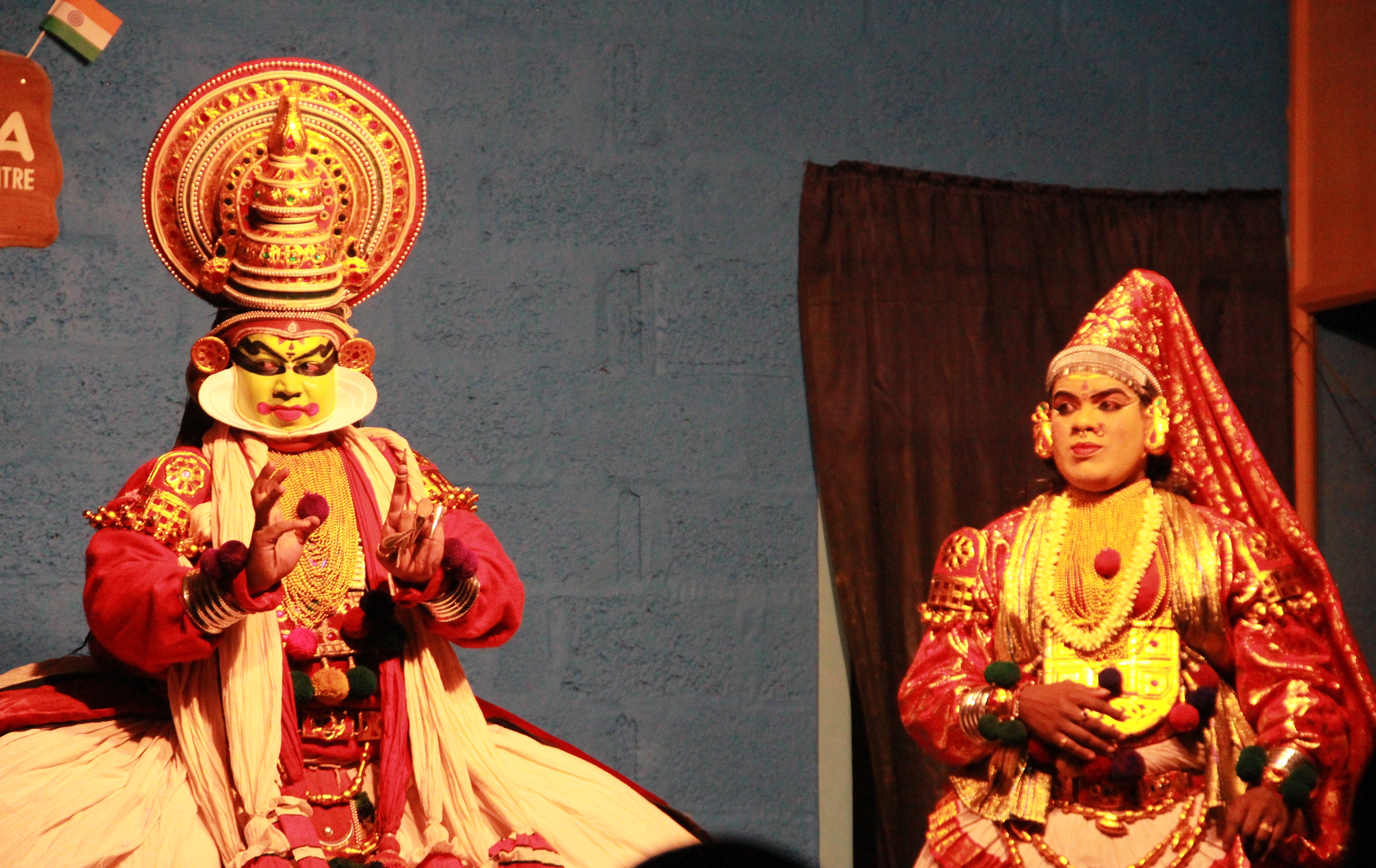 This dramatic dance art is not unlike Japanese Kabuki theater. Elaborate costumes and heavy make-up allow male actors to play female characters; and they do not speak – well, not with words anyway. Instead, they use a different vocabulary called mudras, a taxonomy of 24 hand gestures that in isolation or combination communicate any range of ideas. The mudra representing a deer was demonstrated for us, as was the combined mudra representing a bee buzzing about a blossoming lotus flower.
In addition to the hand gestures, there are nine main facial expressions, called natya. These express more emotive communications like anger, adoration, fear or disgust. The eyes play an important role in conveying these expressions, as do the mouth and, to a surprising extent, the cheeks, which the performer deftly twitched with spastic repetition that could only take years of practice to master. Add to all this the physical component of dance itself, and you have an elaborate language, capable of telling tales and entertaining audiences since the 17th century.


With shows every evening from 7pm to 8pm, the doors of this venue open in the 6 o’clock hour for audience members who are interested in watching the performers prepare for the show by donning ornate costumes and painting vibrant colors on their faces. With some costumes weighing over 30kg, it’s no wonder the process takes an hour. The face paint is made of natural materials, which is difficult to believe when you see how deep and saturated the colors are, and a powder is placed in the eyes to turn their whites to red.
Three percussive musicians accompanied the performers. Two of them played drum-like instruments and the third played the cymbals. The music, while not exactly melodic and harmonious the way you might think music should be, accentuated the enactments of the performers. To help communicate the performers’ messages, the bangs and clangs of the music would dramatically crescendo or softly diminish; its rhythms would accelerate and decelerate, further dramatizing the whole experience.
After a preliminary introduction to all these basics, scenes of a classic Indian story were performed for the audience. The female character, a mere mortal, falls in love with the male character, a god. I won’t give away the violent ending, but I will say that the show was quite an intense display of the powers of nonverbal communication. Interested yet? Join the club. While the people I was with may have had differing levels of appreciation for the entertainment value of this art form, we could all agree that it was, at the very least, Interesting.
 Organikos
Pingback: Theyyam – The Ritual Dance « Raxa Collective