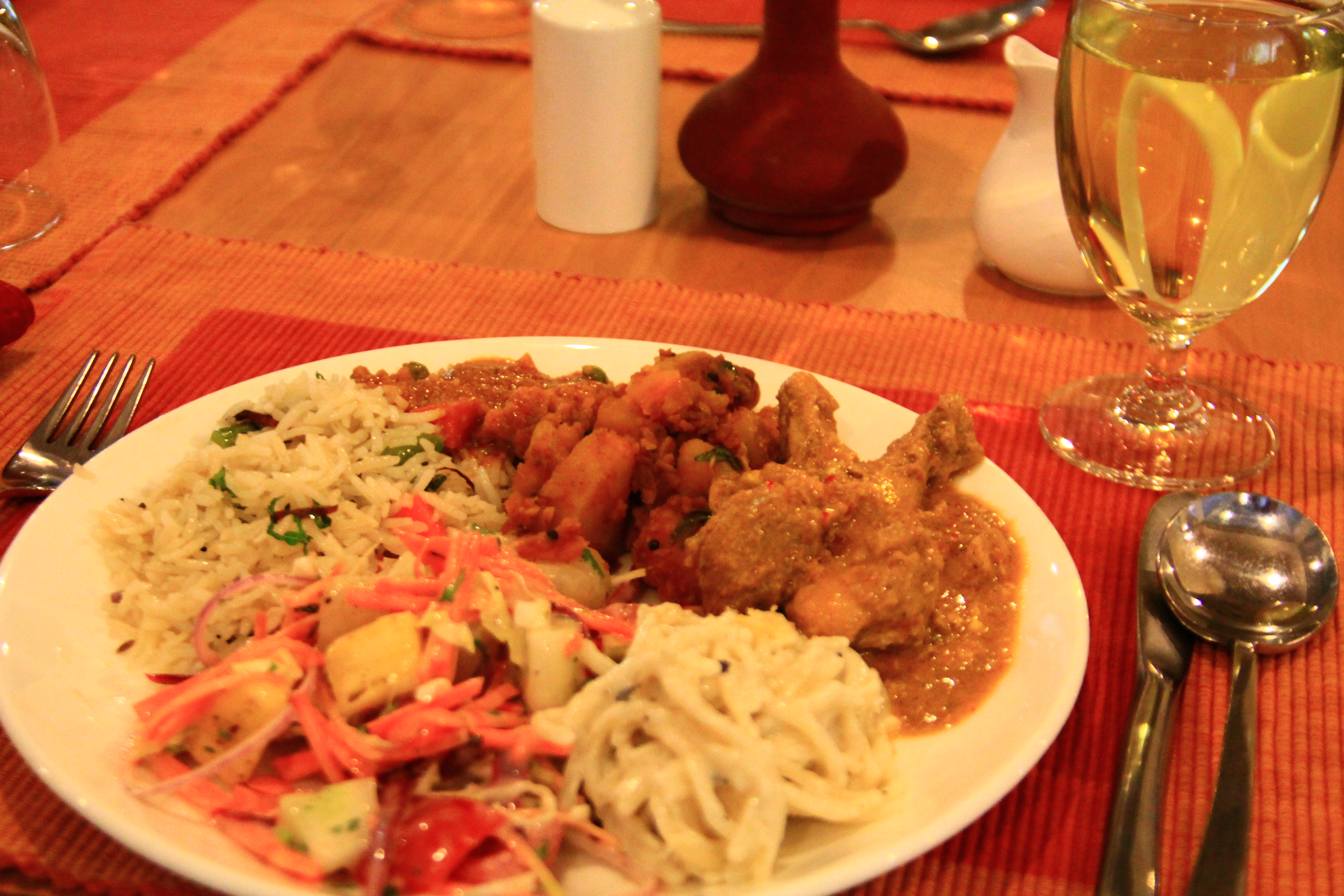
There’s the Myers-Briggs test, the Jungian archetypes, the Japanese with their blood types and the astrologically inclined with their zodiac signs. These are all ways of putting people into classifications of one kind or another, to see which boxes they check and use this as a means of understanding their personalities. These taxonomies are useful for some in their attempts to easily judge books by their covers (or perhaps by their tables of contents). But I’ve got a new one: the buffet approach – comparably empirical but a lot more fun!
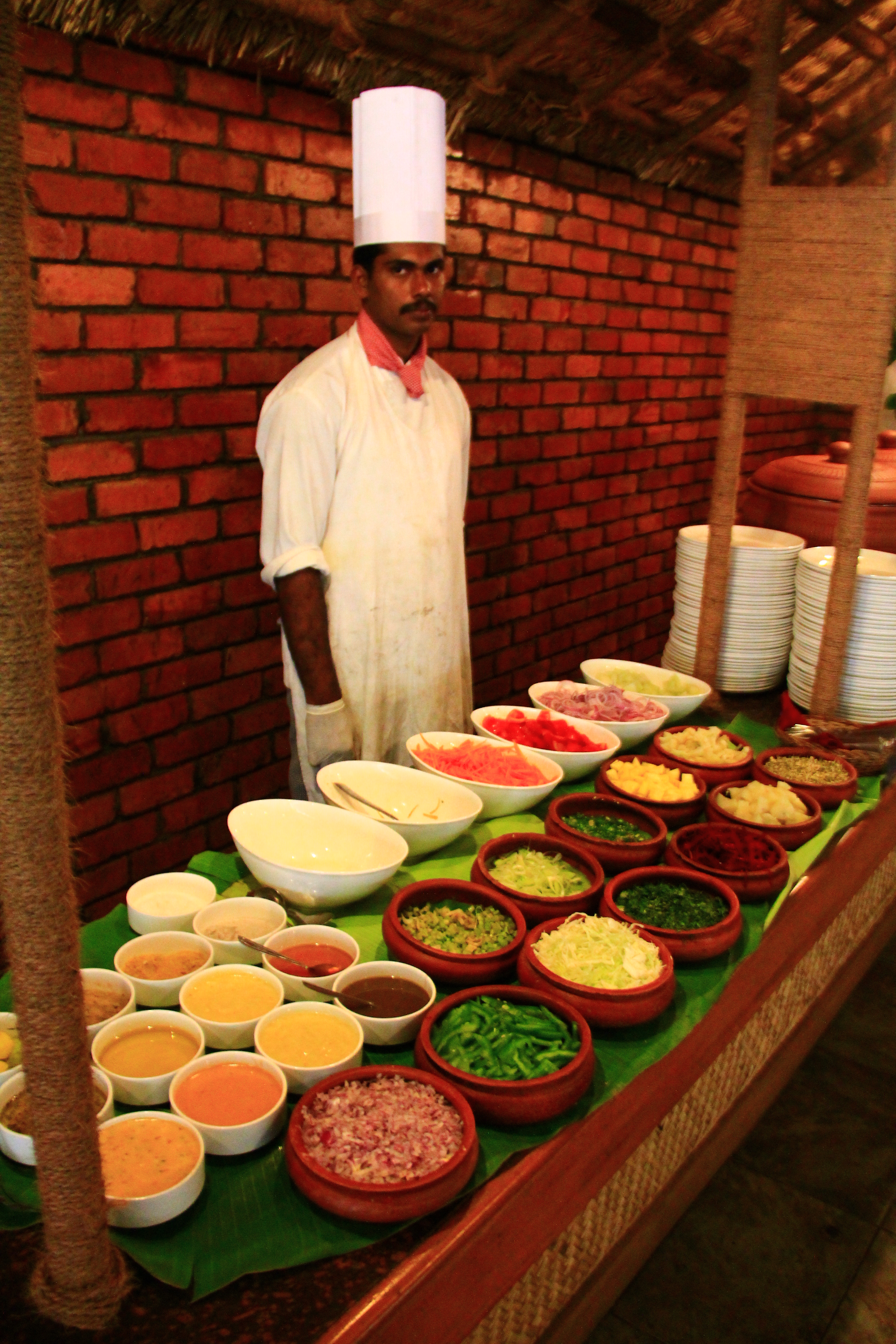 When you’re at a buffet, do you take a little of everything for the first round, then go back for bigger helpings of the dishes you liked best? Or do you browse at first, automatically writing off the red stuff for its overt similarity to a vegan rump roast and skipping the crunchy stuff for its unrecognizable position on the food chain? Or do you phase through it, bit by bit, going back for the things you’ve not yet tried? In my highly rudimentary and anthropologically unqualified analysis, I’d be willing to take your “buffet approach” as a proxy for your “approach to life.”
There are the grazers, particular and self assured. Then there are the nibblers, shy, disciplined and unimposing. And at the other extreme you have the all-out face-stuffers, decadent adventurists for whom a plate’s inadequacy of surface area is just another reminder of the fact that there aren’t enough hours in a day. Of course there would be the combo personalities, like the high-piling sharers, ambitious enough to stack up the sweets yet self-restrained and manipulative enough to make their partner eat the rest. Or the serial nibblers, philosophically conservative yet constitutionally indulgent. I’m telling you, this could be the new Rorschach test.
What gives my thoroughly unacademic theory some potential is the fact that a buffet changes the nature of nourishment. Establishments that don’t charge for uneaten servings or limit portion sizes (although they should) shift the paradigm of food as a limited resource to one in which plentitude is implicit in the experience. Diners are not restricted, then, by a la carte prices and serving sizes. Instead the limitlessness of the food gives people the freedom to utilize their table space with whichever strategy (or lack thereof) they see fit. In effect, the need to feed is shifted up on Maslow’s hierarchy by a notch or two, or even three. Instead of a physiological need it resembles more of an esteem need, providing people with a taste of self-actualization, if in some microcosmic form.
So the next time you’re at a buffet, have a look at the plates and the people around you, and give them a good judging. See if you can conjecture anything about what kind of people they are, or their philosophies on life. While I don’t normally condone the practice of judging others, this one’s a bit of harmless fun. You might even be able to discover or reconfirm elements of your own self-perception (a la daily horoscope), something we all like to do. If I may make a shameless plug of a good buffet to try this out at, book a room at Cardamom County one weekend. The buffets I experienced there had me buzzing about like a bee in garden – a foreign garden with diverse and delightful flowers – and allowed me to reconfirm my self-concept as one of those all-out face-stuffers. But with food that good, I think most people would fall into that category, adding to my theory the contingency of context. At a good buffet, like those at Cardamom County, people are more likely to lean toward the bon vivant side of the spectrum, loading up on the flavors. At a not-so-good buffet, there might be a higher population of nibblers. Doesn’t this reflect life in a way? With scarcity comes prudence and with abundance comes indulgence. Now if only I could figure out a way to get someone to fund my research…