Guest Author: Denzel Johnson

Ecuador today doesn’t seem to have industries that might make you think it could be a strong world contender, especially when it comes to foods. Little known to the outside world though, is the small village of Salinas de Guaranda which sits several hours south from the capital Quito. Salinas used to be one of Ecuador’s small mining villages but today represent a booming industry which began due to community run initiatives that are now templates for other parts of Ecuador.

My time in Salinas was unplanned, suggested by some professors at one of Quito’s top Universities, USFQ. Upon arrival, one’s first impression of Salinas is that it’s small. Which it was, especially considering its seclusion from anywhere else within this Andean valley. Full of surprises though, I found that Salinas was developing products from chocolates, to cheeses, teas, meats and clothes. Despite its village roots the brand called ‘Salinerito’ is a symbol of produce made to the highest standard, proudly representing some of the best that Ecuador has to offer. So much seems to be going on in Salinas today, especially as it receives more and more attention, it’s growth could potentially be that of a global brand or at the least, a successful micro economy.

It’s enough to say the locals are doing everything, but without some sort of recognition, growth as an Ecuadorian brand may be difficult. The Ecuadorian government seems to support Salinas and its importance, however. Although the village is secluded and small, during my visit Ecuador’s Minister of Culture was also there acknowledging its significance as a rural development model, acknowledging all their achievements, from their products to the the tourist meetings and organised tours.

The Minister of Culture’s visit was also a celebration.
I had enough time in the village to visit some of the businesses and talk to more than a few people. Just like any small community, everyone within Salinas knew each other but also worked to know the rest of the outside world from the business side. One business I visited, just 10 years old, was family run and called ‘Mama Miche’. They sold everything from community staples to packaged meats, cheeses and chocolates which tourists were always sure to purchase before leaving the village. “Tourists” in the village were rarely international but instead Ecuadorian. I found it interesting how some of Mama Miche’s produce was not only selling in the neighboring town, Guaranda and receiving business attention from the capital Quito, but also making international sales between places as far afield as Europe. This easily explains the reason why the family is continually eager to learn new languages, from English to Italian on top of the list.
It’s not as if the business clusters of Salinas grew by luck, but instead came from the hard work of the locals. What began through the creation of a microfinance cooperative expanded into artisanal agriculture and manufacturing clusters that are now the pride of Ecuador. Tourism in the village is important, and regular community meetings keep everyone up to date, but every small contributing factor for the economy here is as important as the biggest factor.
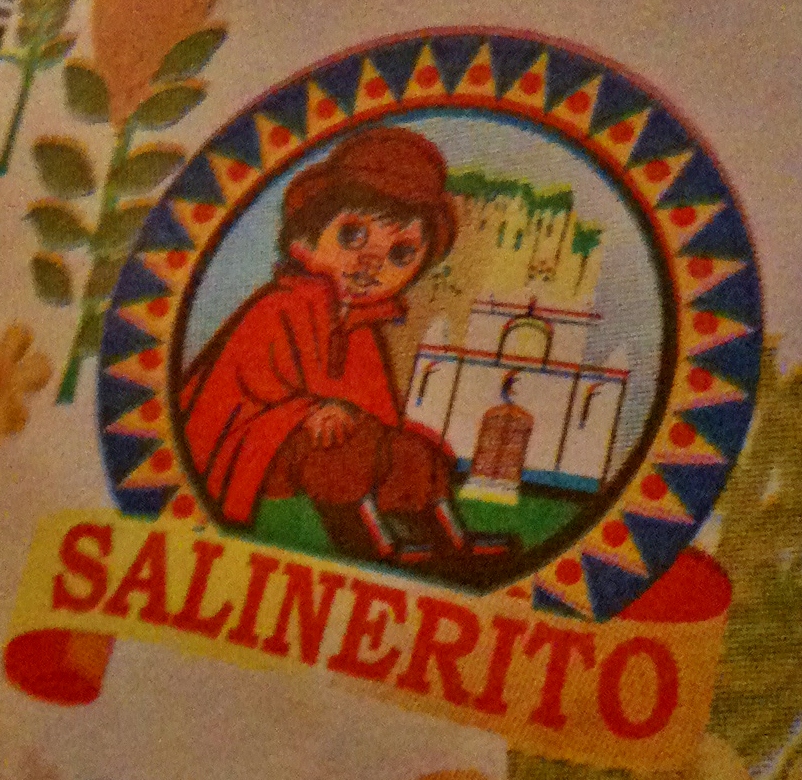
The Salinerito Logo
In a previous post I called Ecuador a “Diamond in the rough” and community initiatives like this make that a fact. Individual business cards with the Salinerito logo? Why not?! Salinerito is growing, and spreading. Definitely worth a visit.
 About the author: I am a student from England currently travelling the Americas on a scholarship from the Royal Geographic Society. My interests come from a geographic point of view aimed at understanding different cultures and what their place is in the modern world.
 Organikos