Scuba Iguana trips start from the office on Charles Darwin Ave. either going north in a taxi to Itabaca Canal or taking a boat at the Scuba Iguana dock behind the office. All boat rides ranged from 35 to 120 minutes, and were generally pretty smooth. On the way, we could see Common Noddies, Blue-footed Boobies, Elliot’s Storm Petrels, Galápagos Shearwaters, and on North Seymour I saw a Red-billed Tropicbird twice! If I remember correctly, some Nazca Boobies were sitting on the coast of Floreana as well.
The crew always consisted of a captain, first mate, and 2-3 scuba guides (depending on the group size, which was 3-8 divers). Once we
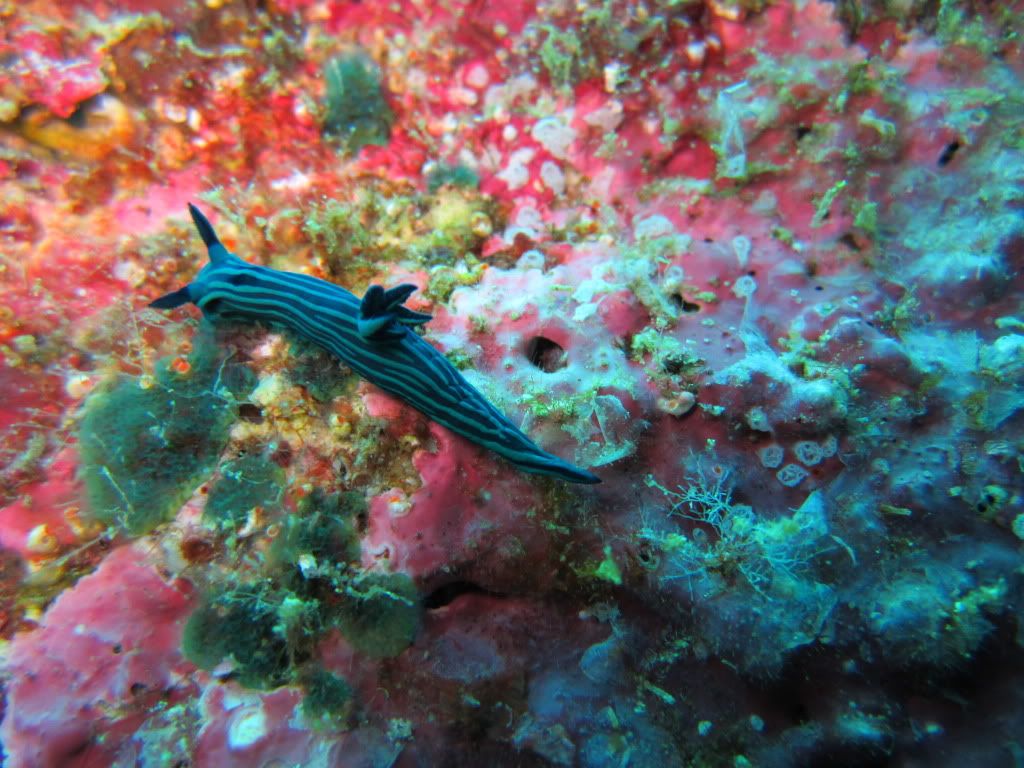
Nudibranch
reached the particular island, we’d either do a check-up in shallower waters or go straight into the dive plan. This briefing basically involved a guide holding up a board with a map and simple topographical diagram of the area, and describing what direction and depths we’d go in. He’d also mention what wildlife we’d look out for and explain the hand signals for these animals. Then we’d all sit on the sides of the boat, get our gear helped on, and fall backwards into the water. At least one of the guides always had a camera in an underwater case, and the photos and videos, as you may have seen so far, were very much worth having. With over thirty species of bony fish (and that doesn’t even account for those I accidentally forgot), seven species of cartilaginous fish—four sharks and three rays—Galápagos Sea Lions, several sea stars, and Green Sea Turtles seen over the course of six dives, the biodiversity and sheer size of fish schools was quite impressive. Considering that my last dive had been for certification in Croatia, under the relatively dull Adriatic Sea in poor visibility, I got very spoiled by these dives.
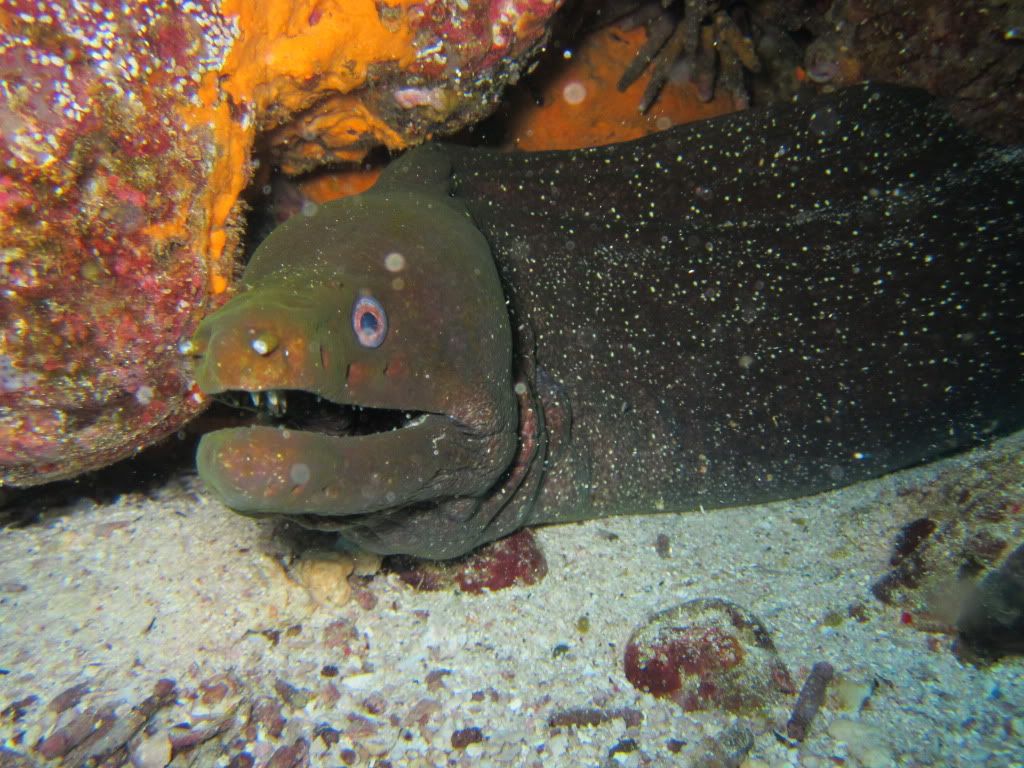
Fine Spotted Moray
Between dives, we’d get hot tea, a small sandwich snack, and rest for about an hour as we moved to the next location. After the second dive, we got a hot lunch (rice, chicken, beans/veggies) and fruit juice. Being able to sit back after dives and let the crew take care of the equipment was convenient not only for relaxation, but also for reducing the likelihood of mistakes in reassembling gear, which is something I fear as a relatively inexperienced diver. This was one of the great benefits of diving with Scuba Iguana: feeling safe and taken care of all along the way, leaving me free to enjoy the dives completely and learn to calmly slow my breathing to lower my air consumption below water. If you missed my first three videos of my dives with Scuba Iguana, here are the links!
My First Dives in Galápagos (1/2)
 Organikos
Pingback: The Oceans’ Invertebrates, Inveterately Out of This World | Raxa Collective