
Machines and Gods: Dionysus at MCCM
The Musei Capitolini Centrale Montemartini is an interesting place, to say the least: it combines Italian machinery of mammoth proportions from the Industrial Revolution with ancient Roman statuary. These statues include the monolithic “Fortuna Huiusce Diei” (“Fortune of This Very Day”), various Greek gods (Venus, Dionysus as pictured above, and others), Roman emperors, famous statesmen, and lesser known wealthy citizens; the machinery, on the other hand, consists in titanic pieces of metal that when whirring generated tens of thousands of horsepower.
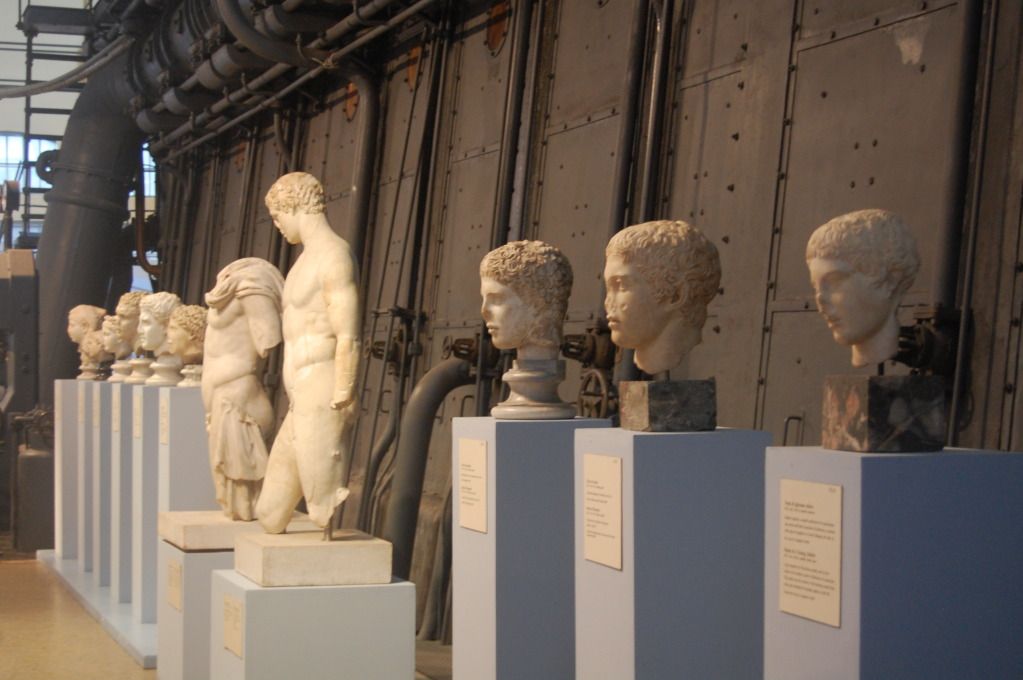
How did these enormous machines–once keeping scores of men as thralls to tend and feed them–come to serve as backdrops to the flowing marble of millennia past? (Perhaps it is unfair to call them backdrops; I found more than once my eyes drawn to their awesome presence, away from the Roman pugilist or priestess I had been contemplating.) According to the story, the power plant (decommissioned in the 1960s) had served as a temporary storage site in the ’90s for the statuary that could no longer fit in fit in the restructured Capitoline complexes of Rome. The rest is history, although one wonders at the discussions that must have taken place around the move to turn the plant into a museum for classical statue: (from the museum’s website)
The outstanding museum space was originally thought of as a temporary solution. However when part of the sculptural collection was returned to the Campidoglio in 2005, on the conclusion of the restructuring works, it was decided to turn the building into a permanent location for a collection of the Museio Capitolini’s most recent acquisitions.
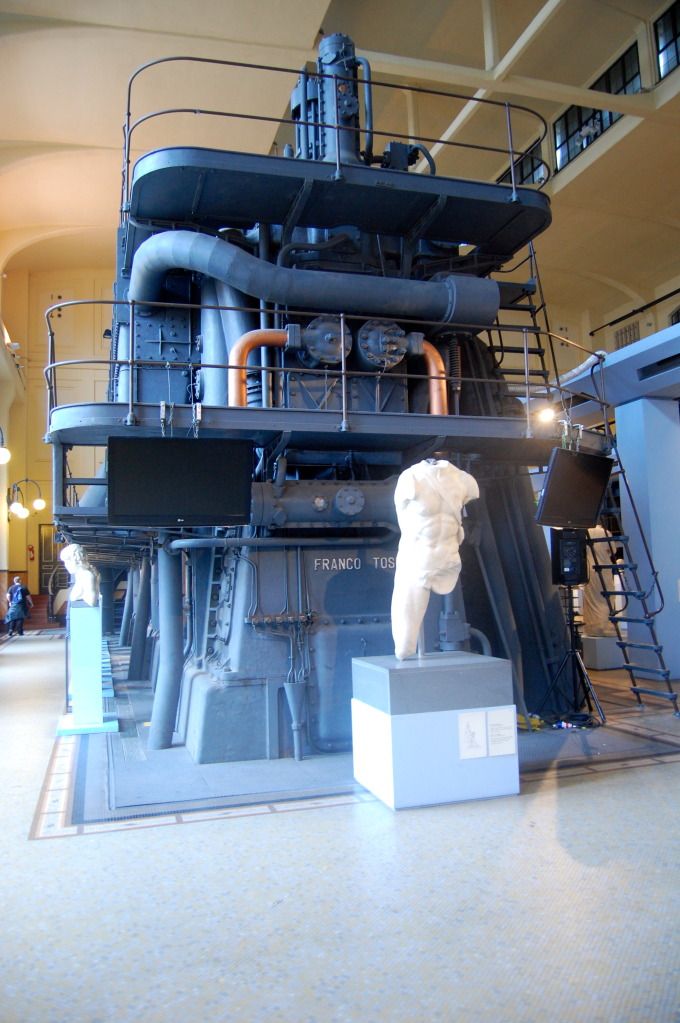 The MCCM museum is a wonderful place to visit if you’re ever in Rome. It’s never too crowded, and in addition to its many statues, it has a frieze from the temple of Apollo Sosianus (the ruins of which are located near the Theater of Marcellus in downtown Rome), a large mosaic of a hunting scene, and other cool artifacts. Not to mention the sheer aesthetic overload that one receives in the juxtaposition of the heavy machinery and ancient white marble. It is hard not to try to form some historical narrative or make a grand comment about material dialectics and labor relations. Assuredly each person who comes to this site will have a fundamentally different experience with the space based on his or her own experiences and outlook.

 Organikos