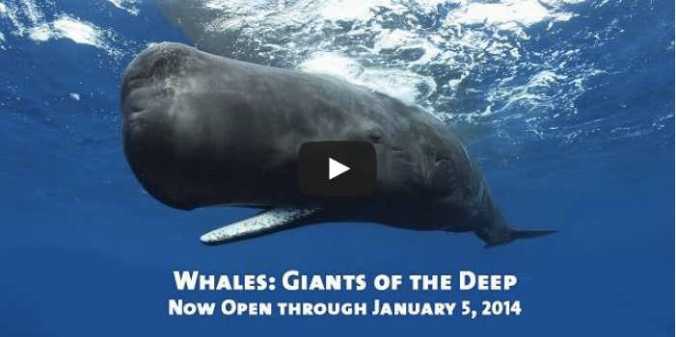
The exhibition goes well beyond that big whale you may remember in that great open space at the Museum:
Whales: Giants of the Deep explores the latest research about these marine mammals as well as the central role they have played for thousands of years in human cultures. From the traditions of New Zealand’s Maori whale riders and the Kwakwaka’wakw peoples of the Pacific Northwest to the international whaling industry and the rise of laws protecting whales from commercial hunting, the exhibition traces the close connections humans and whales have shared for centuries.
Through a variety of interactive exhibits, visitors will experience a re-created dive to the depths of the sea with a sperm whale on the hunt for a giant squid, crawl through a life-size replica of the heart of the blue whale—the largest living animal on the planet—listen to whale croons, and meet people whose lives have been inextricably linked with whales—from legendary whale riders to scientists and former whaling families.
On tour from the Museum of New Zealand Te Papa Tongarewa, which houses one of the largest whale collections in the world,Whales features more than 20 skulls and skeletons from various whale species and showcases many rare specimens, including the real skeleton of a male sperm whale measuring 58 feet long (or about 18 feet longer than a school bus); life-size and scale models of whales common in the South Pacific; and ancient and contemporary objects made from whale bone and other materials such as weapons, chiefly adornments, and jewelry.
The exhibition also includes rarely-viewed specimens and artifacts from the American Museum of Natural History’s world-class collections, such as the massive skull of Andrewsarchus, a land-dwelling relative of whales; cultural objects depicting the power, majesty, and importance of whales to humans; and a log book from a whaling ship that sailed out of New Bedford, Massachusetts, in 1830.
And then some:
Exhibition Highlights

About the Exhibition
Whales: Giants of the Deep transports visitors to the vibrant underwater world of the mightiest animals on Earth.

Whale Evolution
Whales are mammals, and their ancestors once lived on land. So how did they come to live in the sea?

Whale Biology
Whales are divided into two main kinds – baleen and toothed. These two groups are broken into smaller and smaller groups until they get down to individual species.

Whale People
For centuries, humans have revered whales, hunted them, and explored their astounding adaptations to life in the sea.
 EDUCATOR GUIDE
Whales: Giants of the Deep for educators
The Whales: Giants of the Deep exhibition takes an in-depth look at these marine mammals and the role they have played for thousands of years in human cultures. This comprehensive guide will help you explore the exhibition with your students.

Related Programs
Visit the Museum this season for exciting programs about whales and oceanic habitats.

Whales: Giants of the Deep was developed and presented by the Museum of New Zealand Te Papa Tongarewa. This exhibition was made possible through the support of the New Zealand Government.
The American Museum of Natural History gratefully acknowledges the Richard and Karen LeFrak Exhibition and Education Fund.
Generous support for Whales: Giants of the Deep has been provided by the Eileen P. Bernard Exhibition Fund.
 Organikos
Reblogged this on Freedom for Cetaceans.