The Hindu
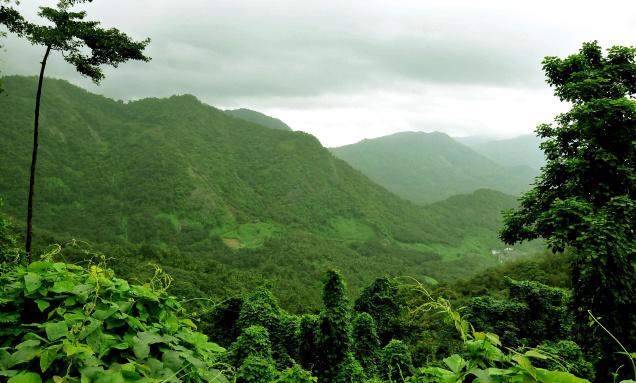
Local farmers in the Western Ghats, like their counterparts everywhere, generally want to be unencumbered to do what farmers do. Any given morning we wake up feeling complete solidarity with farmers. Full stop. We wake up every day looking for opportunities to support conservation where we live and work. Full stop. Currently, one such region where we work, known as the Western Ghats in southern India, is wrestling with the challenge of letting farmers be farmers while also allowing the ecosystem–one of those rare places worthy of being called a biodiversity hotspot–to continue to be the ecosystem. Sometimes, farmers and ecosystems do not get along well. We thank the Hindu for its coverage of this issue, which is much more complicated than one article can convey:
…The sites, spread over 34 countries, “harbour the majority of the populations of more than 600 birds, amphibians, and mammals, half of which are globally threatened. Many of these irreplaceable areas are already designated as places of ‘Outstanding Universal Value’ under the UNESCO World Heritage Convention,” the report said.
Another recent study published in the journal PLOS ONE has put ghats as one of the “10 global priority regions where targeted funding for building resiliency and adapting to the impacts of climate change.”
Besides the ghats region, Central America, Caribbean, Andes, Guiana Highlands, Atlantic Coast of Brazil, Albertine Rift, Madagascar, Philippines and Java were identified as the global priority regions.
The study was jointly carried out by the Conservation International and BI in association with universities of California at Santa Barbara, Kansas, Seoul National University and Lincoln University of New Zealand.
All the regions identified “intersect with global Biodiversity Hotspots and cover 13 per cent of currently cultivated land in the tropics and 7 to 9 per cent of the world’s population living in poverty. These priority regions have high likely return on climate adaptation investments in both poverty reduction and conservation,” according to the report.
Around 45 per cent of the bird species of India, numbering around 500 species, could be found in the ghats region, pointed out P.O. Nameer, South Asian coordinator, in situ, Conservation Breeding Specialist Group, Species Survival Commission of the IUCN.
Recent researches have succeeded in identifying more number of species endemic to the region which is spread over six States. There is a general feeling among the researchers that the ghats is abode to a large number of endemic and yet undiscovered plant and animal varieties. However, no concerted efforts had gone into systematic documentation and monitoring of its biodiversity wealth on a landscape basis, he said.
Read the whole story here.
 Organikos