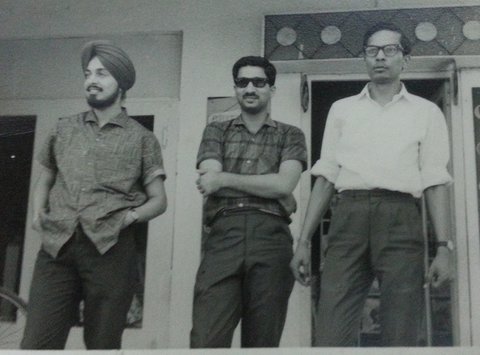
Courtesy of K.D. Singh. K.D. Singh, left, and Kuldeep Shankar, right, owners of “The Steakhouse,” with their mutual friend Anil Arora at the store in New Delhi in the 1960s.
Thanks to India Ink for this article on the evolution and sometimes radical change in food shopping and consumption patterns in India. For those of us from foreign countries working, interning, volunteering with, or visiting as guests of Raxa Collective in India, this news can be put in perspective only relative to the time since 2010, when excellent ice cream became available in Kerala on a regular basis; then, excellent gelato; and more recently otherworldly staples such as good olive oil have found their way onto the shelves of certain grocers.
That may matter to some of us non-Indians more than to our Indian colleagues and friends. Suppliers to our lodging properties continue to supply the high quality domestic inputs we need to produce top quality south Indian cuisine–no change sought on that front until now, as we prepare to open 51, our new restaurant in Mattanchery which will highlight some of the eastern Mediterranean influences on Malabar cuisine, more on which another time. For now, just a shout out of this story:
These days, it’s easy to find once-exotic foods like spaghetti and Parmesan cheese at grocery stores in India. For that, food lovers can thank the proprietors of Steakhouse in central Delhi, one of the first stores that catered to a certain aesthetic of consumerism in India, where an aspiring and growing middle class sought the opportunity to partake in a slice of Western culture.
In 1963, the year Steakhouse opened, neighborhood kirana stores, as they were called then and now, provided for such daily needs as tea, coffee, cereal, butter, milk and toiletries, and often were manned by a middle-aged gentleman and sometimes his other family members, who were, more often than not, refugees from across the border.
Read the whole article here.
 Organikos