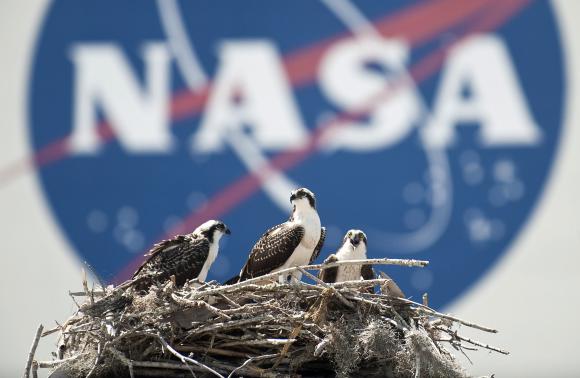
A family of Osprey are seen outside the NASA Kennedy Space Center Vehicle Assembly Building in Cape Canaveral, Florida in this file photo taken May 13, 2010. CREDIT: REUTERS, BILL INGALLS, NASA
Anyone who has been following Raxa Collective’s blog for more than a day is probably aware that we pay close attention to birds. We do this because many of the places where we operate conservation-focused lodging are also exceptionally biodiverse bird habitats. Most of the travelers who visit our properties are at least interested in birds, and many are serious bird-watchers. But we also pay attention to birds for the same reason we pay attention to science in general: they are an indicator of the health of our planet and we want to both pay attention to the indicators and understand them better. Science matters. So, in general, we are NASA fans. But the story here makes us wonder what Solomon’s wisdom might advise:
Florida’s plan to build a commercial space launch complex in a federal wildlife refuge surrounding the Kennedy Space Center drew sharp words from environmentalists and strong support from business boosters during the project’s first public hearing on Tuesday.
Advocates say the proposed spaceport is needed to retain and expand Florida’s aerospace industry, which lost about 8,000 NASA and civilian jobs after the shutdown of the space shuttle program in 2011.
Opponents of the plan to carve out about 200 acres from the 140,000-acre (57,000-hectare) Merritt Island National Wildlife Refuge cite concerns over protecting the refuge’s water, seashore, plants and wildlife, which include 18 federally listed endangered species.
“It’s a very pristine, natural area. It’s clear water … very unique. You don’t have that anywhere else in Florida,” said Ted Forsgren with Coastal Conservation Association of Florida, which strongly opposes the project.
Advocates point to blueprints for new commercial spaceports in Texas, Georgia, Arizona and other states that will operate under the more business-minded Federal Aviation Administration, rather than as a guest of NASA or the U.S. military, which run Kennedy Space Center and the adjacent Cape Canaveral Air Force Station primarily in support of their own missions.
“When NASA is again aggressively launching to the moon or Mars or asteroids or wherever we end up going, I don’t see them standing down to allow commercial activity to proceed unimpeded,” said Dale Ketcham, a strategist with the Space Florida economic development agency that is spearheading the proposed Shiloh Launch Complex.
The site on the Merritt Island refuge that the state wants to carve out for a commercial space launch complex would house one or two launch pads, processing hangars and support facilities, which would be built with private funds.
Prospective tenants include Blue Origin, a startup rocket company owned by Amazon founder Jeff Bezos, and Space Exploration Technologies, which is owned and operated by technology entrepreneur Elon Musk and which already flies its Falcon 9 rockets from leased Air Force launch pads in Florida and California.
The first public hearing on the project was hosted by the FAA on Tuesday in New Smyrna Beach. A second hearing is planned for Wednesday in Titusville. The environmental assessment and related studies are expected to take about 18 months…
Read the whole story here.
 Organikos