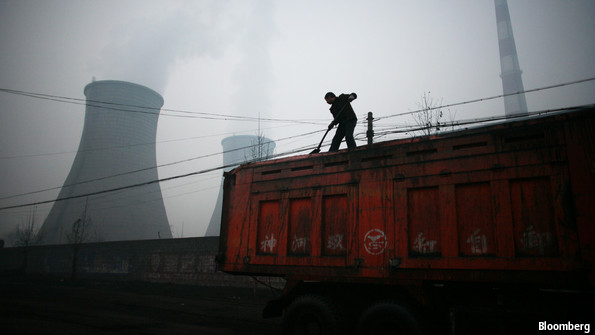
Where there’s smoke, there’s ire
Thanks to the Economist magazine for this update on a set of laws that have not been able to keep up with the pace of development:
Environmental protection
Green teeth
The government amends its environmental law
AT LAST year’s annual session of the National People’s Congress, China’s legislature, Li Keqiang, the prime minister, said the notoriously bad air quality in Chinese cities made him “quite upset”.
At this year’s session, in March, Mr Li went much further, saying it was time for China to “declare war” on pollution. Like the rhetoric, Chinese law is now to be upgraded to deal more stringently with polluters.
The nation’s Environmental Protection Law has been amended for the first time since it was passed in 1989. The new provisions, due to take effect in January, will allow for stiffer fines against polluting companies, detention of negligent executives, protection for whistleblowers, and penalties for officials who fail to enforce laws.
Many ordinary Chinese have shown they want firmer controls. Protests over environmental problems have become commonplace, including one in the eastern city of Hangzhou on May 10th when police vehicles were overturned and dozens of people were injured. Residents were protesting against plans to build a rubbish incinerator, which they fear may emit mercury and dioxin. In April thousands protested in the southern province of Guangdong against a proposed chemical plant.
Their concerns are legitimate. Although smog in Beijing and other cities wins most international attention, it is just one of many environmental hazards that Chinese residents face. In much of China’s countryside, water and soil are as badly polluted as the air in its cities. A recent study by Greenpeace, an international NGO, found widespread and dangerous levels of heavy-metal contamination of rice grown near mines and factories. A Chinese government report into the pollution of China’s soil was finally released in April as a result of public pressure, having previously been classified as a state secret. It says a fifth of China’s agricultural land is polluted.
Another recent report, based on official statistics from a range of government agencies, said that 85% of the length of China’s six biggest river systems consisted of water deemed undrinkable even after treatment. The proportion of groundwater that is polluted rose from 37% in 2000 to 60% in 2013.
Read the whole article here.
 Organikos