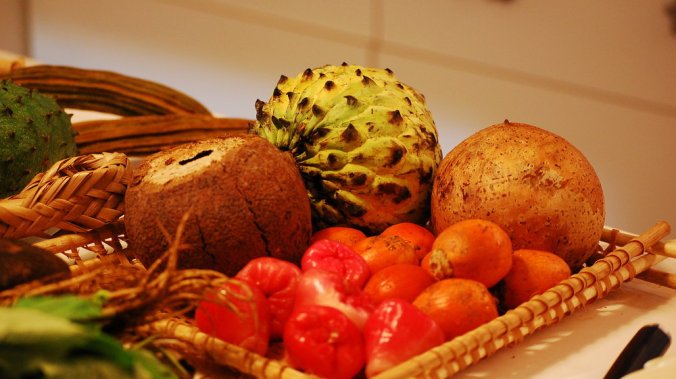
Brazilian fruits, including jambu and tapereba (lower right), displayed for a gathering of chefs in Sao Paolo. Paula Moura for NPR
Thanks to the salt, as always, for bringing us diverse stories about what we eat, where it comes from, and who is doing what to ensure that our food future is a good one:
Culinary superstars gathered in the Brazilian city of Sao Paulo this month at an event organized by the Basque Culinary Center. But they weren’t there to cook. Instead, the the famous chefs were talking about biodiversity.You may heard their names before: Ferran Adria of Spain, Alex Atala of Brazil, Michele Bras of France and Enrique Olvera of Mexico. They are so called super-chefs who’ve lorded over the kitchens of some of the priciest, most innovative restaurants in the world with the Michelin stars to prove it.
But here are some unfamiliar names for you to consider: jambu,tapereba, cajá. If you don’t recognize these Brazilian delicacies, don’t worry. Most of Brazilians don’t either. These local fruits, displayed for the gathering of chefs, look as exotic as they sound, with bright colors and unusual textures.
The chefs here are meeting to discuss food biodiversity. It’s no coincidence the meeting is happening in Brazil – Latin America, and Brazil in particular, is one of the most bio-diverse places on earth. There are strong culinary traditions here with deep roots.
But studies also show that in countries like Brazil, traditional foods like cereal grains, vegetables, fruits, nuts and roots are being replaced with industrialized convenience foods like soft drinks, crackers and cookies. The availability of those three processed food categories increased more than 400 percent in Brazilian households between 1974 to 2003, one study found.
Alex Atala’s D.O.M. restaurant in Sao Paulo has been rated one of the best in the world. The recent biodiversity event was sponsored by his ATA Institute, which focuses on sustainability in the Amazon…
Read the whole article here.
 Organikos