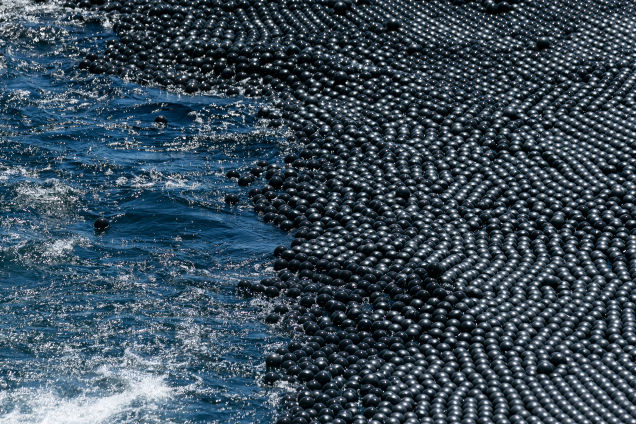
A small portion of the 90 million black plastic balls added to the Los Angeles Reservoir on August 12, 2015. Image credit: AP/Damian Dovarganes
In a drought, every drop of water is precious, including those lost to evaporation in the hot summer. But in a massive open reservoir, how do you prevent that from happening? Facing a long-term water crisis, officials concerned with preserving a reservoir in Los Angeles hatched a plan: They would combat four years of drought with 96 million plastic balls. On Monday, the 175-acre Los Angeles Reservoir saw the final installment of the project: 20,000 small black orbs that would float atop the water.

The shade balls explained, courtesy TIME
“In addition to cutting back on the need to chemically treat our water to prevent natural occurrences like algae, these shade balls are a cost-effective way to reduce evaporation each year by nearly 300 million gallons, enough to provide drinking water for 8,100 people for a full year.”
The reservoir, which holds a total of 3.3 billion gallons, is protected from more than just evaporation and algae. According to a LADWP release, the balls also help keep the water cool, deter birds and other wildlife, and reduce the amount of wind-blown dust entering the water.
Each ball, which is partially filled with water, costs $0.36 to make, bringing the cost of the project to a total of $34.5 million. This, the department said, is a savings of $250 million compared to alternative water saving techniques, such as splitting the reservoir in two or installing floating covers.
And if you’re wondering why black over white, if the purpose is to keep heat away (remember the science lesson about white being a good reflector of light?), then read on:
The purpose of shade balls is to provide shade, not to prevent evaporation. The primary purpose of the shade balls is to block sunlight so the ultraviolet light doesn’t catalyze nasty chemical reactions. Chlorine can accelerate reactions leading to bromate when exposed to UV light, which is a carcinogen that really should violate drinking water standards instead of merely being a thing it’s nice to minimize. It is a secondary benefit that the shade also reduces evaporation, a small but important smidgeon of water savings during the ongoing extreme drought.
Read more here.
 Organikos