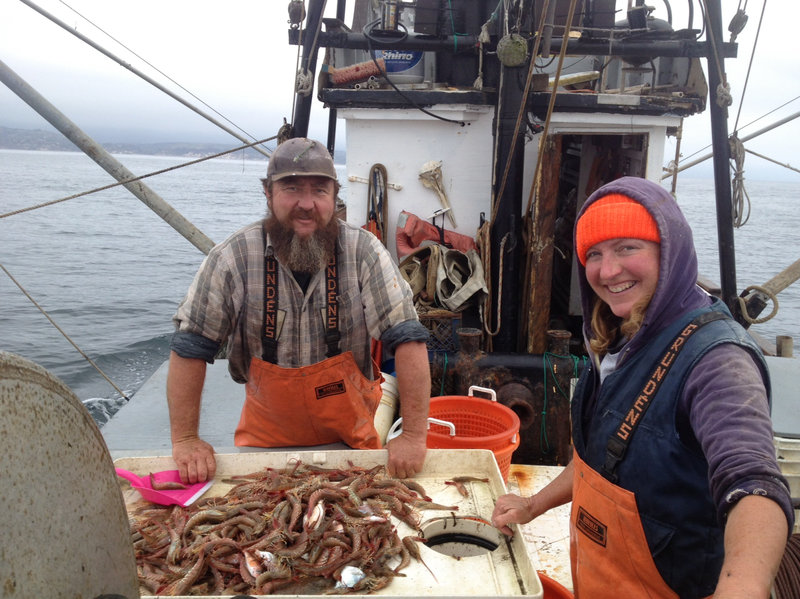
Sixteen Santa Barbara-based fishermen are participating in the Dock to Dish pilot program in California. Seen are Keith and Tiffani Andrews fishing for ridgeback shrimp on the fishing vessel Alamo. PHOTO: Sarah Rathbone
You’ve heard of farm-to-table. At its heart, farm-to-table means that the food on the table came directly from a specific farm. Also emphasizes a direct relationship between a farm and a restaurant or store. The vocabulary of the movement is changing now to include produce from the seas, giving birth to the concept of dock to dish.
The pile of fish marks an important step toward a fundamentally different way that prominent chefs are beginning to source American seafood: the restaurant-supported fishery. Call it an evolutionary leap from community-supported-agriculture programs, which support local farmers, and community-supported fisheries, which support small-scale fishermen. Both models rely on members who share the risks of food production by pre-buying weekly subscriptions.
NPR‘s The Salt brings you more on the movement that’s beginning to rule kitchens:
Chef Michael Cimarusti of Los Angeles-based restaurant Providence is acting as the pilot chef for California’s first such fishery, run by an organization called Dock To Dish. To start, Cimarusti has agreed to buy at least 300 pounds of whole, unprocessed, fresh seafood a month from 16 Santa Barbara-based fishermen participating in the program — approximately a four-day supply for his restaurant.
Cimarusti is a longtime advocate for sustainable seafood. Participating in the program guarantees he’ll have consistent access to the freshest California fish available, caught by small-scale fishermen using sustainable gear including hook and line, traps and spear. What the chef won’t have is any control over the species that will land in his kitchen each week.
“With this model, the chefs aren’t telling us what they want — whether it’s good weather or fish are biting,” says 39-year-old fisherman Eric Hodge. Instead, Hodge and other local fishermen will supply Cimarusti and future participating chefs with whatever nature, skill, and a little luck land for them each week. And because the chefs will buy the fish whole, hours of intense labor — cleaning, gutting and filleting — will now fall to restaurant kitchen staff, instead of the fishermen.
This week, Cimarusti is scoring some gorgeous yellowtail and white sea bass. But at other times there’s a strong possibility the chef may have to persuade his customers to choose less familiar, but locally caught, sheepshead or shovelnose guitarfish instead of the usual halibut or salmon. And species like mackerel, anchovies and market squid — which diners might think of as bait — may also end up on his menu frequently. He’ll have to think fast on his feet about how to transform the unfamiliar into the enticing.
“We have a 10-year repertoire of dishes we can call upon,” says Cimarusti. “Necessity is the mother of invention. Maybe the excitement of bringing in all these new things will spark inspiration. When 75 pounds of fish shows up at the back door and you have to do something with it, it’s an exciting challenge.”The idea behind the restaurant-supported fishery isn’t only about moving chefs away from the mostly imported seafood we typically eat: shrimp, tuna, tilapia and farmed salmon. For fishermen like Hodge, it means he will be able to consistently sell his catch at a higher price than he can get from a wholesaler, enabling him to keep the Myrna Louise, his 17-foot, biodiesel-powered skiff named for his mother, afloat. And that’s a compelling draw for Cimarusti.
“I’m so often asked about issues of seafood sustainability, and I always feel that it’s incredibly important. But the side that is seldom discussed is about those who rely on the sea to make their living. We’re hoping to keep American fishermen on the water,” says Cimarusti.
More on how the model has found a winning streak here.
 Organikos