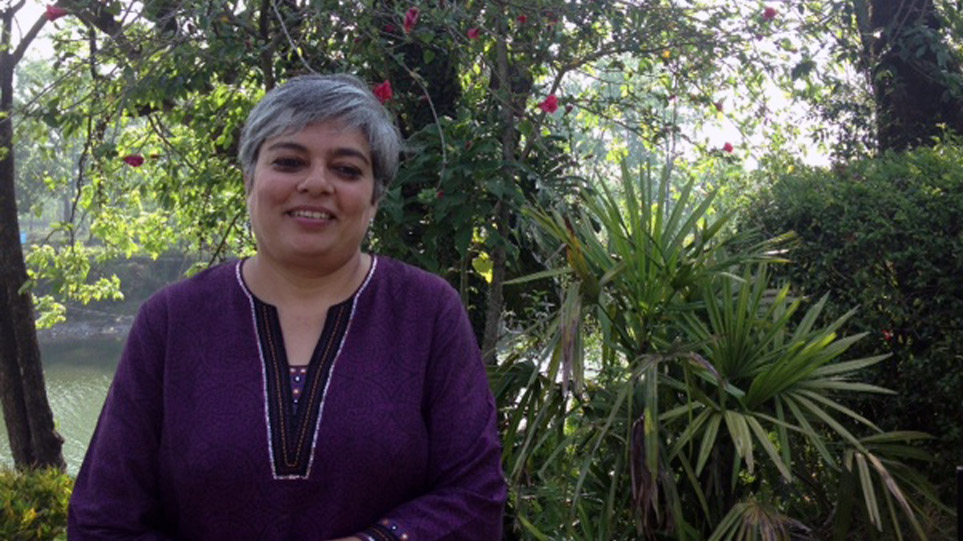
Plant and animal life on Flag Hill, near the hill station town of Mussoorie in north India, has been restored through the efforts conservationist Sejal Worah.
Environmentalist and WWF India Programme Director, Sejal Worah, and her local team have spent the last two years attempting to revive a 400 acres area situated in the Garwhal Himalayas, in Mussoorie, Uttarakhand. From being a degraded and over grazed territory, within two years of conservation efforts the protected area has become a sanctuary for wildlife which hadn’t been reported for years, like the Himalayan black bear and Sambhar deer.
In the fondest childhood memories of Indian conservationist Sejal Worah, Flag Hill features prominently.
Standing just outside the hill station town of Mussoorie in the lower Himalayas Flag Hill offered Dr Worah fresh air and adventure. She climbed its oak trees, explored the corners of its woods, and fell in love with nature.
But when she returned after nearly two decades to Mussoorie in the mid-1990s, she grew distressed at the state of Flag Hill, named after the Tibetan prayer flags strung up on trees by villagers. There was rubbish everywhere, much of the tree cover had vanished, and the wildlife had almost completely dwindled.
“I realised that things were getting really bad,” Dr Worah said.
Having spent the years since her childhood training and working in nature conservation, she decided to embark on a personal project — to revive Flag Hill.
Today, Dr Worah is the conservation director with the World Wide Fund for Nature (WWF) in New Delhi, managing the non-profit organisation’s portfolio of conservation programmes in the country.
Her love for nature grew during her childhood, of which Flag Hill was a significant part.
Even when she visited Mussoorie as a girl, Flag Hill was “pretty degraded”. The hill’s forests supported only one major species: oak, which could be converted into charcoal to be used by the breweries in Mussoorie. Contractors regularly came to fell the oak and cart it away.
“The hill was completely barren towards the top,” Dr Worah said. “We just thought that’s how it is.”
But upon returning to Mussoorie, she noticed the degradation had deepened.
“What started worrying me was that earlier the villagers would only lop oak,” she said, adding that now, they were taking on the rhododendron plant and other species of trees too.
“The pressure on the land was just getting worse.”
The National brings you more on how a chance school reunion set the ball rolling for the conservation of Flag Hill.
 Organikos