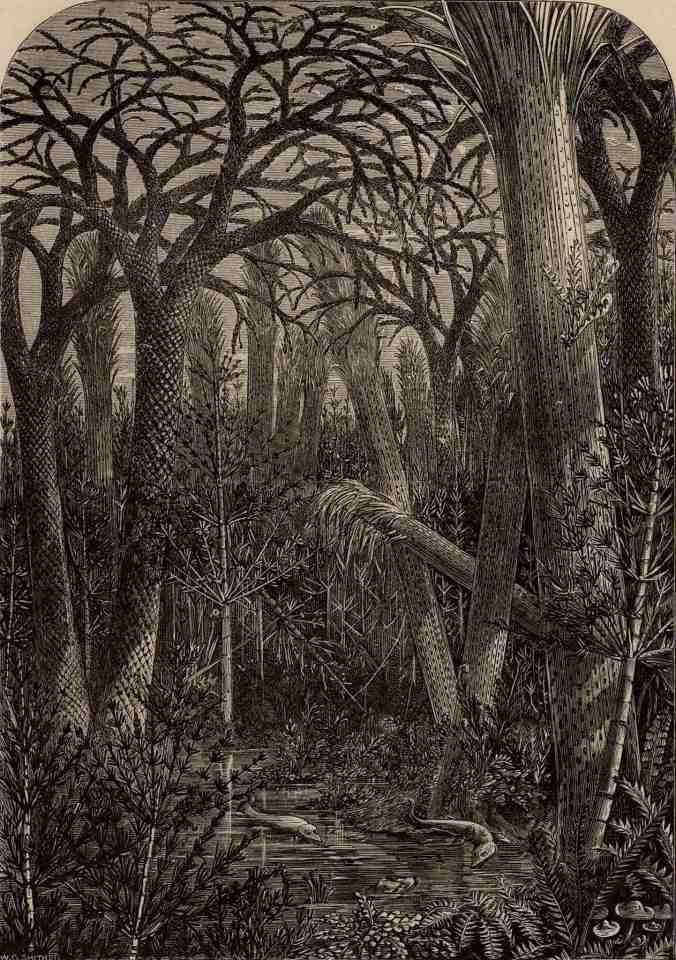
Artist’s reconstruction of a forest during the Carboniferous period. From ‘Science for All’ by Robert Brown (London, c1880). Illustration by World History Archive, Alamy
National Geographic‘s website has enlisted one of our favorite science communicators for its Phenomena section, and we are suddenly aware of how long it has been since we featured one of his ponderings (and excellent illustrations):
… whose trees “would appear fantastic to us in their strangeness,” write Peter Ward and Joseph Kirschvink in their book A New History of Life.
Some of them were giants: 160 feet tall, with delicate fernlike leaves that sat on top of pencil-thin trunks. This was the age when plants were evolving, climbing higher and higher, using cellulose and a tough fiber called lignin to stay upright. Had you been there, you would have felt mouse-sized.

Drawing by Robert Krulwich
These trees weren’t just odd looking. “One of their strangest traits was their very shallow root system,” write Ward and Kirschvink. “They grew tall and fell over quite easily.”…
Read the whole post here.
 Organikos