
A group of Sea Badjao are photographed in Denawan Island, Borneo. Malaysia.
Raxa Collective was invited in 2014 to scout a location for a new conservation project in Borneo, and the Sea Badjao were among the most important cultural features of the island locations being scouted. The scouting resulted in a “pending” return plan, and for sometimes pending implies years (as in this case) so all we can say at the moment is that this item reminds us:
For hundreds of years, nomadic groups known as Badjao have lived on boats in the waters of Southeast Asia, heading to shore only to trade or to take shelter from threatening weather. They are free-diving fishers by tradition, swimming many metres underwater, without equipment, to harvest seafood and pearls off the ocean floor. It is only in the past few generations, facing rising costs and reduced seafood catch, as well as myriad other threats, from extreme weather to pirates, that Badjao families have settled in fixed communities. Living in homes near the water or perched above it, on stilts set into old coral reefs, they have undertaken a slow and difficult transition to modern life.
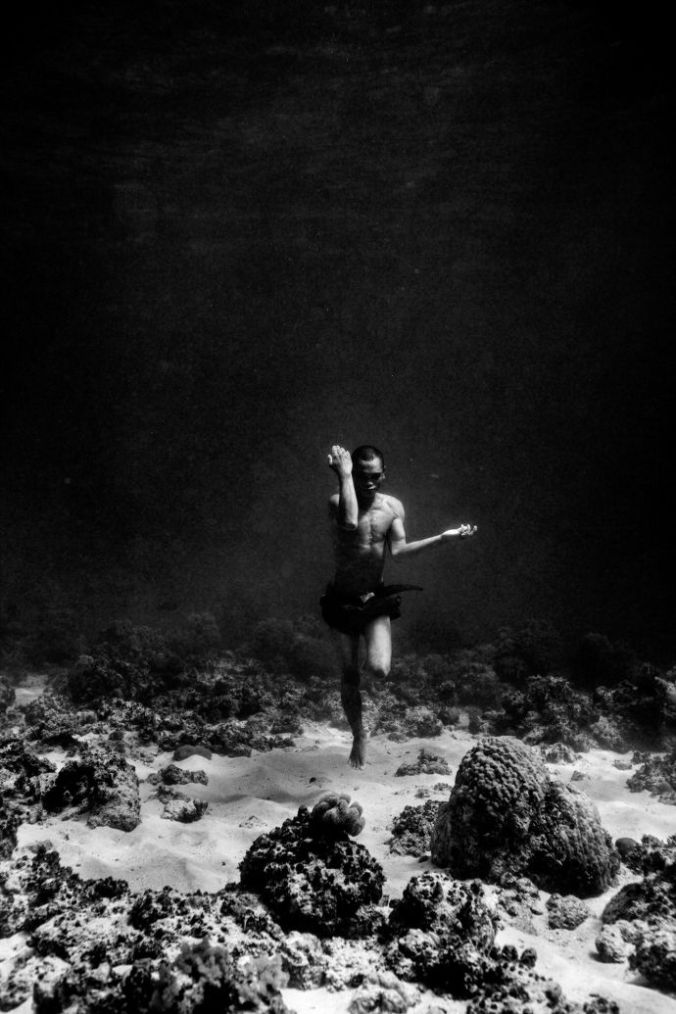
A Sea Badjao is photographed in Mabul Island, Borneo. Malaysia.
For his series “Suspensa,” the Catalan photographer Guillem Valle travelled to one such settlement, on the shore of northeastern Borneo, where many of the Badjao remain stateless, without access to schooling or government services. The fishing trade is becoming increasingly unsustainable, and many children of Badjao fishermen are no longer learning traditional techniques.
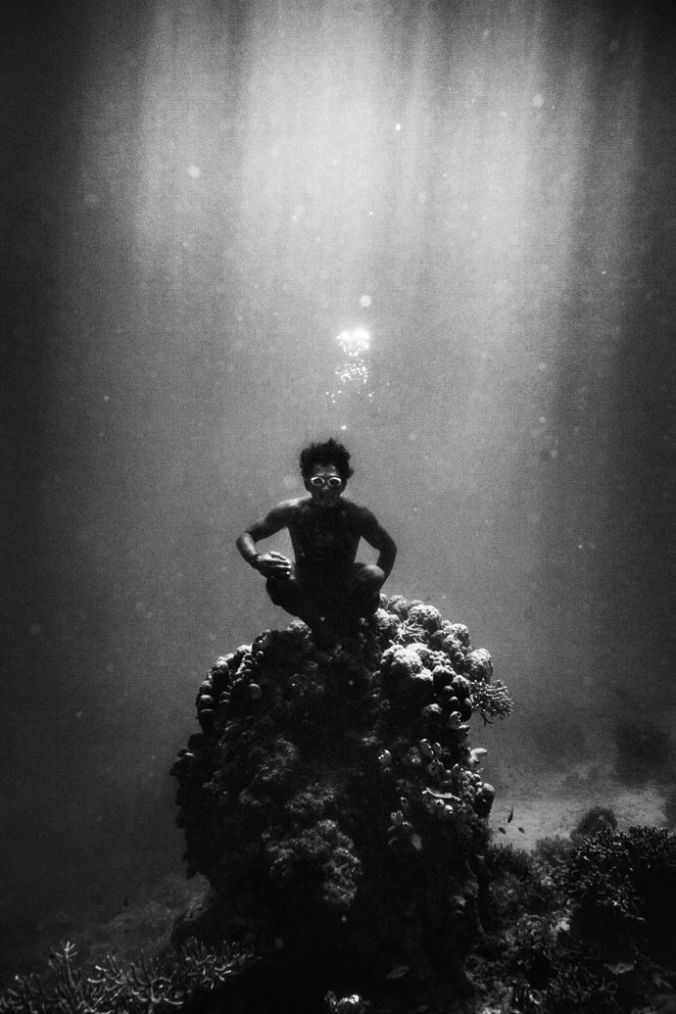
Pulau Peleng, Indonesia. A Bajo sits on the coral reef. Photo Credit: Guillem Valle/MEMO
Read the whole post, and see the slideshow, here.
 Organikos
I understand traditions but I believe the only way to sustainably feed the entire population is by utilizing plant-based alternatives. I support the works of Beyond Meat, Gardein, Muufri, Sophie’s Kitchen & other admirable efforts. See my page at https://makingwavesoutreach.wordpress.com/sustainability/