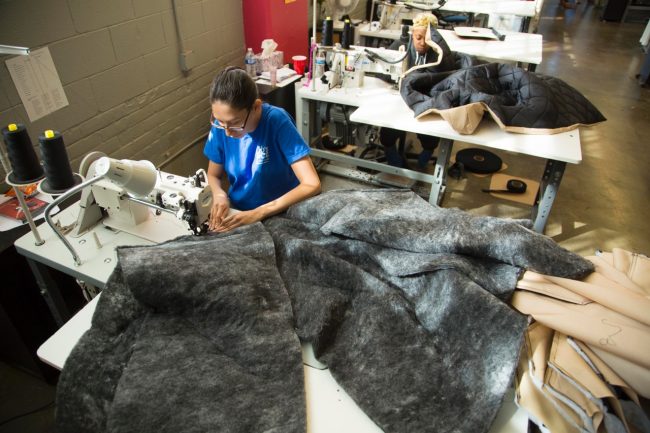
Plastic bottles from GM plants are turned into insulation for jackets. Source: General Motors
Converting to a Closed-loop business model from an Open-loop model presents its challenges, but General Motors (GM) is a good case study of a corporation that is making progress in the closed-loop direction. GM has a zero-waste agenda which encompasses a variety of recycling programs that uphold their claim:
In recent years, the company added used water bottles to its kit of raw materials. Two million water bottles, many of which are from Flint, have been recycled into three products, which include engine covers for the V-6 Chevrolet Equinox, air filters for 10 GM plants, and coats for the homeless through a partnership the company has with a Detroit nonprofit. Through this recycling program, GM says it works with a total of 11 organizations while boosting its waste diversion efforts.
[The] challenge the automakers face in using recycled products for parts is whether they can maintain the same quality and strength of conventionally made materials.
However, the EMPWR coat is one prime example of how recycling can fuel social enterprise. With the plastic-turned-insulation material provided by GM, employees at The Empowerment Plan can make these jackets which can also double as sleeping bags. The non-profit says its workers, many of whom were at one time homeless, can produce 1,000 of these coats on a budget of $100,000. For each 1,000 coats distributed, The Empowerment Plan estimates that 14 lives are saved and regional governments can save $58,800 annually on health care services. So far GM says the 24,000 yards of insulation that it has provided for this project has amounted to 6,500 coats distributed throughout the wider Detroit area.
As part of its zero waste agenda, GM has implemented PET water bottle recycling at most of its facilities worldwide. GM claims that many of the water bottles used in these products are from its Flint-area facilities, which employ 7,000 people. Of course, there is a reason why Flint became a massive font of water bottles for this project.
Curiously, GM’s experience with the water supply in Flint helped eventually sound off alarms about the city’s contaminated water. In an Automotive News article published earlier this year, GM officials in 2014 noticed that engines were corroding due to high levels of chloride in the water.
By the end of the year, the company’s engine plant in Flint was able to switch to another local supply—a move that was not possible for most of the city’s 100,000 residents. Workers, however, continued to notice that something was amiss with their water—and hence the Flint water crisis festered, one that is still ongoing today. GM’s response: a $50,000 donation to purchase water filters for Flint residents.
Read the original article here.
 Organikos