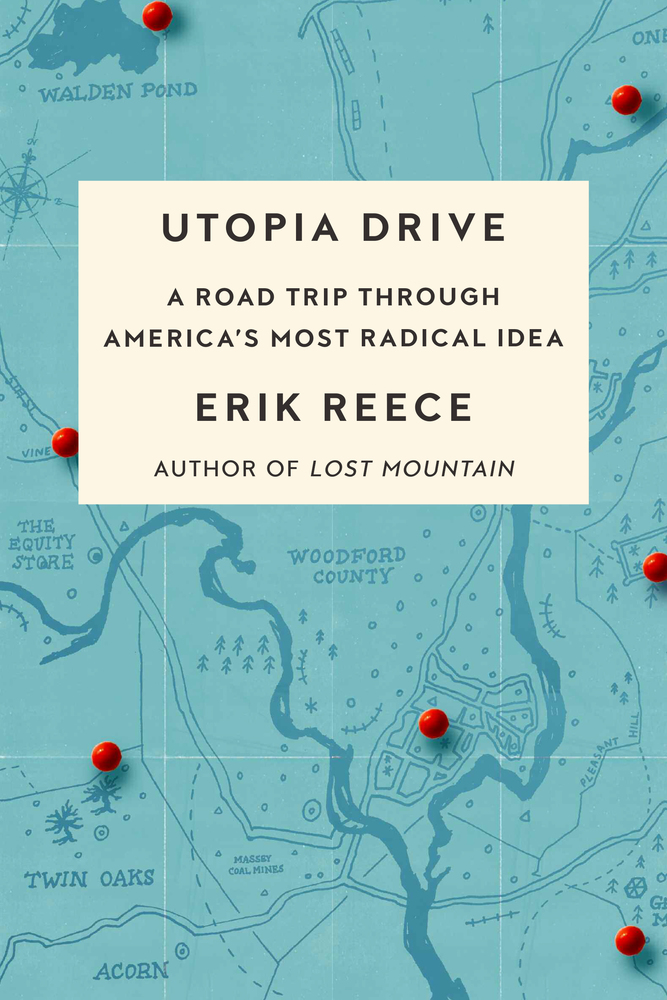
Publishers’ blurbs are sometimes much better than the sound of the word blurb would imply, and anyway I always trust them more than I could possibly trust Amazon’s tricky sales methods. Reviews in trusted publications are best, but they take much longer to read; this blurb has my attention, especially after pondering two decades of life online:
For Erik Reece, life, at last, was good: he was newly married, gainfully employed, living in a creekside cabin in his beloved Kentucky woods. It sounded, as he describes it, “like a country song with a happy ending.” And yet he was still haunted by a sense that the world–or, more specifically, his country–could be better. He couldn’t ignore his conviction that, in fact, the good ol’ USA was in the midst of great social, environmental, and political crises–that for the first time in our history, we were being swept into a future that had no future. Where did we–here, in the land of Jeffersonian optimism and better tomorrows–go wrong?
Rather than despair, Reece turned to those who had dared to imagine radically different futures for America. What followed was a giant road trip and research adventure through the sites of America’s utopian communities, both historical and contemporary, known and unknown, successful and catastrophic. What he uncovered was not just a series of lost histories and broken visionaries but also a continuing and vital but hidden idealistic tradition in American intellectual history. Utopia Drive is an important and definitive reconstruction of that tradition. It is also, perhaps, a new framework to help us find a genuinely sustainable way forward.
Speaking of book reviews, and in case you are a booknerd, do not miss this short piece on one of the greats of our time, mixing book review with personal profile; he sounds like what I imagine is the translated definition of the word mensch:
…It wasn’t just an intense aversion to writing that made Mr. Gottlieb wary; after all, he has written extensively on other topics, including jazz and dance. He also felt squeamish about taking credit for his role in the creation of some of the 20th century’s enduring literary masterpieces. Without his nudging and tinkering, Ms. Morrison’s “Sula,” would have an entirely different opening chapter, Mr. Heller’s “Catch-22” would have been titled “Catch-18,” and Mr. Cheever’s novella “Oh What a Paradise It Seems” would have had a completely different ending. But Mr. Gottlieb feels weird acknowledging that.
“It’s inappropriate for editors to be glamorized and revered,” he said. “I don’t want to be the person in the spotlight.”…
 Organikos