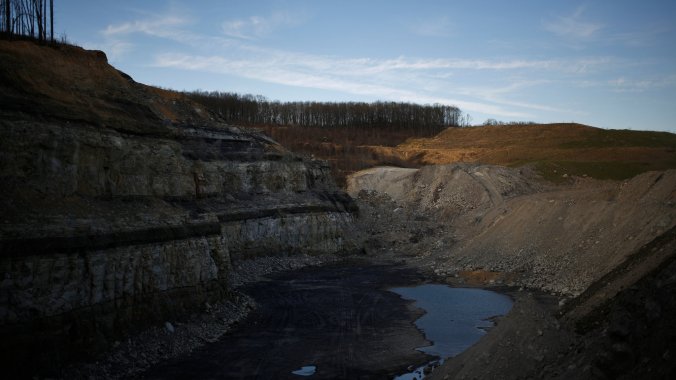
Reclamation crews fill in rock highwalls like this one, creating flat land that Tom Clarke intends to reforest as a way to trap and hold carbon dioxide. Credit Luke Sharrett for The New York Times
We had to read it to believe it:
A Curious Plan to Fight Climate Change: Buy Mines, Sell Coal
Tom Clarke, a nursing home owner, concocted a strategy to cut carbon emissions by gaining control of millions of tons of coal reserves and multiple mines.
FAIRVIEW, W.Va. — The coal was piled about as high as it could go, spilling down to the railroad tracks and towering over the elevator shaft. A yellow bulldozer pushed the mound to make room for more. From a distance on this rainy day, the black heap looked like a giant whale about to swallow the mine whole.
The word underground was that Federal mine No. 2 would soon have to close. It was early April, and the mine was running out of storage space. There were not enough buyers for all the coal.
A few months earlier, this problem would have belonged to Patriot Coal, one of the nation’s largest coal companies, which used to operate the Federal mine, built near a meandering mountain stream called Miracle Run.
But this was not Patriot’s problem anymore. Nor was it the problem of the hedge funds and other investors that had lent the company millions.
When Patriot filed for bankruptcy in 2015 — its second time in three years — environmentalists and regulators were prepared for the company to figure out ways to shunt liabilities and maximize returns. But no one could have envisioned what happened next.
Patriot handed over millions of dollars of environmental obligations to a nonprofit company run by a man named Tom Clarke, who owned a chain of nursing homes and a tourist attraction that had fallen behind on its bills. Until that day in April, Mr. Clarke, 61, had never been in a coal mine.
Patriot sold not only the troubled Federal mine to Mr. Clarke, but also several other mines that were no longer in operation, including a sprawling surface mine carved from the top of a mountain in southern West Virginia. Mr. Clarke’s new company agreed to clean up the shuttered mines and reclaim the land that had been ravaged.
As part of the deal, the miners’ union invested $10 million in the Federal mine operation, which was supposed to keep producing coal for Mr. Clarke to sell. But the mine has struggled from low coal prices.
“It was a spectacular deal for Patriot,” said Patrick McGinley, a law professor at West Virginia University who has been involved in cases against coal companies since 1970s. “This company has had complete success in divesting itself of all liabilities of every kind, including environmental liabilities, which are the hardest to shed.”
Why then, would someone like Mr. Clarke want to take over a troubled mine and the environmental obligations that Patriot Coal was seeking to get rid of? As improbable as it may seem, Mr. Clarke said the Patriot deal had played to his advantage — helping start his grand plan to remake coal mining into a greener industry.
He is not only reclaiming Patriot’s mines that are no longer in use. He has come up with a model, he said, for how the industry can keep producing coal, while reducing its impact on the climate.
The plan involves creating pollution credits by planting or preserving trees around the world to offset the carbon emitted from burning coal. For every ton of coal he sells, Mr. Clarke attaches some of the credits.
Mr. Clarke has had trouble, however, persuading buyers of his coal, like utilities and steel companies, to pay extra for the credits.
Mr. Clarke hoped electric utilities would be able to count his green-coal credits toward the carbon-emissions goals that the Obama administration has set for states in its Clean Power Plan, now before a federal court. But administration officials have effectively ruled that out…
Read the whole article here.
 Organikos