Natalie and I were not hitting it off. In fact, I had become convinced she was trying to kill me.
I’m a non-confrontational person, and I don’t like it when someone’s not my friend. But in this case, our rocky relationship was especially alarming: Natalie was an 1200-pound quarter horse, and I was on her back. Precariously, I might add.
As we trotted up a steep mountain slope, another horse and rider pulled alongside us. Natalie’s ears flattened and her back leg shot out, blasting the other horse with a nasty kick. She quickly lunged to bite. The other rider pulled away but Natalie continued to spin in rage.
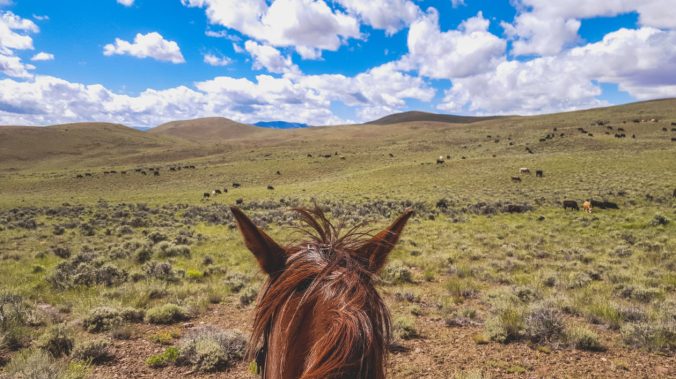
She settled, and as we again began picking our way up the slope, I could again take in what rancher Glenn Elzinga was trying to accomplish here on this rugged Central Idaho range. He shared this country with wolves, imperiled species like bull trout and sage grouse and sensitive habitats.
Glenn had long believed that cattle ranching could have a more positive impact on the land and wildlife around us. And to do this, he’s now incorporating ancient herding techniques, practicing what he calls “one of humanity’s oldest professions.”
But that doesn’t mean it’s easy. Up ahead of me and Natalie, Glenn’s voice boomed across the mountain. “We are dealing with rugged terrain and a lot of variables here,” he said. “You are working with horses and cattle and wolves and all these other creatures, and they often have their own agendas.”
He looked at me approaching. “You can see how that could be difficult, out here in country like this.”
I looked down at Natalie, the one animal whose agenda I had to deal with at the moment. Yeah, I could see the challenge here. Could I ever.
I first met Glenn Elzinga at a Boise farmers market in the early 2000s. Tall, dressed in denim, with a bushy mustache, he stood out in the crowd. In addition to selling excellent grass-fed beef raised on his Alderspring Ranch, he was a natural storyteller and had a keen wit. I liked to stop by his booth and hear his ideas on ranching…
 Organikos