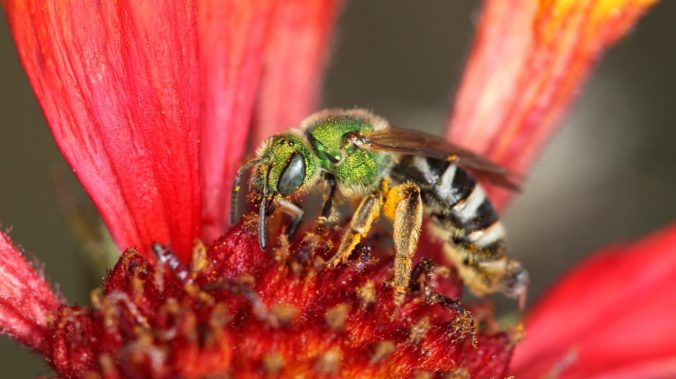
Agapostemon virescens, a sweat bee native to Minnesota. Photo © John Flannery / Flickr through a CC BY-SA 2.0 license
We have met and heard of plenty other skeptics of citizen science, and the conversation is always interesting; we of course enjoy hearing of conversion stories. Thanks to Meredith Cornett and Cool Green Science for this:
On Bee-ing
Science is my day job. Has been for more than two decades. So why would I want to also participate on an amateur basis?
For years I scoffed at the very notion of “citizen science.” I dismissed it as cumbersome, unreliable, and yielding data of questionable quality at best. In short, I was sniffy about the whole thing, and kept it at arm’s length. I was not alone. In fact, many of my colleagues dismissed citizen science as mostly a feel-good endeavor.
Though there may have been some truth to this perception, I snapped to attention when I realized that, in recent years, citizen science can lead to big science. For example, projects such as e-bird and the National Phenology Network have generated dozens of peer-reviewed papers on topics such as bird population trends or plant and animal responses to climate change. The power of crowdsourced data collection lies in thoughtful designs, clear protocols and engaging subjects.
Citizen Science – for Scientists?
The Minnesota Bee Atlas (Bee Atlas) is one such project—citizen science to the core. The Bee Atlas was specifically designed for volunteer involvement in the pursuit of creating a statewide inventory of Minnesota’s bees.
I was bitten by the bee “bug” while attending a seminar by Crystal Boyd, Bee Specialist with the Minnesota Biological Survey (MBS), Minnesota Department of Natural Resources. Boyd conducts field research to inventory native bees in natural areas across the state – including many Nature Conservancy preserves. I was intrigued to learn how little is known about native bees in Minnesota. Over the years, MBS has collected good statewide data on many taxa, native plant communities and other features, but the last statewide bee survey was conducted in 1919. That effort yielded a list of only 67 bee species. Boyd and her colleagues estimate the number is closer to 400 species of native bee in Minnesota. The Bee Atlas project has 3 major components: specimens in the University of Minnesota’s insect collection, historical records from the Minnesota DNR and, yes, citizen science.
It’s a brilliant model. In early spring, the Bee Atlas distributes nesting blocks throughout Minnesota, along with clear directions for where and how to mount them. Volunteers visit the blocks a few times each month from March through October and upload their data to the Bee Atlas Bee Block Project’s online database…
Read the whole story here.
 Organikos