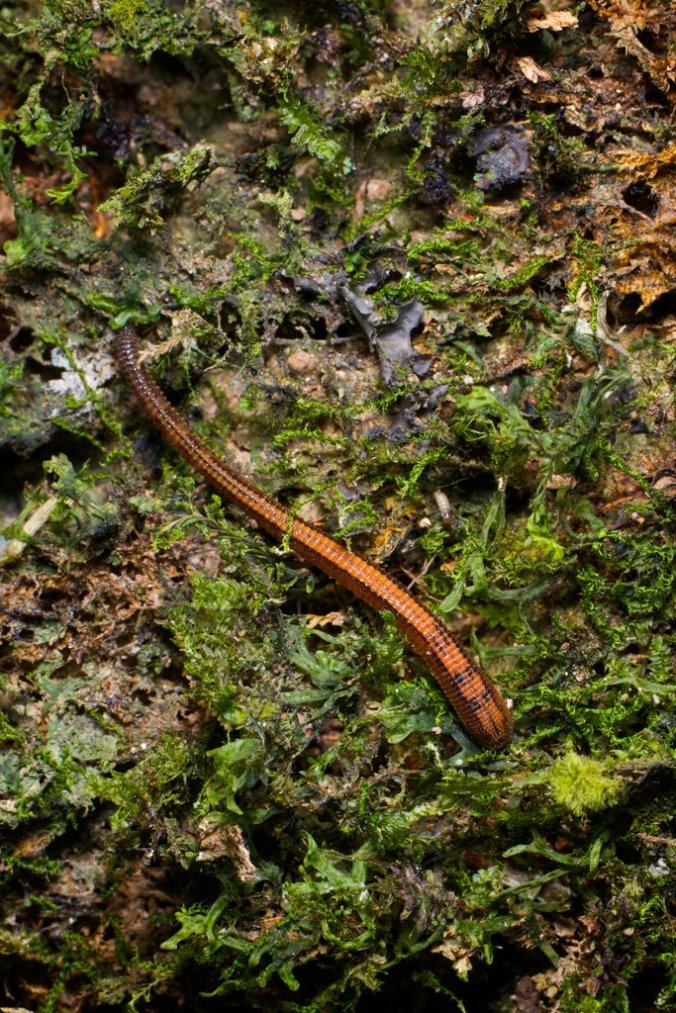
A leech, Haemadipsa zeylanica, in Thailand. Scientists have found they can survey the biodiversity of a forest with DNA analysis of leeches’ last blood meals. Credit Thailand Wildlife/Alamy
If you’ve been in the forests of south India, and like several of our most prolific contributors you have had the creatures creeping in your pant legs, you know that the thought of it is much worse than the reality of it. But now, my esteem for this creature has just increased manyfold thanks to Rachel Nuwer:
It’s the Latest in Conservation Tech.
And It Wants to Suck Your Blood.In the digestive tracts of leeches, scientists find evidence of elusive forest species.
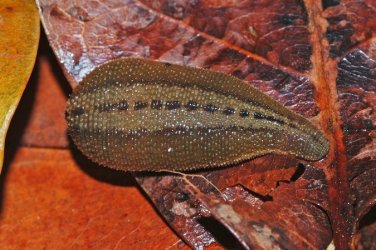
Haemadipsa zeylanica, a leech, in Malaysia after a meal. Leeches can swell to 10 times their body weight after feeding. Credit Bernard Dupont
Michael Tessler realized his life had taken an odd turn. His days were spent not in an office, not out with friends — but alone in the woods, attracting leeches.
Sometimes, they were so bountiful that “it was like the forest floor was moving toward me,” he recalled. “Even for someone who’s used to having swarms of leeches coming at me, it could be intimidating to see that many of them.”
Dr. Tessler, a postdoctoral fellow at the American Museum of Natural History’s Sackler Institute of Comparative Genomics, subjected himself to this horror movie scenario for the good of science. He collected hundreds of leeches and analyzed their last blood meals, hoping to identify their animal victims — and thus to reveal the range of species living in the forest.
Copious leech bites later, Dr. Tessler’s sacrifice paid off. He was a co-author on two papers confirming that leeches and their blood meals offer a fast, cheap method for surveying biodiversity. Such basic data can be surprisingly difficult to come by, yet is often critical for making conservation decisions.
“That this bloodsucking worm might suddenly advance conservation efforts is something few would have predicted,” he said.
Terrestrial leeches are found in humid regions stretching from Madagascar to southern Asia to a number of Pacific islands. Some 70 species have been described, with many more likely awaiting discovery…
Read the whole story here.
 Organikos