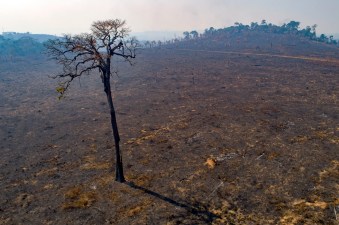
A section of forest in the Brazilian Amazon that was burned by cattle ranchers, seen on August 16, 2020. Cattle ranching is the largest driver of deforestation in the Amazon rainforest. Andre Penner/AP
The photograph heading the story is alarming enough, but the illustrations (especially the “scroll down” graphic) accompanying the written explanations are extremely compelling. Thanks to Benji Jones for the story and to Alvin Chang for the graphics in this Vox article:
The alarming decline of Earth’s forests, in 4 charts
Deforestation raged ahead again in 2022, even after scores of countries pledged to protect their forests.
Over the last decade, dozens of companies and nearly all large countries have vowed to stop demolishing forests, a practice that destroys entire communities of wildlife and pollutes the air with enormous amounts of carbon dioxide.
A big climate conference in Glasgow, in the fall of 2021, produced the most significant pledge to date: 145 countries, including Brazil, China, and Indonesia, committed to “halt and reverse” forest loss within the decade. Never before, it seems, has the world been this dedicated to stopping deforestation.
And yet forests continue to fall.
A new analysis by the research organization World Resources Institute reveals that deforestation remained rampant in 2022. More than 4 million hectares (about 10 million acres) of forests vanished from the tropics that year in places like Brazil and Central Africa, according to the analysis, which is based on data from the University of Maryland. That’s a Switzerland-size area of forest gone, WRI said.
Alarmingly, the world lost 10 percent more tropical forest in 2022 compared to the previous year, indicating that countries are, on the whole, moving in the wrong direction. This is especially troubling considering that tropical forests are among the most important ecosystems on Earth. They help regulate weather, store vast amounts of carbon, and provide homes to the richest assemblages of wildlife on the planet.
“Since the turn of the century, we have seen a hemorrhaging of some of the world’s most important forest ecosystems, despite years of efforts to turn that trend around,” Mikaela Weisse, director of WRI’s forest monitoring platform Global Forest Watch, told reporters on a press call last week. “This year’s data show that we are rapidly losing one of our most effective tools for combating climate change, protecting biodiversity, and supporting the health and livelihoods of millions of people.”
The analysis did reveal a bit of good news: Once hot spots of deforestation, Indonesia and Malaysia have reined in forest loss in recent years, and that trend continued in 2022. These ecosystems are both incredibly rich in carbon and home to iconic endangered animals like orangutans and tigers.
On the whole, however, the world is still failing to arrest global deforestation, leading scientists to question how well various commitments and decades of conservation efforts work. Each year brings the same disappointing result — more forests gone — underscoring the need for solutions that extend far beyond simple pledges…
Read the whole article here.
 Organikos