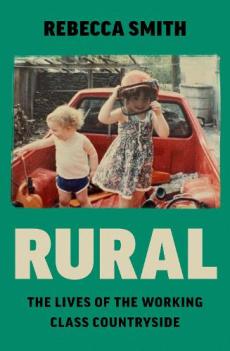
 The reviews are in, and below is an excerpt. The book does not appear to be available through online booksellers in the USA, but I will be watching for it. The excerpt echoes my experience growing up in an equivalent place. A key difference between my youth and hers: my family’s income was modest but, due to my immigrant mother and father’s New England heritage I inherited a clear sense of mobility. I never had the oppressive sense of class boundaries that can dictate exclusion.
Instead I had the sense, and still do, that I could have chosen to earn the requisite fortune that would have afforded me the luxury of owning my own home in that town. But I chose otherwise, and for plenty of reasons I have no regrets whatsoever.

The view from the author’s bedroom window at Graythwaite. Rebecca Smith
Jane Austen’s English Countryside Is Not Mine
Often people assume I am someone I am not. My childhood was spent making dens in the hidden corners of the landscaped gardens of a grand country estate in the Lake District. I wandered woods full of baby pheasants being fattened up for the shoot. I roamed the hills listening to my Walkman like a modern Brontë sister. I had lakes to paddle in and a dinghy that we bumped down the path to a private beach.
The author playing in the garden at Graythwaite. Rebecca Smith
But they weren’t my gardens. It wasn’t my beach.
Until the age of 18, I lived on three private country estates in England. First in Yorkshire, then in Bedford, then on Graythwaite Estate, in Cumbria in the Lake District. In each of these my dad had the job of forester, working his way up until he was head forester, overseeing 500 hectares of woodland at Graythwaite, where the job came with a three-bedroom lodge on the estate.
The house was old and four miles from any kind of shop. But to me, it was idyllic. It had an open coal fire, a huge walk-in pantry and bay windows. A story — probably apocryphal — had it that there had been an upstairs but the landowner didn’t like the way it ruined his view, so he just sliced it off, like a layer of Victoria sponge cake.
Our house was a tied cottage. For centuries, it was not uncommon for the offer of a job in the English countryside to include accommodation. The rent would be minimal or nothing — a fact reflected in the wages. And when the job ended, so, often, did your right to housing.
There was tied housing for the servants of the families and houses on grand country estates — for the gardener, gamekeeper, plumber, forester and tenant farmers.
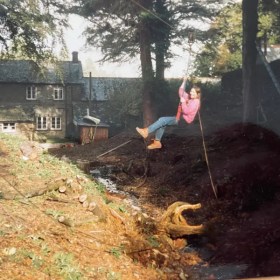
For workers, it was a precarious, contingent way of life. Both the quality of the accommodation and your rights to it were entirely dependent on the benevolence of the landowner. But none of that lay heavily on me as a child. In the summer, I would climb out of my bedroom window when I should have been asleep and ride my bike up and down the estate road. My brother and I made rhododendron perfume to sell to visitors and dangled from an old tire swing. We didn’t realize yet that the ground was shifting beneath our feet.
***
For a lot of people, the English countryside is Elizabeth Bennet starting to change her mind about Mr. Darcy as the road opens up to a view of Pemberley, or the new Mrs. de Winter and the drive that “twisted and turned as a serpent” up to Manderley, “lovelier even than I had ever dreamed.”
But for the landless who work and belong to the British countryside but do not own a piece of it, it’s a place of profound inequality. Damp, cold and underresourced but beautiful…
Read the entire excerpt here.
 Organikos