In my previous post I’d written about birding with Clement Francis and how educational he was in so many ways – sparking my interest in birding, my abilities as a bird photographer, and not least, my understanding of the challenges that birds and other wildlife suffer in the face of climate change and human related habit destruction. The story of the Spoon-billed Sandpiper impacted me in a huge way.
This tiny bird travels between the Arctic Tundra and the South Asiatic regions. While they breed in the tundra, they migrate southwards during winters in a migratory route of 8000 kilometres. Just 200 pairs of this birds existed back then. Now due to human intervention and the implementation of captive breeding programmes, the population are reaching to a decent number.
The International Union for Conservation of Nature (IUCN) has listed the Spoon-billed Sandpiper under the “critically endangered” species. During one of our trips Clement showed me the picture of the bird in its breeding plumage that was shot in Siberia. From that moment on my mind was set on seeing the bird. It may appear like an exaggeration, but the bird appeared in my dreams quite often and the desire to see it for myself grew stronger every day. At the time of our trip the bird was in migration to a small patch in the Sunderbans of Bangladesh, but the numbers there were decreasing, and their path seemed to be shifting toward stopovers in Thailand instead.

Spoon-billed Sandpiper
My dream to go see the bird didn’t come true until February of 2018. It was my “Big Year”, so my scheduling was quite precise, so it wasn’t easy for me to change it drastically and still keep on track, but for the Spoon-billed Sandpiper I was willing to risk it.
A guide I knew from Thailand called me up on 28th of January and offered to show me the bird, saying it was easily accessible. I was birding in Kaziranga when this conversation happened. I booked my ticket to Thailand during lunch break that same day for a three day trip that I eventually cut short to two days after reaching my goal of seeing “Spoony” on the very first day.
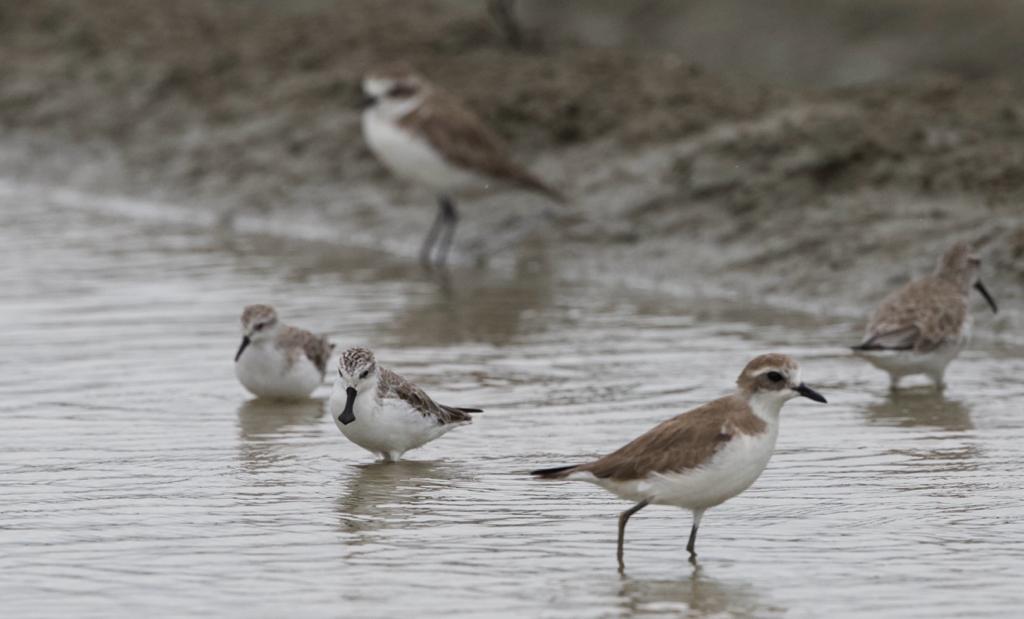
As soon as I landed, on 2nd February 2018, Paan drove me straight to the site after we grabbed sandwiches and ate as we drove. In the morning the tide was low and we had to find the bird before the change at noon. The salt pans adjacent to the shore were full of Plovers, Red-necked Stints, and other waders in large numbers. We had to locate one tiny bird with a paler face and paler chest among hundreds of similar looking birds. We have to focus on the beak–the obvious give-away for this bird. Paan set off with his field scope and halted briefly to scan the salt pans. I was trying to locate the bird with the 500 mm lens and was walking on the ridges. To make things worse it had rained in the morning and the ridge was slippery. After about two hours of scanning the area there was no sight of our quarry.
The salt pans ran several miles. At around 9 am the salt workers arrived in hoards and started their work.
After a brief break, we set out to scan for the bird again. A huge flock arrived in a salt pan close by and there in that flock Paan spotted a “Spoony”. Occasionally one of us would spot the bird, but quite often the flock would lift in flight of the flock it would merge with the rest of the birds and we would lose it again. One time the entire flock moved to the far end of a distant pond, where we could luckily drive closer. Parking right next to the pond and we were able to spot the bird again. Although it played hide and seek for a while I was able to focus and take a few bursts of shots. That was the most satisfying moment in my birding life. Each time I see an endangered or vulnerable species there is a surge of heaviness in me. That inexplicable feeling to learn that humans so frequently contribute to their irrevocable loss.
With this, we all have question to ask ourselves – “where are we heading?”
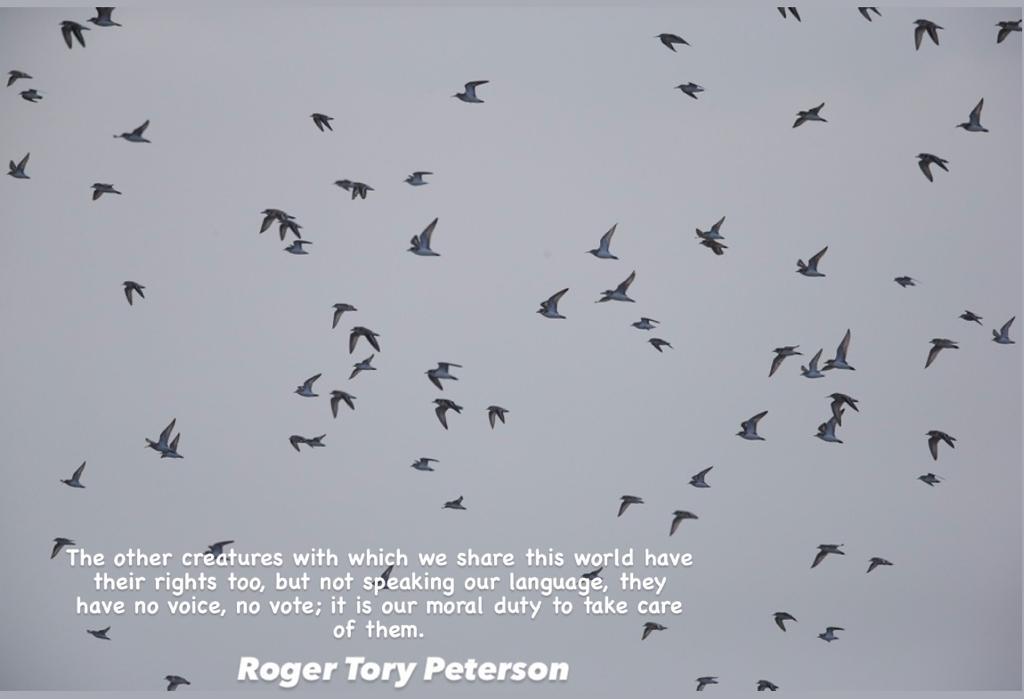
There are many fights to save various species of turtles, birds, mammals and other wildlife from going extinct and the huge World Wide Web of mutual cooperation between living creatures for survival is being fought bravely everyday.
 Organikos