
United Airlines wants to zero out its greenhouse gas emissions by 2050, but without using conventional carbon offsets. Nicolas Economou/NurPhoto via Getty Images
If airlines can quantify what it would cost to become carbon neutral within a relevant timeframe, it implies that we know by how much they are currently fudging their investment model. If it is going to require an investment of X number of dollars over Y number of years to achieve carbon neutrality then they should invest, and price their flights accordingly. Then we will all know the real cost of flying, including the environmental cost. Thanks to Umair Irfan (long time since we last saw his work) and to Vox for this:
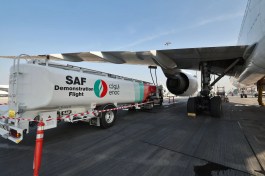
Emirates demonstrated a Boeing 777 flight fueled with SAF earlier this year. Giuseppe Cacace/AFP via Getty Images
Airlines say they’ve found a route to climate-friendly flying
Cleaner, faster, cheaper — the aviation industry’s plan to decarbonize air travel, explained.
If you’ve caught an ad for an airline lately on TV, a podcast, or the entertainment display on your flight, you’ve probably heard the company brag about what it wants to do about climate change.
Major airlines like American, Delta, Southwest, and United have all set targets of achieving net-zero greenhouse gas emissions by 2050. They’re using a suite of tactics including buying more fuel-efficient aircraft, electrifying their ground vehicles, and increasing the efficiency of their operations. They’re also testing the winds on battery- and hydrogen-powered planes, as well as some radically different aircraft designs.
However, in terms of where they expect to make their biggest gains, airlines have begun to arrive at a common strategy: Classic carbon offsets are out, and sustainable aviation fuel is in. But the long haul toward sustainability is just beginning.
Offsets were once the default way airlines cleaned up their greenhouse gas emissions. Some even let you check a box and pay an extra fee to offset your emissions when you booked your flight. But they’ve found out the hard way that trying to negate their emissions by simply paying someone else to plant trees or install solar panels doesn’t deliver results. In 2020, United Airlines became one of the first carriers to cut these types of offsets out of its climate plans. United Airlines CEO Scott Kirby told Politico in May that “the majority of them are fraud.”
Passengers aren’t buying it, either. Over the summer, a group of flyers filed a class-action lawsuit against Delta. The airline said in 2020 that it had become the “the first carbon neutral airline on a global basis.” But plaintiffs say that claim is based on buying carbon offsets that failed to deliver. Environmental activists this summer filed a similar suit against KLM alleging greenwashing. The United Kingdom’s Advertising Standards Authority censured Ryanair, Lufthansa, and Etihad for misleading or overstated sustainability claims. Some airlines have since dropped their environmental ad campaigns.
Now the new hot ticket is sustainable aviation fuel, or SAF. The aim is to develop a fuel that can easily swap in for conventional hydrocarbons, but that is produced with sources like crop waste that emit little to no carbon dioxide on balance. “SAF is the most critical lever in achieving our net zero goal,” Southwest writes on its website. In 2021, United flew the first flight, from Chicago to Washington, DC, with one engine fully powered by SAF. Boeing, NASA, and United recently announced they’ve begun measuring the pollution from burning SAF. The Inflation Reduction Act is giving SAF a boost with nearly $250 million in competitive grants and tax credits.
However, demand is high and supplies are minuscule, making SAF upward of four times as expensive as conventional fuel. For most airlines, fuel is already their biggest or second-biggest expense.
So airlines are stuck in a holding pattern where their cheapest and easiest option for decarbonization doesn’t really work while their best bet is still wildly expensive. The consulting firm McKinsey estimated that decarbonizing aviation would require $175 billion in investments each year until 2050, almost $5 trillion in total. At the same time, demand for flights is poised to climb, and the window for keeping warming in check across the planet is sliding shut. Companies are also bracing for more emissions regulations as governments turn their attention to the climate impacts of aviation…
Read the whole article here.
 Organikos