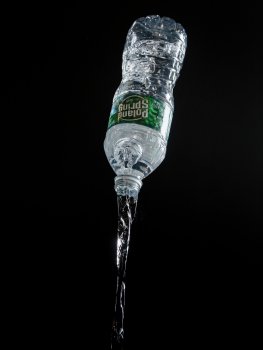
Tristan Spinski
We all need drinking water. Those of us lucky enough to have good quality water from a public source can avoid bottled water, but still too many need or want what Poland Spring sells.
The New York Times deserves high praise for this series on water abuses, especially Hiroko Tabuchi‘s reporting on Poland Springs and its parent company’s practices:
Inside Poland Spring’s Hidden Attack on Water Rules It Didn’t Like
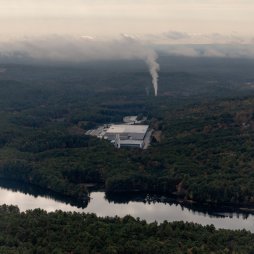
The BlueTriton bottling plant in Poland Spring, Maine, this month.
When Maine lawmakers tried to tighten regulations on large-scale access to water, the brand’s little-known parent company set out to rewrite the rules.
When Maine lawmakers tried to rein in large-scale access to the state’s freshwater this year, the effort initially gained momentum. The state had just emerged from drought, and many Mainers were sympathetic to protecting their snow-fed lakes and streams.
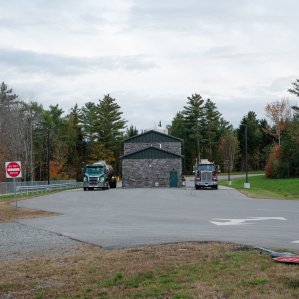
Water trucks filling up at a Poland Spring facility in Lincoln, Maine.
Then a Wall Street-backed giant called BlueTriton stepped in.
BlueTriton isn’t a household name, but its products are. Americans today buy more bottled water than any other packaged drink, and BlueTriton owns many of the nation’s biggest brands, including Poland Spring, which is named after a natural spring in Maine that ran dry decades ago.
Maine’s bill threatened BlueTriton’s access to the groundwater it bottles and sells. The legislation had already gotten a majority vote on the committee and was headed toward the full Legislature, when a lobbyist for BlueTriton proposed an amendment that would gut the entire bill.
“Strike everything,” starts the proposed amendment, which was written in a Word document that contained a digital signature showing that it had been created by Elizabeth M. Frazier, who represents BlueTriton and is one of the most influential lobbyists in Maine. The document was emailed by Ms. Frazier to lawmakers in the days after the committee vote.
After BlueTriton’s intervention, the committee pulled the bill back. The company’s actions, which haven’t previously been reported, were described to The New York Times by three state legislators. The Times also reviewed several of the emails sent by Ms. Frazier as well as the Word document.
“We couldn’t believe it. Their amendment strikes the entire bill,” said Christopher Kessler, a Democratic state representative who represents South Portland and a committee member who voted to advance the bill. “Because all this happened behind closed doors, the public doesn’t know that Poland Spring stalled the process.”
His panel, the Committee on Energy, Utilities and Technology, plans to meet on Wednesday to discuss the fate of the bill.
Bottlers have faced increasing scrutiny for the millions of throwaway plastic bottles they produce, the marketing message that their products are safer or healthier than tap water, and for a business model in which they buy freshwater, often at low cost, only to sell it back to the public at much higher prices.
And while the bottled-water business doesn’t use nearly as much groundwater as the nation’s thirstiest industries, like agriculture, the pressure on bottlers is building as awareness grows of the stress that intensive pumping can place on local water supplies. A Times investigation this year revealed that many of the aquifers that supply 90 percent of the nation’s water systems are being severely depleted as overuse and global warming transform fragile ecosystems.
BlueTriton has been caught up in issues of local opposition and water use, and not only in Maine. The company also is fighting for access to water sources in numerous states, including Michigan, Colorado and others.
Read the whole article here.
 Organikos