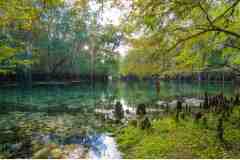
Sunset in the trees at Manatee Springs, Florida. Photograph: Michael Warren/Getty Images/iStockphoto
Oliver Milman, again, brings our attention to an environmental activism that deserves attention, this time for all the wrong reasons:
Experts fear half of the 290m wetland acres have lost federal protection and could be at risk from developers
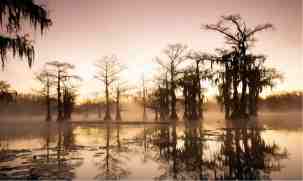
Lake Caddo, on the border between Louisiana and Texas, is a beautiful cypress swamp. Photograph: wanderluster/Getty Images
Often dismissed as dismal wet bogs and rampantly cleared since European arrival in the US, the underappreciated importance of wetlands has been placed into sharp relief by a supreme court ruling that has plunged many of these ecosystems into new peril.
The extent of wetlands, areas covered or saturated by water that encompass marshes, swamps and carbon-rich peatlands, has shrunk by 40% over the past 300 years as the US drained and filled them in for housing, highways, parking lots, golf courses and other uses. Globally, wetlands are disappearing three times faster than forests are.
Wetlands received federal protection under the 1972 Clean Water Act but the future of many of these remaining ecosystems, which span 290m acres, or about twice the size of France, is now in jeopardy following the supreme court’s decision in May to severely narrow the scope of what is protected.
Environmentalists are now nervously eyeing developments in several states that have relatively weak wetlands protections in the wake of the case. At risk, they say, are systems that act as the kidneys of America by filtering clean water as well as providing a home to a treasure trove of wildlife, from dragonflies to frogs to waterfowl, and acting as an important buffer to floods and storms projected to worsen due to the climate crisis.
Read the whole story here.
 Organikos