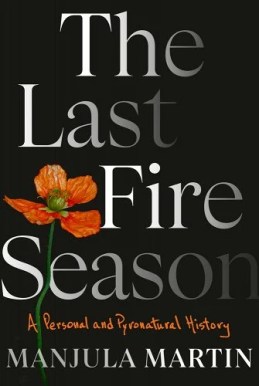
 Fire and its suppression are topics we are never quite sure about. Scientifically, there may be a correct answer. But this personal account sounds worthy of consideration as well. This book review by Casey Schwartz in The Atlantic makes a compelling case:
Living Through the End of California
In a new book, Manjula Martin faces up to the way the altered environment of her home state will change her life forever.In his 1998 book, Ecology of Fear, Mike Davis, the late California muckraker and self-proclaimed Marxist environmentalist, made the case for “letting Malibu burn.” He pointed out that the city of Los Angeles devoted more resources to dealing with the wildfires that rage in the wealthy enclave of Malibu than to the ones that break out in downtown tenements. And yet, Malibu’s very design ensures the return of fire. “The Malibu nouveaux riches built higher and higher in the mountain chamise with scant regard for the inevitable fiery consequences,” he writes. Why not return to the wisdom of native Californians, who knew that small, controlled fires were necessary for preventing bigger ones?
I was in Los Angeles on one of the occasions when Malibu burned, in the 2018 Woolsey Fire. More than 30 miles away, in West Hollywood, not knowing any better, I went about my day, like everybody else, walking, shopping, doing errands, even as white ash fell onto our heads, as gently as snow. I thought about that day as I read Manjula Martin’s memoir, The Last Fire Season: A Personal and Pyronatural History. And I thought about everything we have learned and haven’t learned since, over the past five painful years of fire and smoke.
“I wanted to continue to be an exception to the consequences of climate change,” Martin tells us. Formerly the managing editor of the literary magazine Zoetrope: All-Story, Martin doesn’t get her longed-for exemption. On the contrary, when it comes to our altered environment, she’s in the thick of it, living in the woods of Sonoma County with her partner, a labor organizer named Max. The book she has written is the record of her reckoning with what climate change—by now that blandest of phrases—actually means, day to day, sometimes hour to hour. She reveals all the ways it will inevitably reach down into even the most personal recesses of her life, and our lives as well.
Read the whole review here.
 Organikos