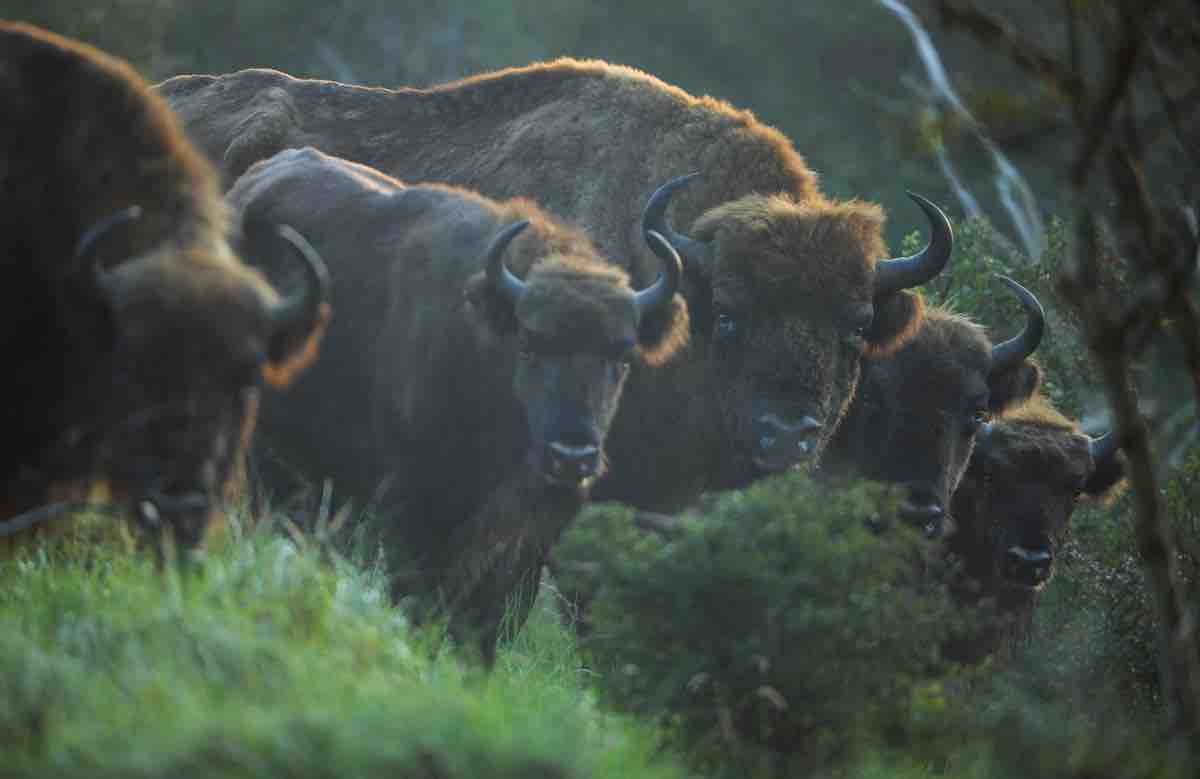
Bison (Bos Bonasus), Kennemerduinen National Park, Kraansvlak, The Netherlands. Enclousure in a fenced reserve, 250 hectar, in Kennemerduinen National Park. STAFFAN WIDSTRAND / REWILDING EUROPE
Bison restoration stories we have linked to are mostly in North America. But the Carpathian mountains have demonstrated Romania’s outsized efforts at rewilding. Now the largest such effort in Europe, according to Rewilding Europe, is this:
The goal of the Tarcu Mountains bison initiative is to help build a herd of at least 500 bison living in freedom by 2025 in the Southern Carpathians. This is an area spanning some 1.4 million hectares of wild mountains and valleys in the southern part of the Carpathian mountain chain.
Thanks to Yale e360 for more on this news from Romania.
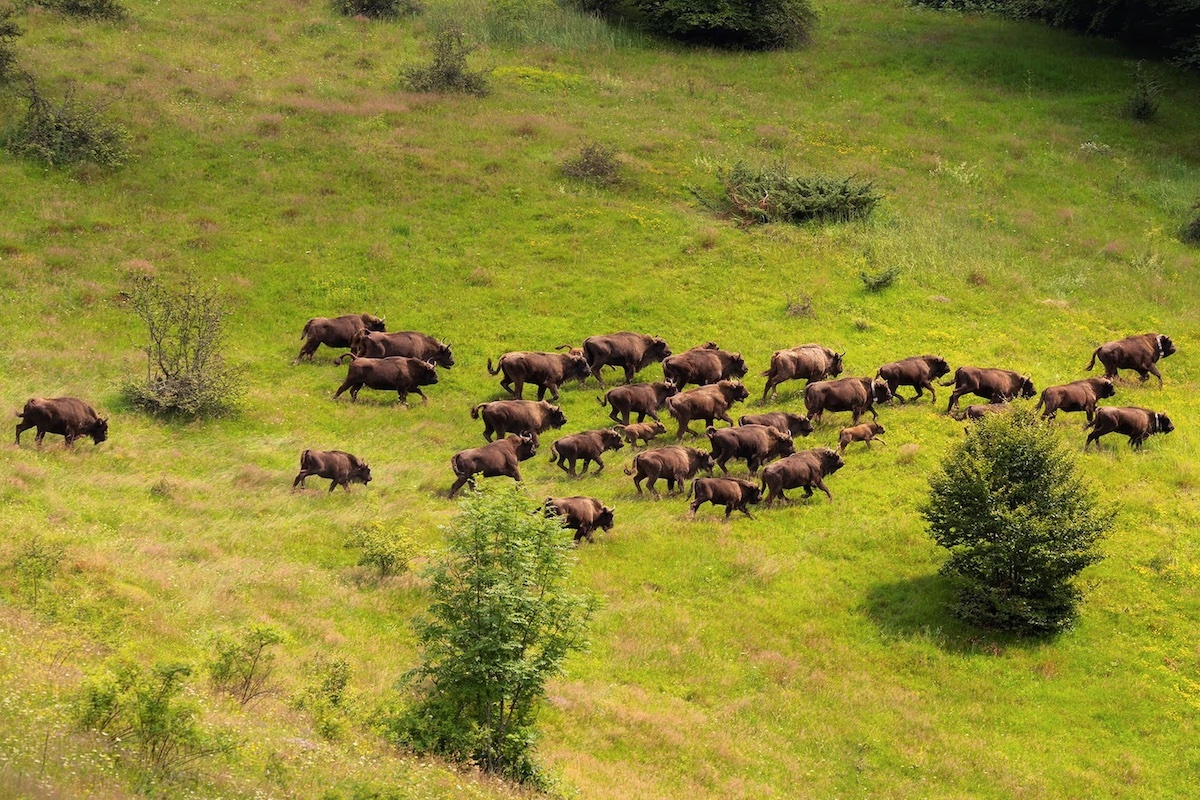
European bison in the Carpathian Mountains in Romania. DANIEL MIRLEA / WWF ROMANIA
How a Small Herd of Romanian Bison Is Locking Away Thousands of Tons of Carbon
Gone from Romania for 200 years, European bison were reintroduced to the Țarcu Mountains, at the southern end of the Carpathian range, in 2014. Now numbering 170, the bison are reshaping the mountain landscape in ways that are helping clean up emissions.
Bison fertilize grasses and spread seeds, spurring growth. With their enormous girth, they also compact soil, helping to keep carbon locked in the ground. According to a new modeling study from the Yale School of the Environment, the Țarcu grasslands are capturing roughly 10 times as much carbon as they were before bison were reintroduced.
The research estimates that just 20 square miles of grassland are drawing down an additional 54,000 tons of carbon annually, an amount equal to the yearly emissions of 43,000 cars. The findings, which have not yet been peer-reviewed, highlight how the restoration of large animals can help slow warming.
Oswald Schmitz, lead author of the new study, previously estimated that protecting and restoring just nine types of animals — marine fish, whales, sharks, gray wolves, wildebeest, sea otters, musk oxen, African forest elephants, and American bison — could lead to the capture of an addition 6.4 billion tons of carbon dioxide annually, an amount roughly equal to the yearly emissions of the U.S.
 Organikos