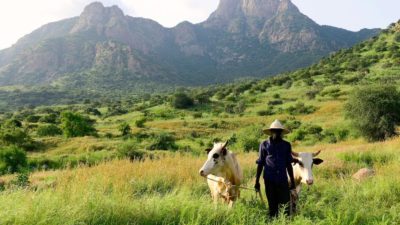
The Guera Mountains in southern Chad, a region that has grown greener in recent decades. NATURE PICTURE LIBRARY / ALAMY STOCK PHOTO
Fred Pearce, writing in Yale e360, offers this surprising news from some of the driest, hottest places:
With CO2 Levels Rising, World’s Drylands Are Turning Green
Despite warnings that climate change would create widespread desertification, many drylands are getting greener because of increased CO2 in the air — a trend that recent studies indicate will continue. But scientists warn this added vegetation may soak up scarce water supplies.
Southeast Australia has been getting hotter and drier. Droughts have lengthened, and temperatures regularly soar above 95 degrees F (35 degrees C). Bush fires abound. But somehow, its woodlands keep growing. One of the more extreme and volatile ecosystems on the planet is defying meteorology and becoming greener.
And Australia is far from alone. From Africa’s Sahel to arid western India, and the deserts of northern China to southern Africa, the story is the same. “Greening is happening in most of the drylands globally, despite increasing aridity,” says Jason Evans, a water-cycle researcher at the Climate Change Research Centre of the University of New South Wales in Sydney, Australia.
What is going on? The primary reason, most recent studies conclude, is the 50-percent rise in carbon dioxide concentrations in the atmosphere since preindustrial times. This increased C02 is not just driving climate change, but also fast-tracking photosynthesis in plants. By allowing them to use scarce water more efficiently, the CO2-rich air fertilizes vegetation growth in even some of the driest places.
As we pump yet more CO2 into the air, arid-land greening seems set to continue, according to two recent modeling studies. But ecologists warn that, despite appearances, going green may have downsides for arid ecosystems and for the people who depend on them. Desert plants and animals will often lose out, and the extra vegetation may soak up scarce water supplies…
Read the whole article here.
 Organikos