


Sometimes you look at workers through a tourism car window and you think: they may be doing the same gestures that their ancestors were doing centuries ago.
Sometimes you look at workers through a tourism car window and you think: they may be doing the same gestures that their ancestors were doing centuries ago.


My colleagues pressed me to arrive at Kathakali half an hour early : “You cannot miss the make-up session”, they insisted. Kathakali is non-speaking theatre you see. So the performance starts early on, before the show even starts. Continue reading


One of the things you notice first when you arrive Kerala is the beautifully curvy and mysterious script. The Malayalam alphabet consists of 56 letters. Its rounded form comes from the fact it was primarily handwritten with a sharp point on dried palm leaves. Continue reading


The first aid kit I packed to come here in Kerala is the size of a small shoebox. Except for mosquito repellent and cold cream I have yet to use it, and although I should be relieved, I am annoyed. It’s the heaviest part of my luggage and I’ll probably carry it all back home ! A lot of this medication treats tummy-aches and Kerala has a strong system of traditional medicine, Ayurveda, that handles those issues well and without the long tail of potential side effects.
“You were right to take precautions, when traveling you never know where you’re going to land and what you’re going to find. Kerala is rich in water sources and is not at risk for Malaria. But you may want to travel to other parts of India which are less fortunate in those regards.” Dr Sulficker reminded me. Dr Pameela Sulficker is the Ayurvedic doctor here at Cardamom County, she introduces travelers to ayurveda at the Ayura Wellness Center. Continue reading

Back home in Paris I have exhausting reactions to pollens and fruits. As if I was allergic to nature, to my own environment. Here in the Ghats, I live in the forest, I’m surrounded with foreign trees, I eat exotic fruits. Yet they don’t seem to provoke any negative reaction in me. I can get rid of the first signs of headache with a cup of coffee. As if here I could let myself let nature take care of business.
When taking my first yoga lesson in India today I realized that when I apply my habitual automated thinking to my resolutions of living according to nature, it backlashes. Continue reading
Dragon Ball, you remember Dragon Ball right, from the 80’s ? I hope you do as I saw the exact live version of “The World Tournament” last night, only here it’s called Kalari. Continue reading
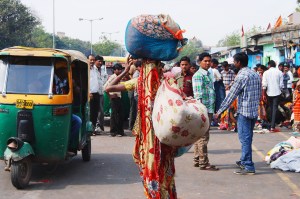 A sari: five yards of unstitched fabric ingeniously wrapped and draped. Nowadays, with the exhausting rhythm of fashion, tons of unwanted secondhand saris are discarded every day and collected by India’s informal rag-picker community who resell these fabrics. This task has gotten harder and harder to do as India’s GDP per capita rises along with a distaste for secondhand.
Back in 2010, Bijal Shah was working on slum development issues as a fellow of the AIF-Clinton Foundation for the NGO SAATH in Gujarat, India. In a sea of beautiful second hand sari fabric, she had the idea to turn secondhand Indian saris into one of a kind, exciting products. Continue reading


Stationery made of elephant dung. Among the entrepreneurial ventures I discovered while browsing through the sustainable products distributed by Raxa Collective at Cardamom County, this one must be my favorite. I had seen goat dung dried and then mixed with dirt to build houses in Masai villages in Kenya, but I had never seen tools or products made out of dung. Continue reading
When he had a choice Treehugger.com founder Graham Hill chose to live in a small apartment. He believed it would allow him to live within his means financially, environmentally and beyond…
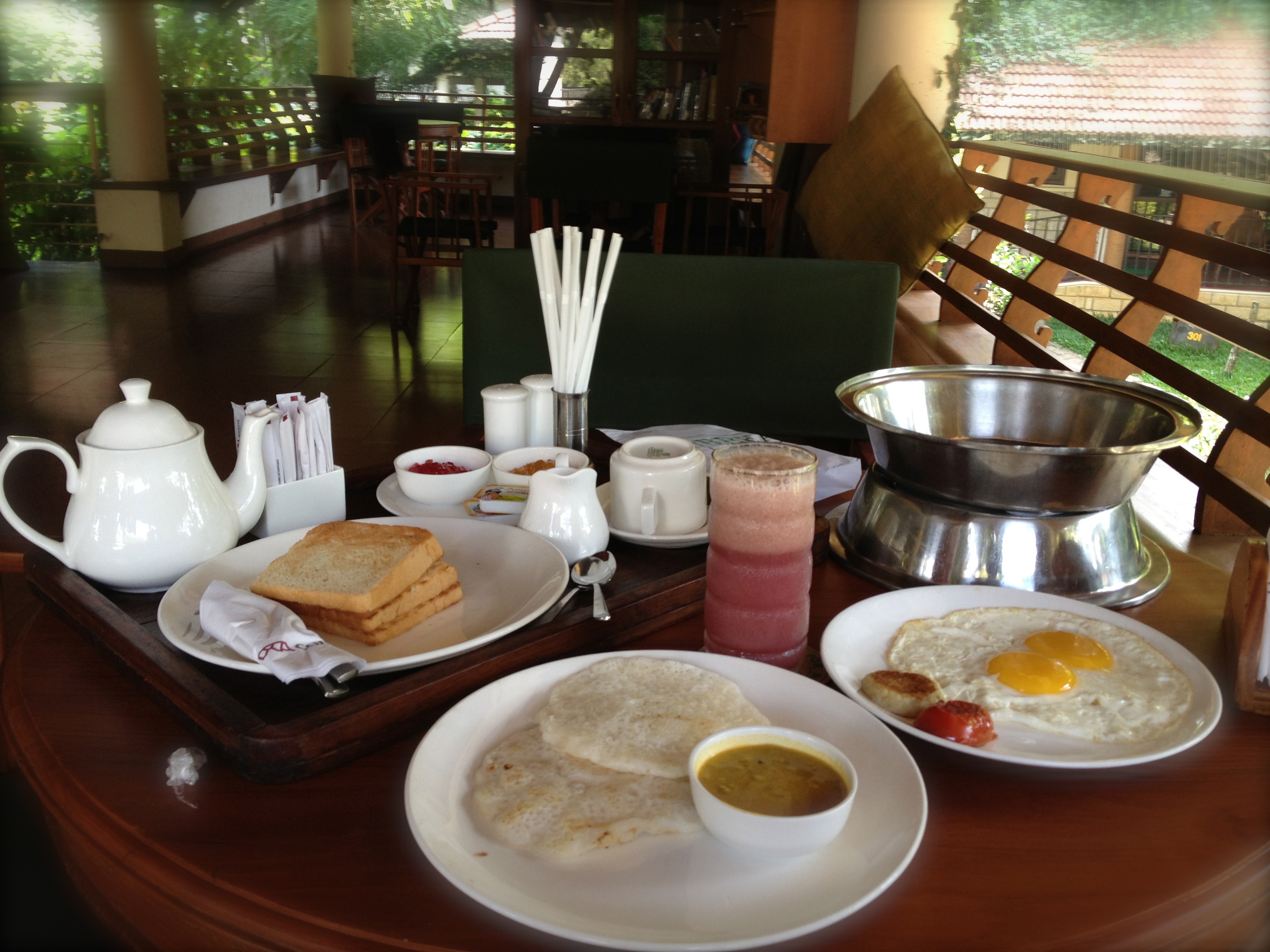
Sunday breakfast indian-style: a meal that just requires to be eaten with the hands
I was about to start my meal at the canteen with my colleagues yesterday when I decided it was time to take the dive and eat with my hands. Boy, was it an exercise, I mean a physical exercise.
As a first-timer I was quite slow: I’ve read it is most polite to use your thumb, pointer and middle finger, and to let only the first two joints of those fingers touch the food. I’m not sure that I did all that. Also you only eat with your right hand, even if you’re a lefty. The left hand will take care of menial things such as wiping your tears of eyes after a spicy curry. The whole meal activates so many muscles that it left me exhausted. It got me thinking about the lack of thought and the lack of physical effort me and my folks, in westernized countries, put into the act of eating. Eating with the hands is common in many areas of the world, including parts of Asia and much of Africa and the Middle East and it has plenty of health benefits. Continue reading


This week, I arrived in Thekkady, at the frontier between Kerala and Tamil Nadu. My name is Allegra I’m a french professional who decided to take a break from hectic Paris to learn about entrepreneurial conservation and eco-tourism. I’ll spend the next two months at Cardamom County with Raxa Collective. Cardamom County borders the Periyar Tiger Reserve. As it nears the center of a bustling spice-trading town, I sometimes forget we’re in a forest. Nature always finds a way to remind you though. Continue reading


Khamu Ram Bishnoi fights against the pollution carried by discarded plastic bags in India since 2005. Every year during Mukam festival, the Bishnois, his community, must bring sand on top of dunes to solidify them and block the advance of the desert. Lately pilgrims had taken the habit of collecting the sand in plastic bags, causing a widespread pollution in the Thar desert. To protect the landscapes and the animals who regularly ate plastic bags, Khamu Ram started to demonstrate noisily to educate his community about alternatives to plastic bags.
In 2008, he was invited to talk at a series of environmental conferences in France. When looking at the street dustbins in Paris, Khamu Ram had the idea of a mobile public dustbin. Since 2010, he installs these dustbins complete with jute bags in public places, during festivals, pilgrimages, and organizes their collection. Last February Khamu Ram Bishnoi received the award of “Extraordinary man of India” in Jaipur, Rajasthan.
If Khamu Ram Bishnoi is an extraordinary man, he’s also part of an extraordinary community. He is a bishnoi. Continue reading
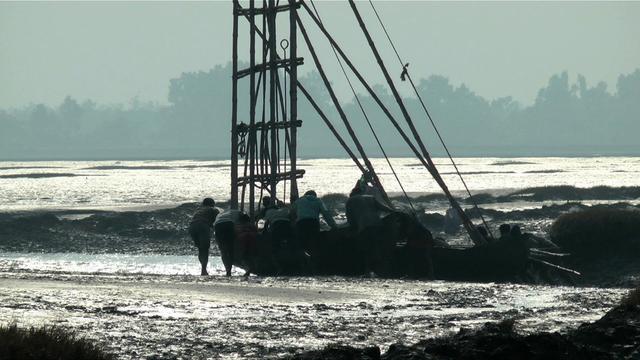
When introducing his documentary at the Paris International Documentary festival, Cinéma du Réel, director Kamar Ahmad Simon said to the audience: “Thank you for being here. I will be back at the end of the screening to discuss the film with you. I’d like to know your opinion and to answer any questions you may have, whether you liked the film or not, so I can go forward and progress.” If I had to sum up the response from the audience and jury it would be something like: “Please keep going. We’ll follow.”
Click here for the trailer of Shunte Ki Pao ! (Are you listening)
Rakhi and Soumen are a beautiful couple, they are young, in love and are the happy parents of little Rahul. You could say they have it all. That’s if their region of the coastal belts of Bangladesh had not been wiped out by the tidal in 2009. Rakhi and Soumen are climate refugees. A couple among almost a million homeless, stranded under the open sky on an ancient dyke. They now live in a small village named Sutarkhali. Rakhi and Soumen were from the middle-class, today three years after the tidal, they buy fruits by the unit, fish for their meal and line-up on neverending queues for food aid. And life goes on. Shunte Ki Pao ! (Are you listening) is not about disaster, it tells how people build a life afterwards. Continue reading
The 30th edition of the International Environmental Film Festival closed in Paris a few weeks ago. The selection of rare, beautiful and eye-opening films was a treat so I wanted to share some of the goodness with you.
Grand Prix: The Fruit hunters by Yung Chang
Inspired by Adam Leith Gollner’s book of the same name -that also inspired a post in these pages – Canadian director Yung Chang (Up the Yangtze) enters the world of fans of rare varieties of fruits. As he follows fruit hunters’ travels and meet-ups, he finds the tree of an almost extinct mango, comes across actor Bill Pullman and interviews many of these unsung heroes of biodiversity. The aesthetics of the cinematography makes those fruits and those characters irresistible. Continue reading
 Organikos