…And Back Again

This small book has followed a long and lively trail since its publication seventy-four years ago today. Tolkien himself recollected that the book began with a mere doodle –“In a hole in the ground, there lived a hobbit”–in the late 1920s, yet the tale itself didn’t actually get written until about 10 years later. But Tolkien was a master scribbler, so those doodles included maps and genealogies that essentially outline the geography of the adventure. He used his keen knowledge as a professor of Anglo-Saxon to populate “Middle Earth” with creatures and languages, making an alphabet of “runes” and painting cover and plate art for the book’s first edition.

J.R.R. Tolkien painted Dust cover from 1937 first edition

“Good morning!” said Bilbo, and he meant it. The sun was shining, and the grass was very green. But Gandalf looked at him from under long bushy eyebrows that stuck out farther than the brim of his shady hat.

“What do you mean?” he said. “Do you wish me a good morning, or mean that it is a good morning whether I want it or not; or that you feel good this morning; or that it is a morning to be good on?”

“All of them at once,” said Bilbo…then Bilbo sat down on a seat by his door, crossed his legs, and blew out a beautiful grey ring of smoke that sailed up into the air without breaking and floated away over The Hill.

“Very pretty!” said Gandalf.  “But I have no time to blow smoke-rings this morning.  I am looking for someone to share in an adventure that I am arranging, and it’s very difficult to find anyone.”

“I should think so–in these parts!”

And even before the adventure truly began my then small sons would sit enthralled as we read chapter after chapter.
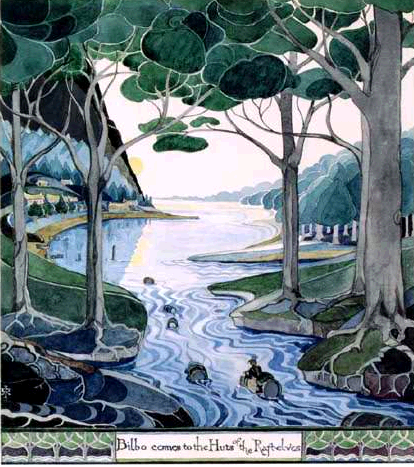
J.R.R. Tolkien painted picture plate from 1937 edition

Before The Hobbit there was Homer, before Homer there was Doyle and Swift and Aesop… Our peripatetic lifestyle always included books, no matter what continent we lived on.

The Hobbit has played an important role in the lives of generations, mine and my sons’ counted among them. Before there were computers and video games there were books, and before books there were stories. I can only pray that the latter two will outlive the former.
Yes! We Have No Bananas!

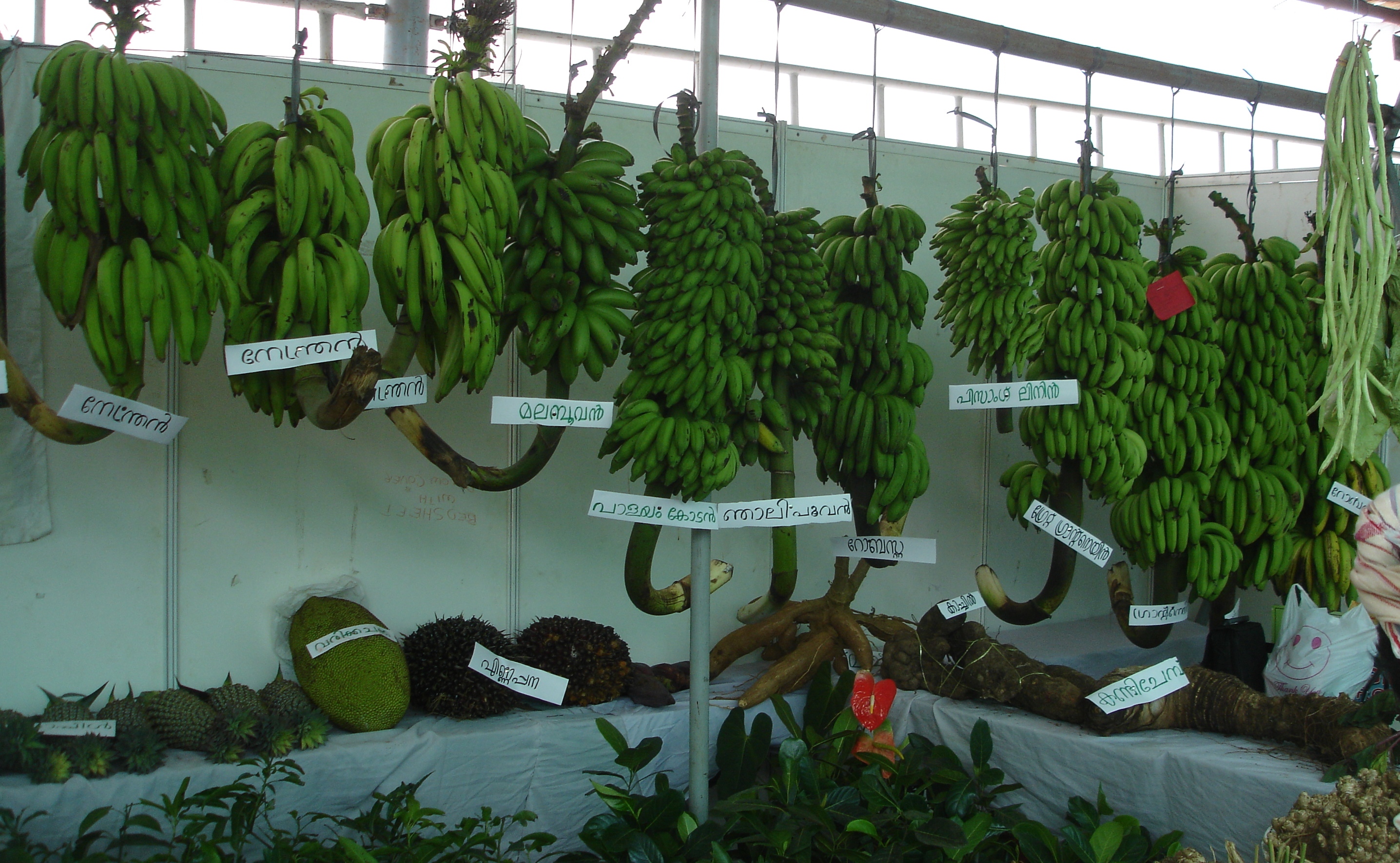
Banana Varieties On Display at the Cochin Flower Show (Names in Malayalam)

There are bananas for eating and bananas for cooking.  Bananas for boiling and bananas for frying. There are bananas with exotic sounding names: Cuban Red, Blue Java, Lady Finger, Orinico, Poovan, Rasthali, Manzana (which does, indeed, taste more like an apple). I wish I knew (and could taste!) all of them, because there are more than a thousand varieties. Somewhere there must be a database of all those names, all those varieties, hopefully all those genomes.  Continue reading

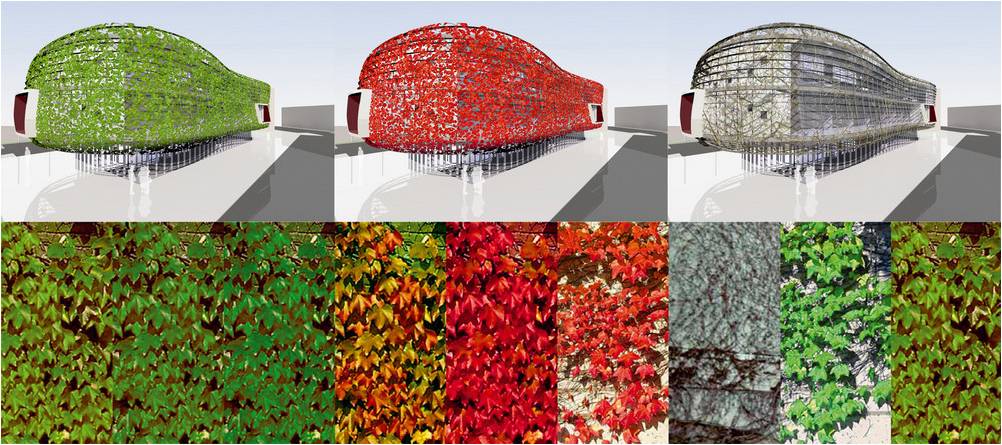
Green House Redefined

Use of natural light, passive and active energy saving systems, relative position to the sun, air flow, leaf moistened air….

This doesn’t sound like “business as usual” for a municipal building. But the Noain City Hall in Navarre, Spain designed by Award winning Zon-e Arquitectos stems  logically from the fact that the region leads Europe in its use of renewable energy technology.  Continue reading

Color Wheels

Whether by coincidence or just being on a roll (sorry), I just came across an inspiring urban art project that is part Civil Disobedience, part Public Art Initiative, part plain old recycling and completely FUN! Continue reading

Lights Out!

The Celebration of Urban Birds isn’t just about “Bird Counts” and helping to create welcome habitats for your ornithological neighbors.  Protecting migratory birds is an urgent part of this process.  Just as we work to create and support buffer zones around nature reserves in various parts of the world, we need to think about ways that human lifestyles impact animal health and habitat.

New York City Audubon’s Director of Conservation Susan Elbin states that

Night-time migrants navigate using cues which include moon-light and star position, and may become confused by the glare of tall building lights.

Continue reading

What Wheels Can Do

This slideshow requires JavaScript.

From Bike Share programs to recycled wheels, Tour de France to backwater byways, bicycles are universal, or at least global.

More than just a method of transportation, they are often a form of expression, of the person riding it or the job they do. Continue reading

Solar on the High Seas

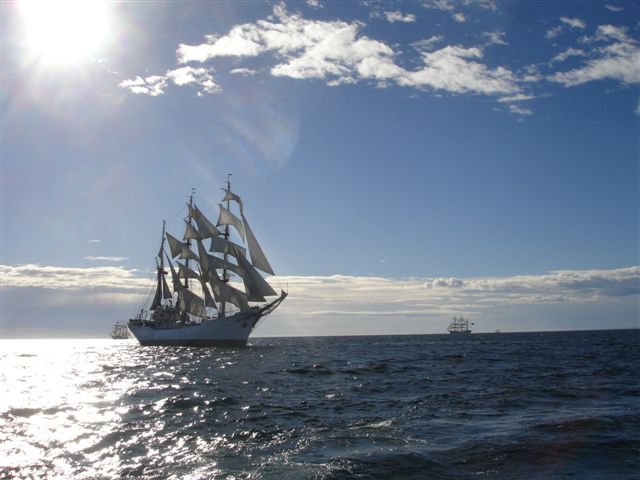
There was a time when all seafaring vessels used renewable energy sources…they moved either by manpower or wind power, or a combination of the two. The Industrial Revolution changed that and the steam engine, powered by coal or wood, pushed ships out of carbon neutrality.

In March, 2010 I had the privilege to experience the Vela Sud America, a Bicentennial Regatta of tall ships commemorating the creation of the independent South and Latin America, as they passed through the Straits of Magellan near Punta Arenas, Chile on their way up the west coast of South America. The weather hadn’t yet turned very cold (it was nearing winter in the southern hemisphere) and it was a bright sunny day.

Coincidentally today, September 15th, is Independence Day in all 5 countries of Central America–Feliz Día de la Independencia! Continue reading

What Goes Around, Comes Around

Despite the fact that this post makes me look like a “one trick pony” I have to share yet another recycling innovation that involves, well, you know…

The Canadian company Knowaste has opened several facilities in the U.K. that are making a significant dent in the nearly 800,000 tons of disposable nappies and other “absorbent hygiene product” waste that would normally go directly to landfills annually.

The company has pioneered a system that, after heat sterilization, converts the plastics in the products into items such as roof shingles and plastic tubing, with the waste from that processing used to generate heat and power for the plant itself. Continue reading

High Line Skyline

An aerial shot looking down on the Washington Grasslands section of the park, with Rashid Johnson’s artwork Blocks and Yutaka Sone’s Little Manhattan visible, both 2015 Commissions.

Railroads were one of the most significant early forces of change to the landscape of North America.  They not only moved freight and people but they participated in opening up the newly formed National Parks to visitors with the creation of the now iconic grand hotels.

Some of the railway’s original train tracks were marked and put back in their original locations. You’ll see them throughout the park today. Photo by Rick Darke

But as roads began to rival rails the network underwent a steady decline, and fewer and fewer resources were being put into their maintenance.

Fast forward a century–give or take a decade–and we find railroads, or at least rail corridors, going back to one of their greatest historical traits; as a pathway to nature.

In the 1980s the U.S. Congress passed an amendment allowing the use of soon-to-be-abandoned rail lines for hiking and biking trails.The highly successful “Rails-to-Trails” program has lead to nearly 1,012 rail-trails in the U.S. with a total trail mileage of more than 11,000.

Not just a U.S. phenomenon, there are similar programs in Canada, Mexico, Europe and Australia, to name a few.  (Tasmanian Trail anyone?) Continue reading

Onam Ice Melter

In our neighborhood of Cochin, called Thevara, we walk sometimes in the early morning or late afternoon—been doing this for over a year now.  Yesterday, some ice melted on our afternoon walk.  Our ice, well-melted by warm neighbors.  The ice I refer to is a cultural separator between the we that has been and the we that is and will be. Continue reading

Victory Gardens Redux


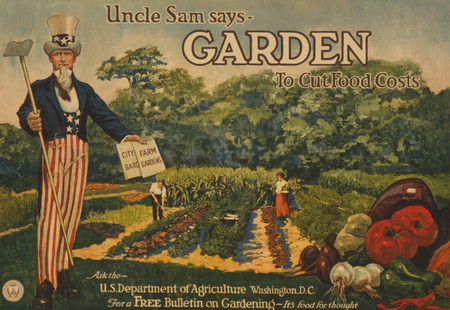
As innovative and “hot topic” as they are, the concept of urban and suburban community gardens is not actually new, nor a USA phenomenon.  Just a seemingly “modern” and “developed economy” phenomenon.  Innumerable acres of public and private land across the USA, U.K., Canada and Germany were being used for small scale agriculture during WWI and WWII. London’s Hyde Park, San Francisco’s Golden Gate Park and New York City’s Riverside Park (not to mention Eleanor Roosevelt’s White House lawn) all had plots for cultivation in order to mitigate the costs of growing and transporting produce during wartime.  A Victory Garden campaign during WWI is said to have influenced the creation of over 5 million gardens in the USA alone. Continue reading

News(Paper) Power

Despite the now ubiquitous use of the internet to follow both local and world news, newspapers continue to exist for many people as their daily connection to current events.  In many countries that’s not their only use of course.  We’ve written about the recycling initiatives of newspaper bags and baskets, as well as their use as wrappers and packaging in markets around the world.  But used for fueling our cars?  Now that’s news!

Tulane University associate professor of cell and molecular biology Dr. Mullin and his team have just applied for a patent for a method to produce the biofuel butanol from organic material.  Continue reading

Flattering Mother Nature

The Art and Design worlds are constantly giving us examples of our interpretive abilities when it comes to nature.  In fact, the very roots of Art go back to those expressions. But if “Imitation is the Sincerest Form of Flattery” then scientists and engineers are also following the adage that “form follows function” in ways that have the potential to direct us out of some of our environmental problems.

Lindsey Doermann writes about how an elephant’s trunk, water strider’s legs, woodpecker’s beak, peacock’s feathers or a beetle’s back (to name a few) are inspirations toward conservation focused engineering.

Continue reading

Challenge: Nappie-free Landfills

Even if the jury is still out comparing the environmental impacts and carbon footprints of cloth vs. disposable nappies, it’s clear that standard disposables are a landfill problem.  As in, a space problem if nothing else.  Being a petroleum-based product, they pose other problems as well.

But since the main component of these stubbornly indispensable items is cellulose,  and mushrooms are nature’s cellulose-eating machines, Mexican scientist Alethia Vázquez-Morillas of The Autonomous Metropolitan University in Mexico City has found a solution.   Continue reading

Let Us Give Thanks

The Kerala Harvest Festival Onam transcends religion and region, making it one of the most important festivals of the state. All signs of abundance and prosperity are incorporated into the celebrations: Elaborate pookalams (mandalas made of flowers and leaves, shown below) adorn the courtyards of homes and business; and elaborate multicourse meals called Onamsadya are served on banana leaves.

This slideshow requires JavaScript.

The festival celebrates a story, not unlike the Greek myth of Persephone when she was kidnapped to the underworld but allowed to return once a year for the spirit of rebirth in spring.  The Kerala story is about a beloved king during a time of great prosperity who sacrificed himself, saving the earth from an avatar of Vishnu.  For his devotion he is granted the boon of being able to return to his country once a year to visit his people, who prepare for his coming with an abundant harvest to assure their King that the land still flows with milk and honey. Continue reading

Balancing Act

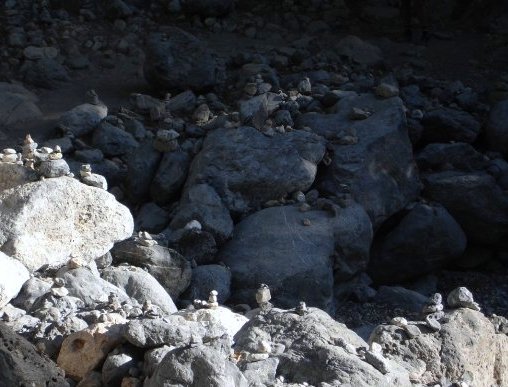
Stacked stones at Samaria Gorge on the Greek island of Crete

Many of us enter a wilderness area to get away from the obvious signs of human habitation.  We go to commune with nature, to be awed by rock, tree or water that has power and age beyond what we can comprehend.

Ancient ruins and other cultural conservation sites have no less appeal.  To stand near a structure built with the often inexplicable ingenuity of early civilizations can be literally breathtaking.

The desire to leave a time capsule of that moment by means of a scratched name and date is nothing new.  Greeks, Romans, Egyptians, Mayans, not to mention Eighteenth Century Romantic Poets have succumbed.  (Lord Byron’s carved name on a column of the Temple to Poseidon at Cape Sounion, Greece is likely one of the world’s most famous pieces of graffiti.) Continue reading

Finding Your Way Back Home

Sign post to the world in Punta Arenas, Chile

Many of us take having an address for granted.  We all know the obvious formula: house number, street name, town or city name, state, zip code,  country (when it differs from our own).  But what may not be obvious is the fact that fewer places in  world are so “perfectly aligned” than we think.  Continue reading

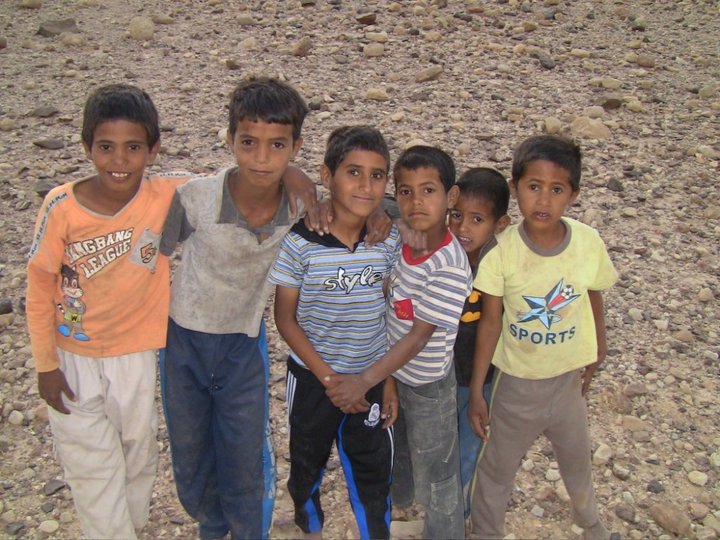
Our Gang, Feynan

Juggling stones, racing barefoot, learning English, playing with rope swings on the desert trees…

5,000 kilometers away from Our Gang in Thekkady, but the spirit of fun and dance and play is the same.

Mismatched and scruffy, there’s a history here, a story, something fundamental to childhood…being pals, chums, buddies, one of the gang.

“Go Green, Young Man (or Woman)…!”

When Horace Greely (well, actually John B. L. Soule) said “Go West, young man, and grow up with the country!” he was speaking from the perspective of limitless possibilities. The Lewis and Clark Expedition had helped map out the west and many young men, and later women, answered the call.

With wilderness in peril, that same entrepreneurial spirit has opened up a new world of empowerment and possibilities for later generations. The California Conservation Corps and Southwest Conservation Corps have teamed with the non-profit Veterans Green Jobs in a win-win program to support both the country’s military veterans and the country’s national parks. Continue reading

From Sea to Sand

There seems to be no limit to the spirit of creativity!  Art often represents a “call and response” relationship to the natural world.

Water is elemental.  Earth and wind follow.   Are these the mechanics of life?